Your cart

THE BYLINE 04/ 2021

How Clark Atlanta professor balances his freelance career, influences students

By: Jamila Wood 

When he is not teaching Clark Atlanta University journalism students the ins and outs of the business, Christopher Daniel is racking up bylines for the likes of The Daily Beast, The Undefeated, HuffPost, Atlanta Magazine, and  NBC News.

But, the award-winning journalist’s love of words, entertainment and culture began well before he started helping students jumpstart their career in the media industry. 

Daniel found a love for entertainment with his childhood being surrounded by constant music. His mother was a general manager at night clubs and his father a DJ. At nine, Daniel was captivated by Nelson George’s writing style and Ed Bradley’s interview skills. 

“One of the first books that I remember reading was this book called ‘The Death of Rhythm & Blues’ by one of my favorite writers, Nelson George,” Daniel said. “I just noticed that as a nine year old reading this adult book that the way he wrote about was the same way I thought about the music that I heard in my house.”  

The writing passion for Daniel started early and was seen through his constant love for reading magazines at the supermarket and carrying his own notebook. 

“I would literally go to the supermarket and read magazines. I could rundown the bylines of all my favorite writers. I used to walk around with a notebook and write all the time,” he said.

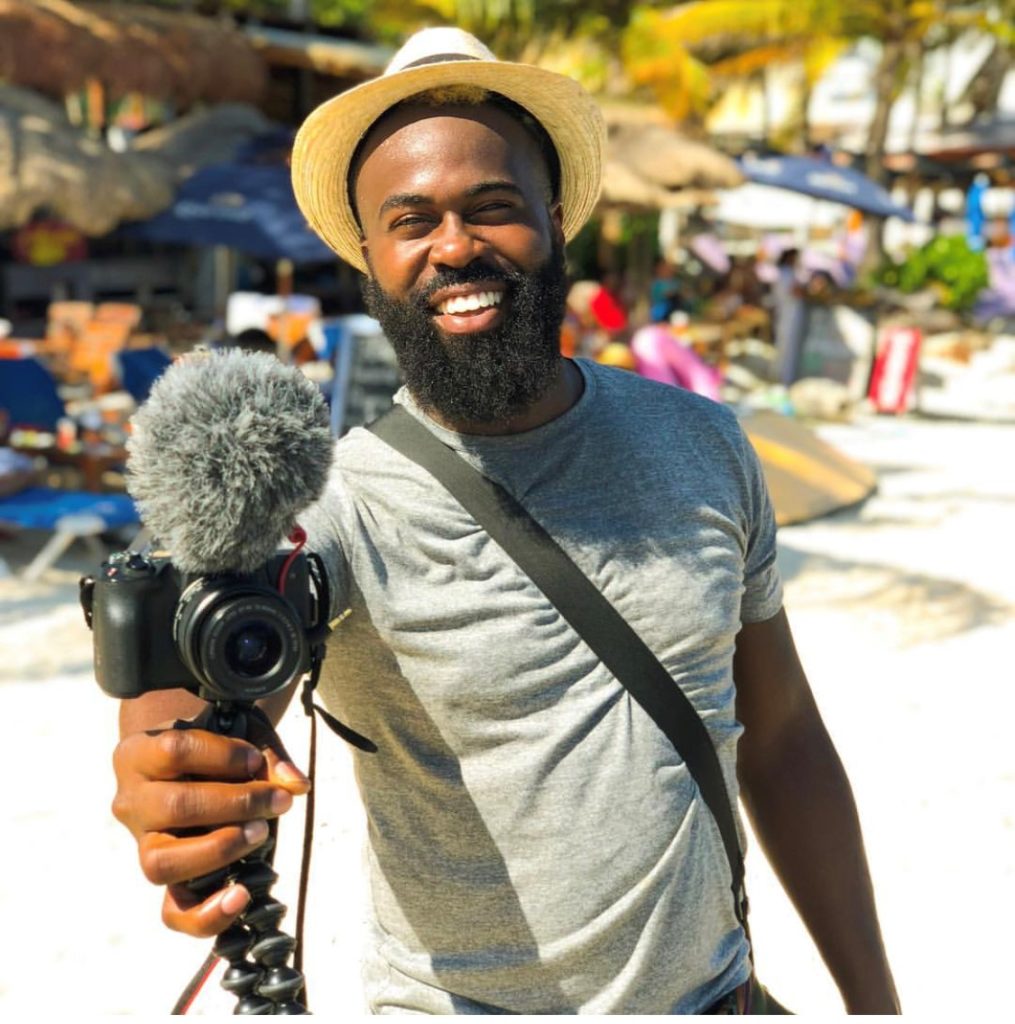
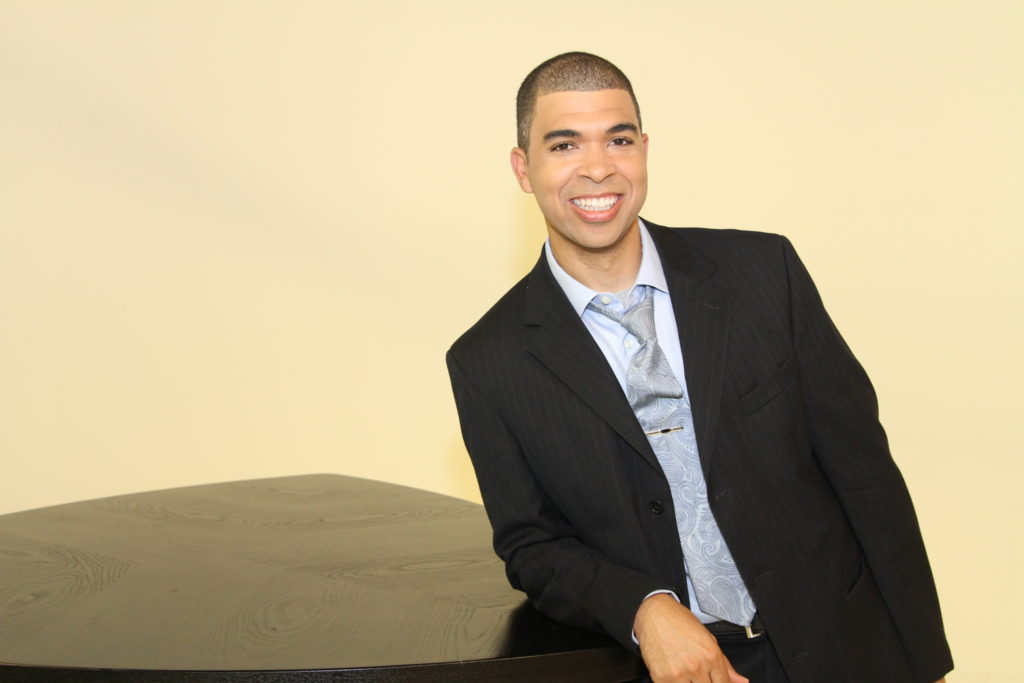
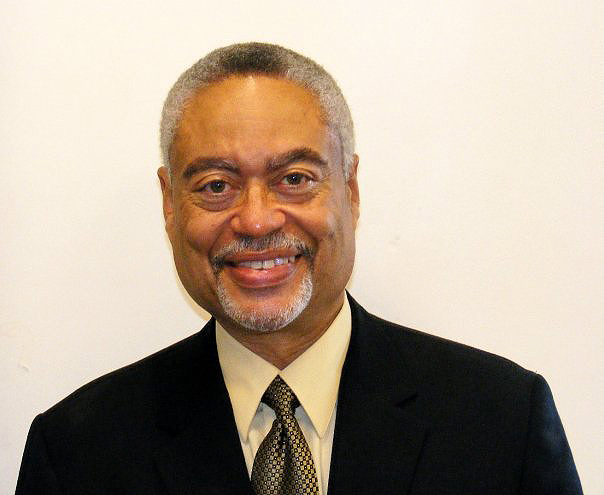
Christopher Daniel

Daniel started his career through his involvement in nonprofits and wanted to cover things that carried purpose. Eventually, his work spoke for itself and opened endless doors of opportunity. 

“At the time there weren’t a lot of people covering it [nonprofit events]. I made it my thing. Every weekend I was at The High Museum, Georgia Aquarium or the Fernbank Museum. I was networking with all these executives and different people. They would see my blog post about who received an accolade at the gala that year,” Daniel said. 

“They would reach out through  LinkedIn or through my email. A lot of it was connecting with communications teams that work with these nonprofits,” he continued. “Naturally, all of these people wanted to invite me to lunch and I started going to events like The Commerce Club. I was just out and talking about things that I did.” 

With Daniel’s immense amount of passion, he went into his career with a strategic mindset that prepared him to handle any difficulty — including maneuvering the challenges of virtual teaching as a professor. 

“As a journalist, it wasn’t hard at all. It was more of a challenge at Clark Atlanta, where I teach. That was because I wasn’t really sure of the content management system or learning management system that we [the school] would have to use to communicate with the students,” Daniel said. “The challenge was trying to figure out how we would transition from the physical setting and deliver it to the virtual setting.” 

Daniel expresses that his strategic networking helped his career and assisted him in gaining more opportunities during the pandemic. 

“I had so many relationships that I built over the years and most of them started by showing up to places and someone referring me because of something they read in a smaller publication. I was just making sure that when I went places I had strategic networking,” he said. 

Now, after making a name for himself, Daniel uses his connections in media to help students at Clark Atlanta University, has dedicated his career to giving more Black writers opportunities, and tries to be a form of representation for his students.

“I knew if there was an assignment I was going to get it. I also knew if they needed students that were good in PR and journalism and would ask for my recommendation,” Daniel said. “That’s why so many students at Clark Atlanta right now are doing well. Why, because they asked questions and followed every move that I was making. It really rubbed off on them by paying attention to the bylines. It really encouraged students to do it because I was doing it.”

But Daniel also cautioned against feeding into misconceptions people have about the entertainment industry whether you’re consuming media or working in the field. 

“You still have to research people and watch tv shows up close and listen to full-length albums and mixtapes. You should be able to read voraciously,” Daniel said. 

As Daniel reflects on his career, he realizes the importance of always executing quality work. Daniel has received endless attention from the entertainment industry and multiple interviews and is thankful to receive the opportunity to share his story with up-and-coming Black journalists. 

Daniel urged rising journalists to “keep your ear to different topics and different things people are talking about. Pay attention to what these editors and producers are doing on social media. 

“A lot of times they put their emails and social media handles out there. They also share the pay and how to pitch,” he said. “It’s one of those things that if you are going to be virtual, you have to utilize the virtual in all possible ways.”

Jamila Wood is a Clark Atlanta University student. 


PR Veteran Carlos Scott talks career, gives insight on the PR industry 

By Da’Zhane Johnson

From crisis management to event planning, publicist Carlos Scott has been able to establish upstanding brands and reputations for celebrities. The marketing extraordinaire is known in the PR industry for his ability to strategically navigate a myriad of matters for his clients.  Scott’s expertise has led him to be seen on CNN in 2016, where he gave professional insight on the scandal surrounding Olympic medalist Ryan Lochte, who fabricated a story about being robbed at gunpoint with three other swimmers. Carlos also spoke on his experiences and his responsibilities at N-Vision Marketing, his Atlanta-based marketing firm. Scott spoke to AABJ’s The Byline about his marketing and PR expertise.

DJ: Tell me how you became interested in the PR industry? Did someone inspire you, or did you discover the industry on your own?

Carlos Scott

CS: It was really my sister who introduced me. After leaving the military, I actually found myself in the music industry as a songwriter. I was able to sign a deal with a record label and started writing for a new artist. I remember sitting in a meeting for about four hours waiting to play the new records we recorded, but that never happened. We spent hours discussing the artist’s image and reputation. We even talked about her dermatologist! That’s when I realized what importance PR, marketing and image had, not only on artists, but on any talent.

DJ: What do you believe is the most difficult part about your job?

CS: I would say the most difficult part can be the clients. You can get clients who are “a problem child.” Another thing is the communication and elitism in the industry. It’s always about respect for me. I can send emails and people do not respond because they see I’m not worthy or they’re not interested. To me, that’s disrespectful. You should treat everyone equally in this industry because you never know who will be your boss.

DJ: As a PR veteran, have you seen any PR trends occur in the past year?

CS: I have definitely seen some trends change. I told a friend of mine earlier this week that the ability to adapt and embrace technology has been the biggest trend. People who couldn’t do those two things probably weren’t able to keep business coming in during COVID-19. In times like this, it’s good to keep your ear to the streets and your mind open.

DJ: Social media has allowed for news to travel across the world easily. It is possible for anyone or anybody to trend on Twitter. Do you believe this has added pressure for publicists when they are managing a crisis situation?

CS: Absolutely. Social media marketing is actually something we specialize in. You just have to learn how to be smart and intentional with every post. We have clients who just don’t need social media because they are so well-known. Some clients just don’t need it for their own good. In those cases, we usually will manage their social media accounts ourselves.  

DJ: What does your typical workday look like? Was it altered at all because of COVID-19?

CS: A typical workday for me doesn’t really exist. Every day can be different depending on the client. Some days I am at my desk emailing pitches. Other days I am helping clients with interviews. The pandemic didn’t hurt business for us actually. The only thing that stopped was traveling. I used to fly from four to five times a month, but that stopped once the world shut down last March.

DJ: What advice do you have for current students who are studying to become a PR expert like yourself?

CS: I would advise any beginner to get an internship first. I say that because it will help you determine if this is the business you really want to be in. I’ve had interns work for me, and say, “You know, Mr.Scott, I’d like to thank you for this opportunity, but this just isn’t for me.” The work is more labor intensive than people think. You need to study the craft in general, get an internship to discover which entity you want to do — whether that be corporate or entertainment — then study this entity. 

Da’Zhane Johnson is a student at Clark Atlanta University. 


This issue of The Byline was edited by Raisa Habersham and Tianna Faulkner. 

THE BYLINE 09/2020

How I found two jobs in a relentless pandemic 

By Alexis Grace 

How does it feel to be a graduate? It’s the question everyone has asked with pride and joy in their voice. That question has a different meaning for recent graduates such as myself and fellow colleagues, who received diplomas, but went without a ceremony due to the COVID-19 pandemic. At the beginning of March, we had no idea that our last moments walking throughout Clark Atlanta University’s campus would abruptly end. 

There was a sense of confusion, continually asking myself “what’s next,” “how am I going to get a job due to the high unemployment rate and lack of hiring” and “Should I move in with my parents until everything blows over?” 

Graduating from college is not just a milestone, it’s a transition into adulthood. The everyday struggles of the world can be daunting, with warnings to enjoy college while you can because time flies. This statement has been continuously said without knowing there was such a unique meaning for the class of 2020.

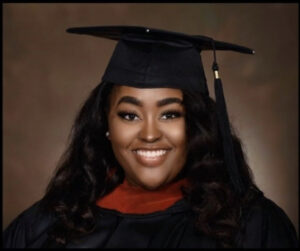
Alexis Grace, Clark Atlanta University graduate.

But my worries aside, I maintained hope and patience that I would find a job. The summer before my senior year, I participated in the NABJ Student Multimedia Projects. Throughout my time in the program, different universities and recruitment programs from media outlets would stop to speak with us and seeing the work. 

There, I ran into James Washington and Janis Ware, general manager and publisher, respectively, of The Atlanta Voice, a Black-owned newspaper based in Atlanta. They saw the work I did in the program and wanted to see my work at The Voice. While they knew I could write, they never knew of my other hats, from graphic design and layout to social media management. 

I was an intern at The Voice for two years prior to student projects, writing articles about different events happening across the city. I loved to write, but I wanted to gain more experience on the digital side of things, so James, or Washington as he is often called, said he would contact me closer to my graduation date.

Between student projects and graduation, I became NABJ-CAU president and interned with CNN’s digital programming team. I worked on a few personal projects while gaining credentials and certifications for programs on LinkedIn and HootSuite

My talents and hardwork opened doors for me to gain connections and meet valuable people in the media industry. My internships and other media work also taught me the importance of holding on to and building relationships. In my case, my meeting with Washington and Janis led to social media jobs for The Atlanta Voice and The Dallas Weekly, a Black-owned newspaper based in Texas. I went from having no job to two positions in less than a month. 

If the pandemic never happened, I would not have looked into pursuing another degree. Several universities waived GRE requirements, which worked in my favor because I hated the test and the preparation that went into it. I am now in my first semester at Agnes Scott College, pursuing my master’s in writing and digital communication. 

For anyone still looking for a job, my advice to you is this: Never burn bridges that you have not fully built yet. You never know what is on the other side. Also, do not limit yourself on what you can do. There are so many resources and opportunities waiting for you. 

Alexis Grace is a 2020 graduate of Clark Atlanta University. She currently works as a social media editor for Black-owned publications, The Atlanta Voice and The Dallas Weekly.


Reflections from the NABJNAHJ Virtual Convention

The convention was ‘very beneficial’

By Kassidy Jack 

With the recent changes to life as we know it as a result of the COVID-19 pandemic, nothing has been the same, and people are still adjusting to the new norm. The National Association of Black Journalists (NABJ) and the National Association of Hispanic Journalists (NAHJ), however, did not let the virus stop them from holding their annual convention. 

I attended the organizations’ first joint virtual convention and career fair, a four-day event catered to aspiring and active journalists, media executives, journalism educators, public relations professionals and students.

Kassidy Jack, Clark Atlanta University

All sessions, workshops, plenaries, forums, networking activities, meal events and the highly anticipated career fair were held online. There were so many excellent speakers and panelists.

Some of my favorite sessions included “Bearing Witness While Black: African Americans, Smartphones and New Protest #Journalism,” led by MSNBC’s Trymaine Lee and author of Bearing Witness While Black, Allissa V. Richardson. During this session, Richardson discussed what inspired her to write her book, Bearing Witness While Black, as well as how to avoid being traumatized by microaggressions Black people experience daily. I learned about the difficulties’ reporters face covering Black Lives Matter protests while dealing with their mental and how Richardson has personally learned to cope while still executing her assignments. 

Another notable session was “Entrepreneurship for the Next Normal,” in which Black women business owners, Tina Wells, founder of Buzz Marketing Group, and Yolanda Owens, owner of Iwi Fresh, discussed how COVID-19 affected their businesses. The women also shared creative tools and tactics they used to help their businesses survive such a crazy time. I loved the inspiration that filled the virtual room and the transparency from the panelists. I do not think there was one person who left this session without feeling motivated and valiant in continuing their respective endeavors despite COVID-19.  

Besides the online sessions, I was thankful that convention attendees could playback any session after it ended. For someone like myself who wanted to be in about 30 sessions at once, this was very beneficial.

NABJ and NAHJ did a remarkable job with their very first virtual joint convention. This was my first convention, and I can only imagine how much better the live event is.

Kassidy Jack is a junior at Clark Atlanta University.

The convention ‘was a changing moment in my life and career’

By Ariyana Griffin

I have always loved journalism and media, but was nervous about officially taking it from a hobby to my undergraduate major and career path. After getting my feet wet by joining my school’s newspaper, The Panther, I switched my major to journalism from sociology.  Through my school, Clark Atlanta University, learned about NABJ and joined immediately. Being new to the organization, I was not familiar with the convention. So, when a classmate sent me a tweet about a chance to attend the convention, I knew I had to take this opportunity to gain some exposure. It was the perfect way to get acquainted with the organization and some of the opportunities NABJ has to offer.

Thanks to Craig Brown, a Clark Atlanta University graduate, and AABJ’s

Ariyana Griffin, Clark Atlanta University

parliamentarian, I was granted access to the NABJ Virtual Convention on August 5-8, 2020. It was amazing to be in a space with people who look like me and who are passionate about journalism and everything it entails. I also appreciated that the convention incorporated current events and subjects such as social justice issues and the COVID-19 pandemic because it made the convention interesting, engaging, and modern.

Sessions such as the W.E.B. Du Bois Plenary, “Progress Before, Progress After: The Criminal Justice System and COVID-19” and “Where Do We Go From Here: What’s Our Collective Strategy to Overcome Social Injustice?” helped me better understand the correlation between the work that activists do and the work that journalists do to inform the public. 

Hearing panelists with differing viewpoints gave me a wider horizon about many topics, including prison reform. Maria Hinojosa, anchor and executive producer of Latino USA, said Latinos are often unheard when it comes to reform discussions. While learning that upset me, I was even more motivated to do work that is inclusive. 

Hearing speakers, journalists, and activists discuss their passion was a changing moment in my life and career because it motivated me to write about civil rights issues, police brutality, social justice issues, and the history of these topics that are often not taught. While my first convention was virtual, the sessions have me excited for next year’s convention in Houston, Texas.

Ariyana Griffin is a mass media and arts major with a concentration in journalism and a sociology minor student at Clark Atlanta University. She also runs a blog, Equal Justice for Some, focused on highlighting injustices. She is originally from Inglewood, California. 


APS Superintendent discusses her goals for the school year

Atlanta Public Schools Superintendent Lisa Herring spoke with Condace Pressley, host of AABJ’s monthly program In Contact, about her new role and how she’s managing the district in the middle of the COVID-19 pandemic. Herring has more than 25 years of experience in education and is a graduate of Spelman College and Georgia Southern University. Prior to joining APS, Herring served as the superintendent of the Birmingham City Schools in Alabama. Here is a portion of the interview:

Talk to us about your vision and some of your goals for the Atlanta Public Schools.

Lisa Herring: My vision as an educational leader, specifically as a

Lisa Herring, APS Superintendent

superintendent, is to ensure that we first remember that our core business is teaching and learning. And secondly, in that core business of teaching and learning, there’s a model that focuses on three key areas: the student, the teacher, and the content of what we teach. I’ve been fortunate to serve in urban school settings. My vision for Atlanta Public Schools is perhaps threefold. Number one, it is one in which we see a high level of academic progress and success for all students that we serve. Number two, that as we define that progress, and measure it, and that we look at it through a lens of equity. And then third, I do believe that every child that enters into our systems should exit, not only having fully identified their gifts, but being able to have the necessary skills to then transition to the next level of their life’s journey.

What are those one or two things that are going well in APS,  and how do you seek to build upon them?

LH: Let me let me take a moment to brag about our outstanding leaders and high performers within the school system over the last several years. I know this as a former superintendent, some of the most critical decisions we make are tied to principalship selection and district leaders who help support schools. I am so impressed with not just the caliber of staff, but the love and loyalty and investment in the work and the children that I have seen. I’ve observed in the last several months individuals that perhaps we would call them in any other field essential workers. Those who have been frontline and sharing that Atlanta Public Schools continues to run and operate in a fluid successful manner, even with restrictions during a pandemic, whether that’s the school bus driver whose role has changed now into food delivery services, or school nurses, or school psychologists and counselors who’ve not only taken additional approaches to how we make sure that people are well. And because of the pandemic, we’re all cognizant and conscious about the cleanliness of our surroundings. And I’m not saying that it wasn’t [before the pandemic]. But given what we had, we’ve taken it to another level. I am clear that we have a high level of dedication to excellence in Atlanta Public Schools.

It’s one thing to start a new position at the end of a school year or at any point during the year. But to do so in the middle of a global pandemic, for which there is no vaccine is quite the undertaking. How would you characterize your transition, and as we wrap up your thoughts, again, just looking ahead to this exciting new challenge that you’ve accepted.

LH: The challenge is indeed exciting and new in that, as familiar as the city is, being the superintendent in the city as a new role and opportunity, being a superintendent, whereas it may not be new, the superintendent of city of Atlanta, or Atlanta public schools is new for me. I’m very thoughtful every day I think about are we doing enough or doing too much in certain categories. I worked very hard as a leader to not make decisions that I have to second guess. And I also want to make certain that the team of leaders around me feel empowered to execute whatever expectations are put in front of them.

That being said, we have to be very thoughtful about our practices and our actions. We have to have a level of reflection when we need to reevaluate but we also have to do things with a sense of urgency. And yet in the midst of all of that, we also have to remember that we’re not on an assembly line building cars, but we’re virtually in homes and in front of individuals. Still trying to impact minds and the thinking process, it’s a heavy weight. I think about it every day.

And then I think about the fact that we’re also trying to do it and keep ourselves healthy, and keep the people that we serve healthy. And all of us are only individually responsible for that part. We couldn’t have guessed this season. Our goal in Atlanta Public Schools, is that a year from now or two years from now, when they’re trying to figure out how to make certain that when and if it should ever reoccur, maybe they’ll look at APS for some guidance there. We want to be a model for what is right. What is right, not just in terms of the work, but that we do right by people, and most importantly, children.

This interview was edited for length and clarity. The full interview may be viewed Sundays throughout September at 10:30 a.m. on AIB-TV.


This issue of The Byline was edited by Raisa Habersham. 

THE BYLINE (11/2019)

Challenges in improving health literacy in the US

By JoAnna Pendergrass, DVM

Health information can be highly technical and complex, occasionally perplexing even to the most highly educated. Understanding this information — broadly defined as health literacy — is key to a person taking a proactive role in their health and well-being. What happens, though, if people do not understand what the doctor tells them or make sense of their medication instructions?

Health literacy was initially defined in 2000 as “the capacity of individuals to obtain, process, and understand basic health information and services needed to make appropriate health decisions.” This definition has since undergone several iterations as health literacy has come to be understood as multi-dimensional, involving more than just the individual patient, according to the researchers Scott C. Ratzan and Ruth M. Parker in the introduction to “Health Literacy: Improving Health, Health Systems, and Health Policy Around the World.”

Health literacy encompasses a set of skills, including accessing health care, communicating with health care providers and calculating drug dosages. An individual’s health literacy level depends on many factors, such as ethnicity, education and income. Disproportionately, individuals who are minorities, have limited education or live in poverty have poor health literacy, according to the 2003 National Assessment of Adult Literacy. This survey — the first nationwide survey to assess health literacy — reported that only 12 percent of adult Americans had a high level of health literacy.

Poor health literacy has wide-ranging effects. Individuals with low health literacy visit the emergency room more frequently for routine medical care, engage less with the health care system and report a worse overall health status. Health care efficiency suffers because of poor health literacy. Also poor health literacy costs the U.S. economy hundreds of billions of dollars annually, as stated in the report “Low Health Literacy: Implications for National Health Policy.”

Despite the prevalence of poor health literacy and its consequences, many health care providers are unaware that their patients struggle with comprehending health information. This communication divide only further compounds low health literacy in that providers continue talking “above” their patients, and patients are reluctant to acknowledge their lack of understanding.

Improving health literacy can help eliminate health inequality, improve health outcomes and improve health care efficiency, according to the 2016 paper “Considerations for a New Definition of Health Literacy.” Health care providers have many strategies for communicating health information more clearly to their patients.

For example, health care providers can use plain language, which involves using the active voice, substituting complex terms or phrases for simpler ones and presenting information in small chunks, as described in the U.S. Department of Health and Human Services’ “Quick Guide to Health Literacy.”

The teach-back method helps health care providers ensure that patients understand health information, according to the Agency for Healthcare Research and Quality. To use this method, a health care provider explains a particular concept to a patient, asks the patient what they understand about the concept, clarifies any misunderstandings and repeats this process until the patient demonstrates mastery of the concept.

Health literacy is multi-faceted and complex. Improving health literacy has benefits for the individual and health care system as a whole. Through a concerted effort, health care providers can tailor health information to make it clear and understandable to patients.

JoAnna Pendergrass, DVM, is a freelance medical writer.


AABJ Online Fundraiser: 43 Years Campaign

AABJ’s $43 for 43 fundraising campaign is still ongoing. In its 43rd year, we are asking members to donate $43 to go towards programming, scholarships, and events throughout the year. Be sure to invite your friends, coworkers and anyone you know who supports our members in print, communications, public relations, radio, broadcast, digital and the many trailblazers in the literary world. Be sure to share our campaign on your social media by using the hashtag  #AABJ43.

You can donate here.


Atlanta vlogger chosen for YouTube mentorship progam

By Joi Light 

Will Edmond

It’s no doubt that the world is changing due to significant technological advancements — so naturally the world of journalism has to follow suit. Some of the world’s largest publications are now in competition with someone’s favorite mom blogger or popular social media influencer turned red carpet correspondent. To a “classically trained” journalist, this might sound like a change for the worse, but for someone who has the skills and the entrepreneurial spirit, it’s go time!

That’s exactly what Atlanta resident, Will Edmond is capitalizing on — the new way of making your own way. After pitching a show idea to the Travel Channel that didn’t end up taking off, Will decided to make his own way as a YouTube extraordinaire.

Fast forward to just two years after his first video, Will was hand-picked by the good folks at Youtube in September for their NextUP Black Creators Class of 2019. This week-long free mentorship program in Los Angeles, California, consisted of classes on lighting, equipment and editing.

“What I learned most was that it’s not about the best camera, it’s all about the best lighting,”  Edmond said. “The lighting techniques are what inspires me to set up my own studio.”

Besides the courses provided by YouTube, that some invest thousands of dollars into, he was able to connect and network with other like-minded black creators. After graduating from the program, creators in the class were gifted with new equipment to elevate their videos to a new level and an assigned personal mentor from the YouTube staff.

“YouTube is changing the world of journalism,”Edmond said. “It’s truly putting storytelling back into the hands of people and telling stories their own way.”

Joi Light is a full-time digital brand journalist and part-time freelance writer and blogger. 


Be sure to buy the AABJ documentary “Black and Reporting”

Get your Emmy Award-Nominated copy of AABJ’s Documentary, “Black & Reporting: The Struggle Behind the Lens.”

Proceeds go to AABJ’s Xernona Clayton Scholarship Fund .

Anyone who wants to watch the entire documentary can buy it for $9.95 here.


Member Spotlight: MaKisha Funderburke

MaKisha Funderburke

Current position in AABJ?

Member

How long have you been a member of AABJ?

Since May 2017

Where did you attend college?

Clark Atlanta University – B.A. Mass Media Arts, Morris Brown College – B.A. Music Performance and Full Sail University – M.S. Entertainment Business

How long have you lived in Atlanta?

19 years (since year 2000)

Current Occupation?

Marketing Communications Professional (Kennesaw State University) and Adjunct Instructor in Mass Media (Clark Atlanta University)

What do you like most about being a member of AABJ?

I really enjoy networking with black media professionals and the monthly workshops.

What initially got you interested in the media/communications field?

I have always been a creative and a suit, meaning I bridge the worlds of the arts and business.  I enjoy shaping and refining the vision, mission, messages and visuals of a brand.

What are your favorite publications/outlets to get your news?

CNN, Huffington Post, TheRoot.com and Blavity.com. I like a variety of sources for a sense of balance.

Is there anyone in media you look up to? Why?

I am a fan of Tyra Banks.  I have followed her story of desiring to major in mass communications when she was a teen, to her modeling career, to her entrepreneurial accomplishments in television and film.

What’s an interesting fact about you people wouldn’t have otherwise known?

I absolutely love to sing and wouldn’t mind experiencing Broadway.


This edition of The Byline was edited by Amir Vera.

THE BYLINE (10/2019)

AABJ volunteers trade experiences with seniors at AG Rhodes Health and Rehab

By Breanna Durham

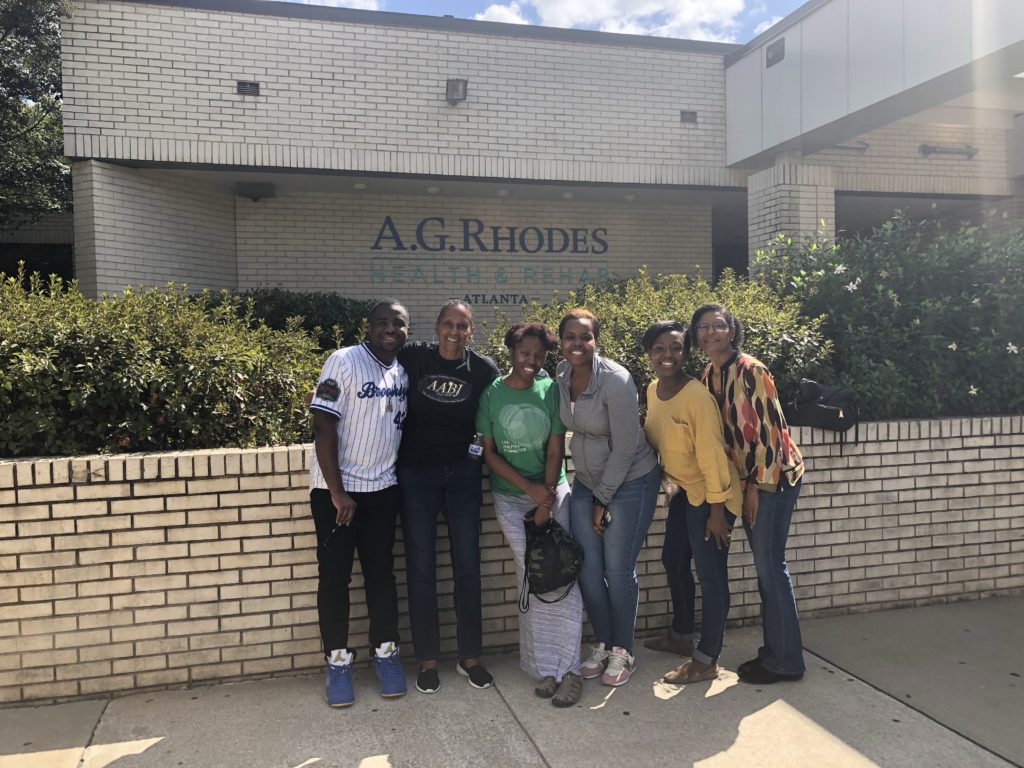
AABJ members pose for a photo outside of the AG Rhodes Health and Rehab on Sept. 21, 2019.

Members of Atlanta Association of Black Journalist (AABJ) gathered to spend time with senior citizens Sept. 21 for a volunteer event at the Atlanta branch of AG Rhodes Health and Rehab, a nursing home.

For two hours, the seven volunteers played games and heard about the lives and opinions of the seniors while sharing their own experiences and answering some of the residents’ questions. Typically, AABJ holds four volunteer events per year. After the nursing home visit, the chapter plans to hold one more volunteer event this year.

Barbara McDew, AG’s activities assistant,  has worked with senior citizens for the past 30 years and spoke about the impact the seniors had on her and the potential impact they can have on others. Seniors, she said, have experienced life in ways she wouldn’t have ever imagined and hold interesting stories. By working with them, McDew learned things that would equip her for life. 

“They taught me how to live and how to be a lady,” she said. 

Helene Mills, a 94-year-old resident of the center, told the volunteers  about her life and her advocacy. Mills has worked as a community advocate for Atlanta’s Fourth Ward and for senior citizens for years. 

“I’m still working as an advocate for senior citizens right here,” she said. “I’m now a (National) Silver Haired Congress person who — when I was able — went to congress to advocate for various items in regards to senior citizens … That’s something I’m proud of.”

Jasimine Murray, who joined AABJ two months ago, said she volunteered due to her past experiences and her love of seniors. Because of her close relationship with her great grandmother, she said she has volunteered at her great grandmother’s senior citizens home. 

“Anytime I can do something with the seniors, I do it,” Murray said. “I always think that there’s so many hidden stories here … I think that you can have all the books, but I think the best truths and stories come from people.”

Joy Woodson, the AABJ committee chairperson for community relations, said she chose the center in hopes of exposing the public to reporters.

“We [as AABJ members] thinks it’s important for people to see journalists as people and not just as people you see on the news who are telling a story and the only time they want to know you is when you’re having a bad day,” she said. 

In addition, Woodson said she picked the center due to her belief that it’s important for black residents to see reporters that look like them serving the public. A large portion of the residents that came out for the volunteer event were black. Woodson described the group as lively and said she saw a lot of smiles.

“I think part of that is an outside group coming in,” she said. “It’s a help to the community. You’re helping expand the knowledge of whoever you’re helping.”

At this volunteer event, Woodson said that enough people did not come out, but she expressed hope for more to come out for the winter volunteer event. Over the course of a reporter’s career, Woodson pointed out the graciousness people have shown by sharing their stories with reporters and answering their questions. Besides returning that act of grace to the community, Woodson centered service as a pillar of the journalism profession.

“That’s what the core of what journalism should be about,” she said. “It’s a public service.”

Breanna Durham is a free lance writer.


AABJ Online Fundraiser: 43 Years Campaign

AABJ’s $43 for 43 fundraising campaign is still ongoing. In its 43rd year, we are asking members to donate $43 to go towards programming, scholarships, and events throughout the year. Be sure to invite your friends, coworkers and anyone you know who supports our members in print, communications, public relations, radio, broadcast, digital and the many trailblazers in the literary world. Be sure to share our campaign on your social media by using the hashtag  #AABJ43.

You can donate here.


A Clark Atlanta student is running for state office

Amber Doss-Hunter

By Almiya White

Amber Doss-Hunter couldn’t pass up the opportunity to run for the Democratic seat in the Georgia House Representatives 65th District as a college student.

“My professor encouraged me to run on the state level instead of the federal level because there are a lot of progressive policies and initiatives that must start to happen here in Georgia, and since this is home, take care of home first,” the 33-year-old sophomore at Clark Atlanta University said.

The threat to women’s rights is what prompted Doss-Hunter to run for the state position.

“Men are controlling women’s rights, and we need more women of color at the table voicing our rights,” Doss-Hunter said. 

Led by public service and public policy, Doss-Hunter spends most of her time in Clark Atlanta’s political science department, perfecting her craft in policymaking.

Before attending Clark Atlanta, Doss-Hunter spent one year at the University of Central Arkansas in 2004 studying film.

“Before I moved to Atlanta I was prepared to enroll in school. I didn’t know where I wanted to go so I was waiting to apply for colleges once I moved here,” Doss-Hunter said. She added that her family worked in film and she started working in film as well.

“I immediately started working in the field I wanted to without a college degree so going back to school seemed unnecessary,” she said.

Doss-Hunter said she was inspired by the teachings of W.E.B. Du Bois,  and decided to go back to school to further her education in the fall of 2018.

“I wanted to go back to school to understand policy and legislation thoroughly. What better place to learn politics than at Clark Atlanta University? Georgia is the home of the first black woman state representative, Grace Towns Hamilton. There is no other place I should be,” Doss-Hunter said. 

Doss-Hunter’s top priorities as a candidate are education, criminal justice reform and quality healthcare.

She believes Georgians “deserve transformative education programs that nurture and guide the excellence of” all children. Doss-Hunter also said she supports reform that de-criminalizes non-violent minor marijuana offenses and wants quality healthcare coverage and facilities for everyone.

“No one should be refused quality health care services because they do not have health insurance,” she said.

Students at Clark Atlanta University have shown excitement in seeing their classmate run for state office .

“I believe Amber will represent Clark Atlanta well. I am certain the institution will support her through her campaign journey,” CAU senior Alexis Grace said. 

Hunter’s vision for this campaign season is to touch everyone within arm’s reach of her district.

“I never want to be a person who speaks of the issues and never tries to help those in need of solutions. I want to help bring the change my community needs,” Doss-Hunter said. 

Union City, Fairburn, Chattahoochee Hills, Douglasville, Palmetto, and South Fulton are all part of District 65.

The primary voting is on May 19, 2020, followed by general elections on November 3, 2020.

Almiya White is a senior at Clark Atlanta University.


Be sure to buy the AABJ documentary “Black and Reporting”

Get your Emmy Award-Nominated copy of AABJ’s Documentary, “Black & Reporting: The Struggle Behind the Lens.”

Proceeds go to AABJ’s Xernona Clayton Scholarship Fund .

Anyone who wants to watch the entire documentary can buy it for $9.95 here.


Member Spotlight: Lisa Cox

Lisa Cox

Current position in AABJ?

Member

How long have you been a member of AABJ?

5 years

Where did you attend college?

UC Berkeley-Undergrad 

Columbia University Graduate School of Journalism- Graduate

How long have you lived in Atlanta? 

6 years

Current Occupation?

Writer/Producer, CNN Newsroom with Brooke Baldwin

What do you like most about being a member of AABJ?

The fellowship, networking, making new friends, learning the history and impact of black journos in Atlanta, and being surrounded by fellow black journalists.

What initially got you interested in the media/communications field?

I grew up in the business so I was naturally attracted to it. My father is a broadcast journalist and professor. He used to be a top local TV news anchor in my hometown of Los Angeles and a former network radio host and correspondent. Plus — I got good grades in English and composition and writing came naturally to me.

What are your favorite publications/outlets to get your news?

LOL — ummm CNN.

But I do like GMA/WNT and watch them daily. But I also subscribe to the LAT, NYT, Time, The Atlantic, Essence,  Vogue, O-The Magazine. And I religiously follow The Root, Black America Web, The Grio, Facebook and Twitter.

Is there anyone in media you look up to? Why?

Not really but there are a multitude of people I admire and respect for their accomplishments and acumen (several local news professionals, Carole Simpson, Wolf Blitzer, Byron Pitts, Bernie Shaw among them). I love Whoopi Goldberg. She’s not traditional media but I love her anyways … her spirit and conviction. She keeps it real.

What’s an interesting fact about you people wouldn’t have otherwise known?

My maternal grandmother was from Guadalajara, Mexico; I’m an excellent interior decorator; if I could have any job and money was no object I’d be a masseuse and own an herbal apothecary/fragrance shoppe. 


This edition of The Byline was edited by Amir Vera

The Byline (9/2019)

We’re back after the NABJ Convention

The Byline staff took a break for the month of August because of the National Association of Black Journalists Convention in Miami.

Two AABJ members won Salute to Excellence Awards (more on that later) and the chapter was nominated — but unfortunately did not win — Chapter of the Year.

Below are some pictures from the conference provided by various AABJ members.


Fox 5 anchor Marissa Mitchell wins the Salute to Excellence Award

By Craig Allen Brown


Marissa Mitchell holds her NABJ Salute to Excellence Award at the NABJ Conference in Miami, Florida.

Atlanta native and Fox 5 anchor Marissa Mitchell achieved another significant career milestone on Aug. 10 when she won a National Association of Black Journalists (NABJ) Salute to Excellence Award. Mitchell won in the Large Market/Network Radio, Television, Print category for her tribute to soul icon Aretha Franklin.

 “When I learned that I won, I was very honored, and I was humbled,” Mitchell said. “I have been nominated for Salute to Excellence Awards before, but I had never won.”

“It was very special,” she continued. “I’ve been a member of NABJ for over a decade now. To have my work recognized by an organization I’ve supported so much was an esteemed honor.”

Equally important to Mitchell was the recognition received for a memorial on the Queen of Soul. Franklin is considered by many to be one of the world’s greatest singers. She is also hailed as a civil rights and human rights pioneer. Mitchell states that Franklin was more than just an amazing singer, she was an unparalleled embodiment of African-American artistry and humanity.

“[Franklin] was a symbol of pride for so many communities, particularly the African-American community,” Mitchell said. “To have received the honor for a piece that I felt honored her was particularly special.”

Upon hearing of Franklin’s passing, Mitchell began conceptualizing what would become the award-winning tribute. She contacted artists who knew Franklin well, such as R&B legend Peabo Bryson and singer Avery Sunshine. These entertainers were able to provide context into what made Franklin such a giant in the worlds of soul, R&B and gospel music. Atlanta-based DJ Frank Ski closed the piece by making an intriguing connection between Franklin’s performances for both civil rights leader Dr. Martin Luther King, Jr. and Barack Obama, as King’s work was certainly influential in Obama becoming the first African-American president.

Mitchell says that the NABJ’s influence on her life and career is “paramount.” She cites the sense of community within the organization as being largely responsible for the success that she has had as a professional journalist.

“NABJ has been my shoulder to lean and cry on throughout the course of my career. This is something I want to be a part of as long as possible.”

Craig Allen Brown is a freelance writer and teacher at Bear Creek Middle School.


AABJ parliamentarian Wilton Jackson wins the Salute to Excellence Award for sports writing

By Breanna Durham


AABJ Parliamentarian Wilton Jackson II

For the second time, Wilton Jackson II has won the Salute to Excellence Award, this time at the National Association of Black Journalists convention in Miami. 

Jackson, a six-year member of NABJ and two-year member of the Atlanta chapter, was presented with the award on Aug. 10.

Jackson’s story “Jackson State, Alcorn State battle in Soul Bowl for SWAC East Crown” won the best use of multimedia award in the graduate collegiate and digital awards category for online sports reporting. Jackson wrote the story as a freelancer for HBCU GameDay. It looked at the championship game between rivals Jackson State University and Alcorn State University, both historically black universities in Mississippi.

When Jackson was announced as a winner of the award, he admitted he was shocked and quiet, but deep down he was excited. He hadn’t really told anyone he was in the running for the award. Jackson said he hadn’t thought he’d win the award due to hard space he occupied while he was trying to complete his masters at Louisiana State University (LSU).

“Everything that came with that and still trying to do the stories I wanted to, it just happened that that was one of the biggest games in HBCU football … It just  meant a lot,” he said. “I’m just grateful and thankful to have won the award.”

In creating a story with context for the battle between the rivals, Jackson went off to gather sources and get closer to his subjects. Jackson said that he went to press conferences and practices, mostly for Jackson State, and spoke to those he knew that attended HBCUs to gather information. 

In May,  Jackson graduated from LSU and about a month before the convention, he was notified about his NABJ Salute to Excellence nominations.

“I know where I was in my life at that time. It wasn’t the best time in my life because I was frustrated by trying to finish grad school and all the nuances with that, plus trying to do something freelance on the side … That was a great feeling to know somebody read my work,” he said.

Jackson said that he believed that the piece’s combination of feature aspects combined with typical things like stats made the article stand out. Sports reporters at times can get focused on the game alone, Jackson said. He did that when he was younger, but he said that only having the nuts and bolts of things gets boring. 

“There’s so many things you can talk about away from the field,” he said. “It’s a culture.You have to include that.”

Another story by Jackson, “Jackson State Vs. Alcorn State: A rivalry for the ages that never gets old,” also made it to the final round, Jackson said. 

 Jackson won  a Salute to Excellence Award for the first time in 2016 for his story, “Tech advances, economy impact trajectory of journalism.”  The story covered how technology and the economy was changing the way news was being produced at the time. Jackson said he was a finalist for the Salute to Excellence Award in 2017 as well. 

 The award is the only U.S. event exclusively honoring exemplary coverage of African and African-American people or issues, according to an NABJ news release. The award showcases stories across a variety of media platforms, having 20 main categories and 120 subcategories.

Breanna Durham is a free lance writer.


AABJ grant winner Amani Patterson explains how the convention changed her life

By Amani Patterson

Amani Patterson poses for a photo at the host hotel for the NABJ conference.

Some say that Disney World is the happiest place on Earth, but many journalists would say it’s actually the annual National Association of Black Journalists convention. Being a part of the NABJ has honestly changed my life. This is the place where your dreams could potentially come true. Thousands come to the ever-changing convention site every year with hopes of networking with the right people and possibly even making life-long friends in the industry. This is also an opportunity to get away from the emotional stress the industry brings and just have fun.

Even though this seems like one big family reunion every year, it can be quite overwhelming. This was my second year attending, but the first year after graduating college. Nothing will humble you more than walking into that career fair. I came with my brand-new portfolio, freshly printed resumes, and brand-new outfit. I was determined to dominate the career fair and leave by the end of the week with my first job out of college.

I quickly realized how nervous I was! As a result, I might have self-sabotaged myself just a tiny bit. I found myself downplaying my talents instead of showing recruiters exactly what kind of journalist I am. If I could change anything about my career fair experience, I definitely would have gone in with more confidence. Even though I did not walk away with a job, I definitely networked and made connections with people who work for companies I admire, and of course get my first professional headshot courtesy of Scripps. So in the end, I still consider it a win! Even though this was a trial and error, I now know how to “come correct” next year at the 2020 NABJ Convention in Washington D.C.

Amani Patterson’s headshot

Having fellowship with everyone was my favorite part of the entire experience. I was able to talk with people who had the similar experience and those who were veterans in the industry. I will say that it was kind of weird to be around people that I watch on television. Whether it was at the Tamron Hall luncheon, eating lunch at a table across from Kevin Fraizer, and even taking a picture with Ne-Yo!

I love being a part of something that shows black people in such a great light. We all have faced racism in our lives and have felt like we could not be our full selves. For a week I was able to be unapologetically black and feel comfortable.The convention is not only just business, but at night people were able to let loose and dance all their stresses away. I loved being able to have fun and know that we were all there to have a good time with each other. The mass shootings that happened the week before did make a lot of people in the world uneasy, especially journalists. I personally know a couple of people who decided to skip the convention because of that. It’s a beautiful thing to be able to come together, but more importantly be there for each other. This convention shows how important our work is and that we must continue to report on the things that matter, including  tragedies.

Thank you to the Atlanta Association of Black Journalists for believing that I would benefit from receiving their financial assistance grant. Like many of us fresh out of college, it would have been a challenge to scramble the money together to make it to the convention. Knowing that I have a community – both regionally and nationally – that supports me is so comforting. I hope one day I can in return help a student make it to the convention.

Amani Patterson is a recent graduate of Georgia State University.


AABJ grant winner Markayla Brooks wants to take the sports industry by storm

By Markayla Brooks

Markayla Brooks

I can honestly say the National Association of Black Journalists convention changed my life. I am a senior at Clark Atlanta University (CAU) majoring in mass media arts. Prior to the convention I was messaging peers and professionals trying to understand the environment I was about to be immersed in for four days. Everyone spoke highly of the convention and I was excited to get to Aventura, Florida, and network.

It was refreshing to be in a space with  people who have similar goals because everyone seemed genuine and eager to offer tips and help in any way.

The workshop I enjoyed the most was “Shooting Your Shot Masterclass” put on by Bleacher Report and Turner Sports. During the workshop there were mini panels about all the careers paths in sports media. My goal is to be in sports media so I really soaked in all the information. Many of the panelists discussed how they started in one place and transitioned to another as they found their passion within the sports realm.

Markayla Brooks and Tyson Beckford

The career fair was overwhelming but exhilarating. I had never been in a space where most of the booths were for me and my career path.  There were so many people, so you had to think hard about how to make yourself stand out and ask the right questions. I was always eager to leave my resume and business card with everyone that I spoke with and ask for their business card. Building genuine connections and growing my network was a large goal of mine when I came to the conference. I also appreciate all of the hard work that was put into the career fair. I know for a fact that had it not been for this conference, I would not have gotten an opportunity to speak with some of these companies.

Next year I will do a few things differently, but I am very grateful I was able to attend this amazing conference and see it while I am still a student. While in line for the Sports Task Force party a gentleman shared how happy he was to see me at the conference and how proactive I was because he did not attend his first national NABJ conference until he was in graduate school. My goal in coming to the conference was to build by network and gain self-confidence and get that feeling after the conference that I am ready to go out and take the sports industry by storm.

Markayla Brooks is a senior at Clark Atlanta University.


AABJ extends its condolences to the Edwards family and friends

NABJ and AABJ both extend their condolences, prayers and thoughts to the family, friends and colleagues of Marsha Edwards, Christopher Edwards II and Erin Edwards. Marsha, Christopher and Erin were NABJ members from the Atlanta area. The Atlanta Journal-Constitution reported their deaths in August. The story is available here.


AABJ Online Fundraiser: 43 Years Campaign

AABJ’s $43 for 43 fundraising campaign is still ongoing. In its 43rd year, we are asking members to donate $43 to go towards programming, scholarships, and events throughout the year. Be sure to invite your friends, coworkers and anyone you know that supports our members in print, communications, public relations, radio, broadcast, digital and the many trailblazers in the literary world. Be sure to share our campaign on your social media by using the hashtag  #AABJ43.

You can donate here.


This edition of The Byline was edited by Amir Vera

THE BYLINE (7/2019)

A message from AABJ VP of Print Amir Vera

AABJ Vice President of Print Amir Vera

With the National Association of Black Journalist Convention just weeks away, we at the Atlanta Association of Black Journalists (AABJ) decided to do something different this month.

Instead of the usual newsletter, we asked a student journalist, an early-career journalist and a veteran journalist to write about their experiences at the national convention. Each writer brings a different perspective that we hope not only AABJ members, but all NABJ members can gain guidance from as we all head to Miami in August.

Almiya White heads to NABJ for the first time

Almiya White

I remember walking to class in April when I received an email alerting me that one of my dreams was becoming reality.

I received an invitation to be a part of the 2019 NABJ Student Multimedia Project at the 44th Annual NABJ Convention and Career Fair in Miami.

A rush of excitement came over me as I viewed the email. I worked and prayed for this. “Thankful for this blessing,” were the only words that came out of my mouth. It’s safe to say the pressure is now on.  

I must be honest, I am a little nervous and anxious to work in a full operating news setting. I’ve heard pros and cons about being a part of the Student Multimedia Project – the intensity, hardship and reassurance you receive are like no other.  We’ve all been told nothing in life comes easy, so I want all the pressure.  

This year’s convention will also be the first one I’ve ever attended. Sadly, I was unable to attend last year’s convention in Detroit – poor planning on my part.

I remember getting text messages and phone calls from friends and classmates sharing the information, skills and exposure they gained within roughly five days. I also remember stalking NABJ’s social media accounts amazed at the endless opportunities they put together for students and professionals. I might not have been present at the convention, but I like to say I was living vicariously through my friends.

This time around, not only did I want to attend the convention, but I wanted to be a voice for the convention, so I applied to be a part of the Student Multimedia Project.

Pursuing a career in broadcast journalism has always been my No. 1 goal because it allows me to advocate on behalf of underserved communities and amply unheard voices. I have a duty not only to inform the public, but to allow audiences to discuss issues that directly affect them.

What I’m looking forward to with the Student Multimedia Project is allowing myself to be vulnerable in a new and uncomfortable setting. As a young journalist, it’s my mission to have the mind and mentality to absorb things freely, whether I’m knowledgeable or not in that area. It’s important that I surround myself with people who can play a pivotal role in my career, go above and beyond and stand out among my counterparts.

Almiya White is a rising senior at Clark Atlanta University.

###

Cierra Johnson provides tips on navigating the national convention

Cierra Johnson at the 2018 NABJ Convention in Detroit, Michigan.

The NABJ convention is considered to be a family reunion for many journalists.  It’s the one time of year where hundreds of students and professionals travel across the world to come together to learn how they can be successful in the media and journalism industry. 

During my second NABJ convention last year in Detroit, I participated in a NABJ fellowship called the Student Multimedia Projects. A group of students, including myself, were selected to broadcast daily newscasts for three days.  The experience was exciting, intense and fun! I finished the fellowship feeling more knowledgeable of the journalism industry (applications are normally available on the NABJ website in January of each year). It was super inspiring to be surrounded by students who share common passions and mentors who are eager to help you. 

Major highlights of the convention included career advice from professionals, a variety of workshops, social events, networking opportunities and the biggest attraction, the career fair. Recruiters offer on-the-spot interviews, internships and jobs. The conventions are super eye-opening and fun! 

A memorable tip a panelist said during one of the professional 101 workshops was “it’s not all about the resume, but also about the relationship.” 

Take a look at a few tips I learned from previous conventions:

  • Be prepared: Be sure to have professional business cards, printed resumes (at least 50), a LinkedIn profile, samples of your work and a 30-second pitch.
  • Dress appropriately: Wear business attire for the career fair and workshops.  Neutral colors are safe. Recruiters are everywhere, and you want your attire to be appropriate at all times. 
  • Clean your social media: Be sure your social media handles and posts are appropriate. Recruiters are looking! If you are not certain your account is appropriate, do not be afraid to reach out to a NABJ member or mentor to ask their opinion.
  • Network: You will meet a ton of students, professionals and recruiters. Take the initiative to start a conversation and exchange contact information. Remember, building relationships is key. 
  • Be safe and smart: Have accountability partners during the convention. There will be plenty of social events in and outside of the host hotel. Do not travel to places outside of the host hotel without telling someone where you will be and for legal attendees, please be mindful of the amount of alcohol you choose to have.
  • Follow-up email or thank you card: Follow-up emails or thank you cards are a memorable gesture to the people you meet at the convention. It is highly recommended!

Cierra Johnson is a programming assistant and producer at AIB-TV (Atlanta Interfaith Broadcasters).

###

Craig Brown explains how to prep for interviews


Cierra Jones and Craig Brown at the 2018 NABJ Convention in Detroit, Michigan.

The National Association of Black Journalists convention, from what I’ve seen and what I’ve experienced, can be either an extremely rewarding event, or a very disappointing (and costly) experience.

As I prepare for my third convention, I find myself reflecting on past experiences, and on ways that I could have made my time there more gratifying. I’ve realized that proper preparation is a very important component in making the NABJ convention as fulfilling as possible. I’d like to share some ideas that may prove helpful as you prepare for the convention.

Your reel is a reflection of you

 Make your reel look and sound as professional as possible. The goal is to stand out from the many others who are trying to secure the same position. Your reel is a reflection of your abilities as a journalist. If a subject appears too dark, if the sound fluctuates or if your reel ends abruptly in the middle of a stand-up, this could affect your chances of being hired.

Be prepared for anything during an interview

Go beyond the obvious in preparing for interviews. During an interview I had with ESPN the Magazine last year, I was asked the following questions:

Who are your five favorite sports journalists, and why?

Who is your favorite author and/or poet?

What is the most compelling article you’ve read in the last six months?

Those questions were not what I expected, and more importantly they indicated that I needed to be doing more to stand out in an oversaturated journalism field. So, in order to separate yourself from the competition, work on your craft daily. Study your favorite journalists and determine what makes them so good. Look to add similar qualities to your own skill set.

Make sure you have all your materials for an interview

Have resumes, business cards and clips of your best work with you when you’re in front of an interviewer. Ensure that you take notes and ask questions. If you are able, take a tablet with you so interviewers can watch your reel immediately. Otherwise, ensure that all of these items are uploaded to your website.

Know who is doing the hiring

Connect with hiring managers. Build relationships with those who actually do the hiring. Contact them prior to the convention, send them a resume and let them know what you are capable of.

Remember there’s always someone watching

 Be personable, approachable and professional at all times. At the parties, dance and have a good time, but I suggest you don’t start “twerking” or “backin’ that thing up.” You can never be sure of who you might encounter as your career progresses (or regresses).

Be able to take constructive criticism

Lastly, have thick skin. You are going to be told that you need more experience. Some journos will not have time to talk or take a selfie. Do not let that affect your confidence. Trust that while you may not be a good fit for one organization, you are exactly what another station is looking for.

Hopefully, these tips will aid you in having a fun and productive time in Miami. I look forward to seeing you there.

Craig Allen Brown is a freelance writer and teacher at Bear Creek Middle School.

###

AABJ documentary nominated for
NABJ’s 2019 Salute to Excellence Awards

The AABJ documentary “Black & Reporting: The Struggle Behind the Lens” has been nominated for an NABJ Salute to Excellence Award at this year’s convention.

NABJ’s Salute to Excellence Awards ceremony highlights the work of media organizations and individuals involved in print, broadcast and online journalism, marketing and communications. It is the only event in the U.S. that honors exemplary coverage of African/African-American people or issues exclusively, according to NABJ’s website.

Be sure to get your Emmy Award-Nominated copy of the AABJ.

Proceeds go to AABJ’s Xernona Clayton Scholarship Fund .

Anyone who wants to watch the entire documentary can buy it for $9.95 here.

###

AABJ Online Fundraiser: 43 Years Campaign

AABJ’s $43 for 43 fundraising campaign is still ongoing. In its 43rd year, we are asking members to donate $43 to go towards programming, scholarships, and events throughout the year. Be sure to invite your friends, coworkers and anyone you know that supports our members in print, communications, public relations, radio, broadcast, digital and the many trailblazers in the literary world. Be sure to share our campaign on your social media by using the hashtag  #AABJ43.

You can donate here.

###

This edition of The Byline was edited by Amir Vera

THE BYLINE (5/2019)

AABJ to host Black Male Media Project June 1

The narrative of Black men in the media needs to change, in more ways than one.
There are plenty of Black faces in front of the camera. Now is the time to have the discussion about the faces behind the camera. Who are the people making decisions about which stories are being told and how?
AABJ will tackle this subject on June 1, 2019. This year’s focus for the Black Male Media Project is “Becoming a Gatekeeper.” We’ve invited six panelists in different decision-making roles to share how they landed their job, the impact it has caused, and how can we get more Black men involved in decision-making roles.
This project was designed to help change the narrative around the lives and images of Black men in the news and in society, with a series of workshops nationwide to be held on Saturday, June 1, 2019. Participating NABJ chapters will promote the project – which is open to anyone who is passionate about this movement – using the hashtag #InspireBlackMen

After all, who’s best to tell the stories of Black men? Other Black men.
Here’s a look at some of the guest speakers for this year’s event:

Tolly Carr
Managing partner for HBCU Gameday
Eric Ludgood
Assistant News Director for Fox 5
Collie Burnett
President and CEO of AIB Network
Glenn Marshall
Producer for Will Packer’s “PowerStarLive”
Drew Dawson
Station Manager for Georgia Public Broadcasting

Not pictured Eric Burns, vice president of content production and sports at Georgia Public Broadcasting.

Lunch will be provided.

Be sure to spread the word and buy tickets here.

###

AABJ Online Fundraiser: 43 Years Campaign

AABJ’s $43 for 43 fundraising campaign is still ongoing. In its 43rd year, we are asking members to donate $43 to go towards programming, scholarships, and events throughout the year. Be sure to invite your friends, coworkers and anyone you know that supports our members in print, communications, public relations, radio, broadcast, digital and the many trailblazers in the literary world. Be sure to share our campaign on your social media by using the hashtag  #AABJ43.

You can donate here.

###

Andrew Gillum, former Florida gubernatorial candidate, to be keynote speaker at CAU commencement

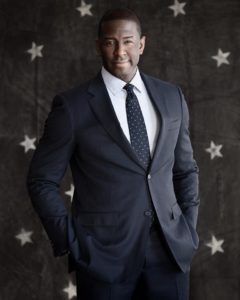
Andrew Gillum

By Camille Taylor

Andrew Gillum, former Florida Democratic gubernatorial candidate, will be the keynote speaker at Clark Atlanta University’s 2019 commencement May 19. Gillum ran a high profile campaign with celebrities and public figures.

“We need a speaker who can reach the students, not only emotionally but mentally,” said Dr. Margaret Spriggs, CAU chair of ceremonials. “This year at our commencement we want the students to know that they have a responsibility to uphold and to leave them with an example of how to lead in the future.”

Most of the time, high profile figures have calendars that needs to be adjusted at least one year in advance, and the committee at Clark was able to confirm Andrew Gillum within weeks of them reaching out.

“Our students are worth a leader who connects with their audience and Andrew Gillum provides that,” Spriggs said.

Last year, Don Lemon gave the keynote address for the class of 2018 and left the students with a message to “be aware of your environment.”

Camille Taylor is a sophomore at Clark Atlanta University

###

Be sure to buy the AABJ documentary “Black and Reporting”

Get your Emmy Award-Nominated copy of AABJ’s Documentary, “Black & Reporting: The Struggle Behind the Lens.”

Proceeds go to AABJ’s Xernona Clayton Scholarship Fund .

Anyone who wants to watch the entire documentary can buy it for $9.95 here.

###

Southern Fried Queer Pride: An Organization Making Space for Queer People in the South

By Breanna Durham

Starting initially as a PRIDE event first held in 2015, Southern Fried Queer Pride (SFQP) expanded into a full  non-profit organization dedicated to showcasing queer and trans art, advocacy, and community building in Atlanta and abroad.

According to The Williams Institute, over 260,000 adults live in Georgia, 37 percent of them are African American. SFQP is one of multiple groups in Georgia working on LGBTQ issues and bringing this community’s stories and skills into the light.

Every month, members of SFQP gather together on the third Sunday to plan events, create programming and brainstorm ideas. The group has no dues, fees or prerequisites to become an organizer to these events.

Besides their two festivals, one in June in Atlanta and one in May in the Durham, North Carolina, the organization holds monthly events. Those events range from workshops and skill-sharing to productions and discussions.  In their Southern Fried Forums (SFF), for example, they hold an open, community discussion around challenging topics like intimate partner violence and racism in the queer community. Their Cinequeer Film Series event features films directed, written and/or starring and centering queer and trans people of color.  In March, they showed “America In Transition,” a documentary about social change from the perspective of trans people of color. They also have a seasonal music and art showcase spotlighting queer and trans people of color(QTPoC) called CLUTCH.

According to their website, the organization expects to open a space to hold events events and art exhibits and to have a resource center, potentially including a coffee shop, by 2020.

Those wishing to get involved in the group or learn more about them can do a few things. You can check out their website at www.southernfriedqueerpride.com and their Facebook and Instagram pages. You can join their mailing list for SFQP updates. Or you can reach them by email at: contact@southernfriedqueerpride.com.

Breanna Durham is a free lance writer and staff writer at The McDuffie Progress

###

Member Spotlight: Cierra Johnson

Current position in AABJ?

Student member

How long have you been a member of AABJ?

Since July of 2017

Where did you attend college?

Clark Atlanta University; Class of 2019; B.A. in Mass Media Arts with a concentration in Journalism

How long have you lived in Atlanta?

Born and raised! 23 years

Current Occupation?

Programming Assistant and Producer at AIB-TV (Atlanta Interfaith Broadcasters)

What do you like most about being a member of AABJ?

I appreciate the mentorship that is provided.  There have been many networking opportunities provided by AABJ and, from my experience, I have met members who have been intentional about remaining in touch with me and guiding me on my career and personal path.  In addition to, I appreciate AABJs dedication to helping students with scholarships. Though I am no longer in college (as of recently), I will never forget when AABJ funded my trip for my first NABJ convention in 2017 and ensured I was given tips on how to have a successful experience at the convention.

What initially got you interested in the media/communications field?

As a child, I watched Monica Kaufman Pearson, a former anchor for WSB-TV, and I was inspired by how confident and well she was able to broadcast news. I knew I wanted to tell great stories and have a strong presence as an African American on camera. I also loved how visually appealing a news story could be, therefore I practiced graphic design, editing and anchoring each chance I could.

What are your favorite publications/outlets to get your news?

Essence magazine, CNN, The New York Times and the AJC

Is there anyone in media you look up to? Why?

Director and screenwriter Ava DuVernay is someone in media I look up to.  Her genius ability to highlight the real-life struggles and triumphs African-Americans face and her compassion for community inspires me to create programming that is true to people’s experience. I also look up to her because she welcomes opportunity for women directors to have a chance to direct her shows – she does not only seek creativity from her own mind.

What’s an interesting fact about you people wouldn’t have otherwise known?

I am a former volleyball player, and I still enjoy playing in my community.  I am a great defense player! (People would not expect, because I have a quiet, reserved personality)

This month’s Byline was edited by Amir Vera

THE BYLINE (4/2019)

Recap of NABJ Region III Conference

This year’s conference for Region III took place in Birmingham, Alabama, April 5-6. AABJ President Carol Gantt attended the conference, as did many AABJ members including Fox 5 anchor/reporter Kerry Charles and CNN digital trending news writer Doug Criss. Here’s a look back at the conference in historic Birmingham.

Learning to serve while being great

By Louis Deas


Eldredge Washington

“Everybody can be great because everybody can serve,” Dr. Martin Luther King Jr. once said.

But how many of us can serve while being great?

We’re all striving to be great. However, Atlanta resident Eldredge Washington, 29, has proven that in the midst of striving for personal greatness, there’s still time to give back to others through volunteerism, activism, and service.

As the founder of a non-profit Motivated Adults Developing Excellence (M.A.D.E) and co-founder of the startup tech company Spendefy, Washington has navigated multiple layers of the social sphere. Despite his accomplishments he’s as humble as he is charismatic and constantly thinks of others before he thinks about himself. A man of character and integrity, he has unwittingly positioned himself as a role model for everyone seeking to serve while being great.

A native of Monroe, Georgia, Washington has become a part of the fabric and inner-workings of Atlanta’s entrepreneurial and social good communities. Launching his youth empowerment organization, M.A.D.E, when he was only 17 years old, he sought to transform the lives of others by actively promoting cross-generational interaction and dialogue between adults and youth through mentorship.

“Just seeing the everyday impact of sitting down and talking with students, letting them know you care and that you’re available gives you that ‘wow’ feeling,” Washington said. “More important than the feeling, though, is seeing their lives change for the better.”

Full of life and bubbling with subdued energy and excitement, Washington has a magnetic draw that attracts people into his orbit and inspires them to serve in their own way on some level.

“People want to give back to their community, but many times don’t have time and don’t know how. I help them see that there’s no shortage of ways and more than enough opportunities to make an impact,” he says.

Years spent as a nonprofit leader has taught Washington that while service is good, the community is best served when good hearted people with decision making and economic power can be counted as true allies. Motivated to become such an ally and have an even greater impact for the African-American community, Washington and his co-founder, Antwon Davis, launched Spendefy — a web based application designed to promote black businesses and to dare its users to “spend different”.

“Spendefy is just an outgrowth of my passion for community and sustainable transformation,” Washington said. “When we strengthen the power of the Black dollar and support each other on the grassroots level, we can begin to see real changes from the bottom up.”


Eldredge Washington

In addition to mentoring students, leading social change in the neighborhoods and building socially minded businesses, Washington is active in his local church and engages with other civically minded groups who share his same vision for community uplift.

“It’s easier to go it alone to get all of the glory, but we have a greater chance of success and can touch more lives when we pool our resources, talents, and connections to achieve the greater good,” Washington said.

Washington’s daring to put his community first has inspired countless people — young and old alike — to envision greatness for themselves through service and entrepreneurship. His journey is just beginning, but he’s proven to be a true leader dedicated to uplifting his community through mentorship, financial empowerment, and community activism.

Louis Deas is the founder of Assured Hope

AABJ Online Fundraiser: 43 Years Campaign

AABJ’s $43 for 43 fundraising campaign is still ongoing. In its 43rd year, we are asking members to donate $43 to go towards programming, scholarships, and events throughout the year. Be sure to invite your friends, coworkers and anyone you know that supports our members in print, communications, public relations, radio, broadcast, digital and the many trailblazers in the literary world. Be sure to share our campaign on your social media by using the hashtag  #AABJ43.

You can donate here.

How to prepare for life after college

By Mariah Hill

When it comes to students’ senior year of college, there tends to be a gap between the campus environment and “the real world.” Every student fears whether he or she is prepared for the opportunities that typically won’t fall in their lap when they’re not a student anymore.

There is the also the question whether the institution the students attended prepared them for the “real world.” Some students blame themselves for not taking advantage of opportunities presented to them.

“Clark gives you a glimpse into the real world and doesn’t hold your hand … That’s how the real world is,” said Frank Jefferson, a senior at Clark Atlanta University.

Each institution sometimes held career fairs where students are able to meet professionals for potential internships that could turn into a job in the student’s interested field.

Students could also join organizations that put them in the position to network with professionals or an outside organization where students can get hands-on opportunities.

“My best advice would be to seek out the opportunities yourself, be assertive but not aggressive and follow up with those who you have connected with over the past few years in college,” Nailah Heard a Senior at Clark Atlanta University said.

Ultimately students want to feel fully prepared for life after college. Professionals say “that is when the hard work begins.”

Mariah Hill is a junior at Clark Atlanta University

Member Spotlight: Ray Metoyer, past AABJ president

Ray Metoyer

Current position in AABJ?

Technically I don’t have a current position in AABJ, but I’m a very active member. I am a past AABJ President, who served from 2005-2008. During that time, I was blessed to be the President when AABJ hosted the NABJ convention in 2005 and AABJ/Atlanta did an amazing job.

How long have you been a member of AABJ?

I’ve been a member of AABJ since 1994, right after I relocated here to be an anchor/reporter for WGNX, which is now WGCL. My membership in AABJ is connected to my membership in NABJ, where I served on the NABJ Board from 1989 to 1991. I was a chapter president in Denver and my hometown of Omaha.

Where did you attend college?

I graduated from the University of Nebraska/Lincoln where I majored in journalism.

How long have you lived in Atlanta?

I’ve lived in Atlanta since 1994 and I continue to work as a journalist.

Current Occupation?

Currently I’m the managing editor for Georgia Public Broadcasting’s “Lawmakers” program, covering the legislature when it’s in session. The rest of the year I work on freelance projects. I started my career in broadcasting in Omaha before moving to Denver, Little Rock, Houston, Dallas and Atlanta, both in front of and behind the camera.

What do you like most about being a member of AABJ?

Being a member of AABJ is important because our voices need to be heard in Atlanta. The diversity of media people here is the direct result of the push for change by NABJ/AABJ. It is our job to point out issues that need to be corrected, including how our communities are covered by mainstream media. Questions we have raised locally and nationally have made a difference in changing unfair practices, but we can never let up. Bad habits, lazy reporting and cultural arrogance in coverage have a way of coming back and we have to be there waiting.

What initially got you interested in the media/communications field?

I was always fascinated with television production and storytelling. I got my first introduction to TV while in high school. I joined a Junior Achievement company, run by a local Omaha TV station, WOWT-TV, where we produced our own programs. When I was a sophomore in college, I was hired part time by that station, working summers as a reporter/photographer, before being hired full time after I graduated. Starting as a photographer made me a better storyteller because I learned to see each story through the lens of the camera.

What are your favorite publications/outlets to get your news?

I watch and read media every day, CNN, MSNBC, local news, PBS, AJC, and the NY Times to name a few. I’m fascinated by great storytelling and how things are produced and that includes movies, documentaries and special programs.

Is there anyone in media you look up to? Why?

Former CBS 60 Minutes Correspondent Ed Bradley remains one of my biggest heroes because he was such a trailblazer in the industry and he commanded respect. I also respect ABC’s Robin Roberts because of her bravery in fighting cancer, while maintaining a high level of professionalism in her lead role on Good Morning America. She brings great JOY to her work and shares it every day.

What’s an interesting fact about you people wouldn’t have otherwise known?

Most people don’t know I’m a musician; a percussionist since high school. I’ve produced the music and soundtrack for three documentaries. In 2018 I created the music for a new TV program called “Secrets of the Caribbean,” which is currently being distributed on smaller TV networks and online. Creating music and the atmosphere for TV programs and productions is also an important part of storytelling!

This edition of the Byline was edited by Amir Vera and Shalon Bell