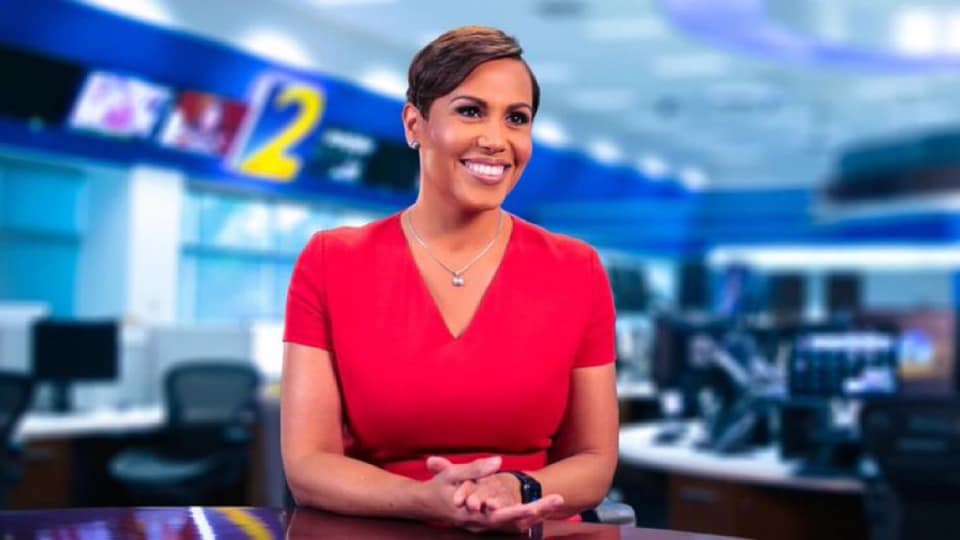
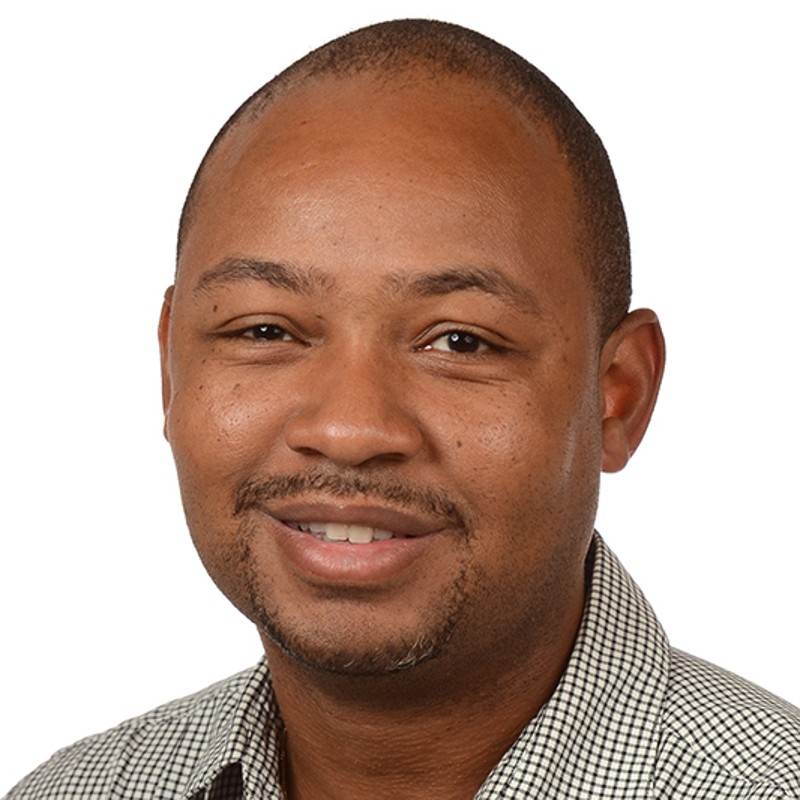
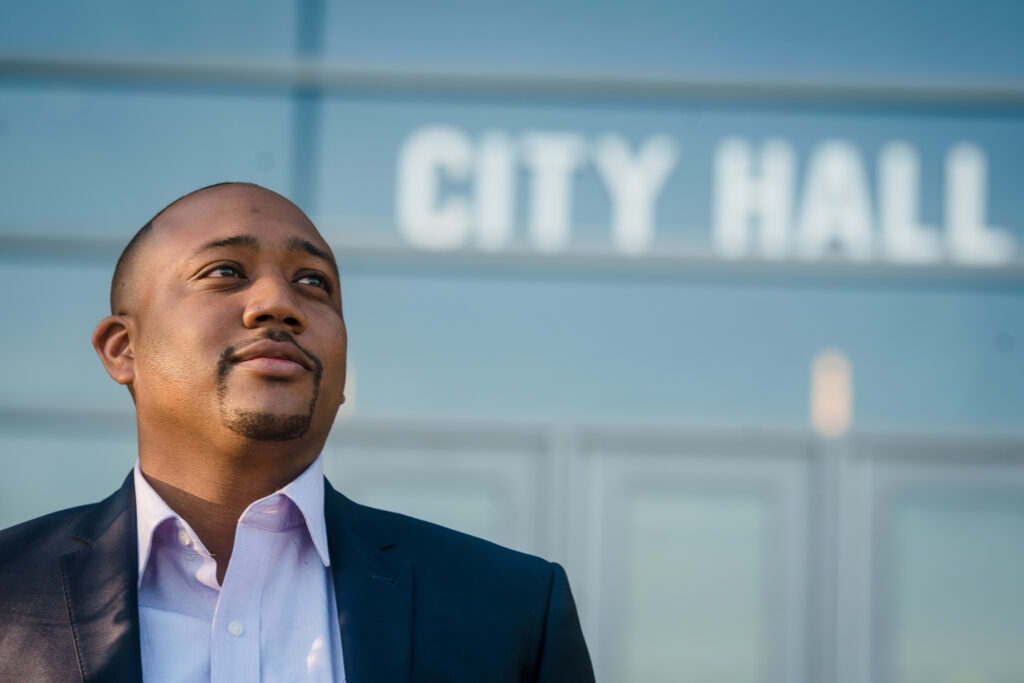
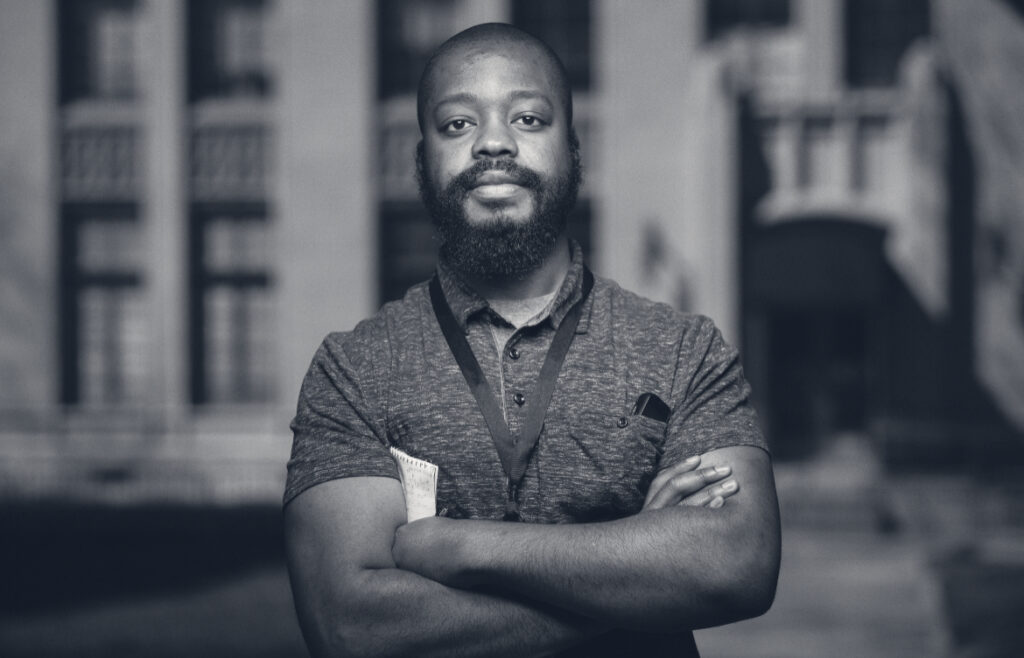
As an organization, we are mourning the loss of Jovita. She played an integral part in not only AABJ, but also as a presence in Atlanta. We understand many of our members were close with Jovita, and even if you did not know her personally, you may have felt connected to her through her work in the community. You can read more information about Jovita, her life and watch a very touching tribute video on WSB-TV’s website. AABJ has shared many memories with Jovita Moore through the story feature on our Instagram account.
AJC Higher Education Reporter Speaks on Challenges in Higher Education Learning
By Elisheva Wimberly
Eric Stirgus, AJC reporter
Eric Stirgus is the Higher Education Reporter at The Atlanta Journal-Constitution. He focuses on schools and universities throughout Georgia, primarily focusing on metro-Atlanta colleges and universities.
Two years ago, Stirgus focused on a variety of topics in higher education, including student loan debt, sexual misconduct and administration in higher learning. Today, Stirgus still covers those issues, but on a very small level. Stirgus looks at higher education from a completely different lens. About 90 percent of the issues he covers today are COVID-19 related, ranging from how colleges are managing the pandemic to the type of services they provide students. The Byline asked Stirgus if concerns of faculty are being heard regarding Atlanta colleges and universities not providing enough safety measures.
“Faculty will say no. They just finished weeks worth of rallies and demonstrations,” Stirgus said. “They want mask mandates and they’d like to have vaccine mandates but the University System of Georgia says no.”
The University System of Georgia (USG) strongly encourages faculty, students and staff to wear masks and get vaccinated, but Gov. Brian Kemp has been adamant that they don’t want to see mandates.
“The faculty are frustrated”, Stirgus said. “They feel the need to speak up and it keeps me quite busy trying to keep up with it.”
Stirgus said even through these rallies and demonstrations of protest from faculty he hasn’t heard much from students on the issue.
“In general, I feel like they’re supportive of these issues that faculty want but I don’t see them protesting,” Stirgus said. “I think that most of them want to be back on campus after over a year of not being on campus and experiencing online learning.”
The majority of students Stirgus sees on college campuses are wearing masks. However, the University of Georgia has had more positive cases than any other institution in Georgia.
When Stirgus visited UGA last week and went into the student center, he noticed half of the students present were not wearing masks. Last week, UGA had a big drop in their COVID-19 cases. Stirgus will be monitoring reports to see if the University of Georgia’s numbers show up low.
The Byline asked Stirgus if there’s a possibility of vaccine mandates becoming a requirement for all faculty, students and staff across the University System of Georgia.
“Biden has taken that step for federal workers and businesses with more than 100 employees but if he wanted to he would have done it by now,” Stirgus said. “If there is another spike, he might mandate it but we’ll see.”
Despite the feud over mask mandates, there are some positives to higher education according to Stirgus. He hears from many administrators and faculty. They share with him that remote learning has helped them become a lot more nimble in trying to find new ways to reach out to students. Stirgus says COVID-19 has given people in the education and outside world a better perspective of the challenges that it takes to be an educator.
“Before COVID I was writing on mental health,” Stirgus says, “That has become a greater challenge with COVID and they need to provide students with services that support their needs. Faculty realize those things are still very important.”
Compared to the University of Georgia, the Atlanta University Center’s (AUC’s) COVID-19 numbers have been very low, as they have been following mask mandates. Stirgus says they are different from the University System of Georgia because they require students to be vaccinated on campus. The AUC does not keep track of self-reported cases. And recently, they took the step last week to do weekly COVID testing. Along with the Atlanta UniversityCenter, Emory’s cases have also gone down.
Strigus believes the AUC is using more aggressive measures than the USG. Morehouse College and Spelman College have cancelled their Homecoming 2021 due to the lingering effects of COVID-19. Whereas universities such as UGA recently had 93,000 fans in their football stadium.
“A lot of schools are going full speed ahead,” Stirgus said. “I don’t see them adjusting.”
As for commencement ceremonies, Stirgus says the deciding factor on that decision will be the COVID-19 numbers.
“Hopefully the numbers will decline by commencement,” Stirgus says, “As long as we do what we have to do to keep the delta variant in check, I think we will see commencement ceremonies.”
Elisheva Wimberly is a student at Georgia State University.
Sandy Springs Mayoral Candidate, Dontaye Carter Discusses Career, Equality and Politics
By Da’Zhane Johnson
Dontaye Carter at City Hall in Sandy Springs, Georgia (Photo by Kevin Lowery)
Dontaye Carter is a Black man juggling a family, career, and now a campaign, proving once again that hard work and perseverance prevails. He is running for Mayor in the city of Sandy Springs against incumbent Mayor Rusty Paul, who has been in office since 2014, in hopes of providing a better future and world in which his young daughter can live.
While a sophomore in college at Florida A&M University, Carter already received his first journalism job at WCTV in Tallahassee, Florida. Inspired by his mother’s hard work ethic, Carter would wake up for work at 4 a.m. and then head to class at 9 a.m. He kept this routine for six months until the station promoted him to a producer. His success post-graduation matched his previous years too. Carter was a reporter in Tulsa, Oklahoma, then brought his talents to Atlanta.
The next couple of years, Carter continued reporting in the Georgia capital. Unfortunately, the work took a toll on his personal life, which caused him to switch careers.
“Personally, not only did I want to be a husband that was there, but a father that was there,” Carter said. “I wanted to be invested in my relationship, in my family, and I wanted to find something I was passionate about.”
The Fulton County’s District Attorney Office is where Carter found the passion he was searching for. While serving as a public affairs officer, Carter worked on cases that he felt had unjust verdicts. The case of four teens who were accused of murder specifically stuck with the mayoral candidate throughout the years. Often the cases showed signs of injustice and imbalance within the community.
Carter then decided to enhance the voices of unjust victims through his own business, Carter Media Group. The company served as a companion with attorneys to display the stories and challenges victims faced in their cases. In fact, Carter Media Group has been the public relations firm for several high-profile cases, like the case of R&B singer R. Kelly .
“I worked with Attorney Gerald Griggs, many of the survivors of that case and their families. We worked diligently because what we saw happening was everybody trying to turn that into a he-said-she-said case, but it was really a case about human sex-trafficking” Carter stated. “These plane tickets have to have these girls’ ages on them, so we put them out.”
Carter went on to speak about his work with the Jimmy Atchison case too. He recalled looking through files. Additionally, he highlighted the importance of keeping the public informed. Several agencies were even called to examine the case facts thoroughly.
Despite the backlash he’s recently received from some residents, Carter still believes politics is his best outlet for promoting change in Sandy Springs. He spoke of the significance of community, representation and trust. The three elements are key components to what has inspired him running in elections this year. The husband and father wants a city that, most importantly, gives his family a voice and protection, and obtaining the title of mayor will grant him access to create that city.
Sandy Springs is known to have a large white population and Carter has not ignored this fact. He understands that most residents of the city agree with the injustice displayed by policymakers in the past. Carter spoke in detail about his standards for people who are elected into office.
“There is nobody in office right now that I trust to take care of my daughter or anybody that looks like her. We have to put people in office that put their constituents first,” Carter stated. There was a lot of talk last year about change, but the way of those words haven’t met actions a year later. Until we get people in office whose words match their actions, we’re never going to be in an equitable society.”
While in office, Carter has explained before that he wants to focus on several issues, which include affordable housing, sustainable developments, schooling and diversity and inclusion. However, his passion for these issues does not negate from his immediate focus — managing the COVID-19 pandemic. Carter explained how he wanted to open the discussion of mandated vaccines to further the safety for all residents. The former reporter believes the conversation surrounding COVID-19 has been converted from survival to political.
“I know the mandating has been so politicized, but the reality of it is, in Fulton County, your child has to get 14 vaccinations before they start school,” Carter said. “We’re already getting vaccines, one more vaccine to ensure that people are going to survive is vitally important to me.”
The details of Carter’s campaign can be found on www.dontayeformayor.com. Election day is November 2.
Da’Zhane Johnson is a student at Clark Atlanta University.
Atlanta City Hall Reporter Speaks Politics
By Ariyana Griffin
Wilborn P. Nobles III covers City Hall for the AJC.
Wilborn P. Nobles III is a journalist with The Atlanta Journal-Constitution (AJC), where he covers Atlanta City Hall. He originally joined the AJC staff to cover DeKalb County Public Schools in November 2020. Earlier this year, he started to cover Atlanta City Hall. He previously worked for The Baltimore Sun covering the government. There he covered police shootings, housing discrimination and other things revolving around issues within Baltimore County, Maryland. Nobles also interned at The Washington Post, where he covered local news. Additionally, the Louisiana native covered education for The Times-Picayune in New Orleans.
With politics being prominent in Atlanta right now due to the upcoming mayoral election, Atlanta residents also have to vote for a new council president and an entirely new city council, and the Atlanta Public School Board.
All 15 seats for the Atlanta city council are up for election. Among those 15 seats, six of those seats will not be filled by an incumbent due to leaders running for other positions or just not running for re-election. Nobles, however, is solely focused on covering the Atlanta Mayoral election. Early voting began on Oct. 12 and ended Oct. 29. The general election will take place on Nov. 2.
Each local election is crucial and dictates the future of a community, including where tax dollars go.
“Super voters are people who vote in every election. No matter if it has something to do with the president or raising taxes or legalizing some new aspect or service to the city,” Nobles said. There is also a large group of people who are “apathetic” because they feel like the elections do not care about them or their community, an issue Nobles found prominent in Atlanta. Some people also do not believe that the vote counts or is essential, making them sceptical to go out and vote. Nobles explained that it is crucial to learn and research people who are running for office or who are interested in running for office so people can be informed and then participate.
“Black voters are concerned about affordable housing, career opportunities, and public safety. The latter issue includes both crime and police reform,” Nobles explained.
Nobles said he always wanted to cover politics and government to help hold politicians and leaders accountable. His advice to reporters or anyone when covering politics is simple.
“As a new reporter on the beat, they want to give you their best impression, but it is important for you to do your homework, ” he said. “Talk to people and read what’s been written about them, any sort of homework you can do ahead of time.”
He said that as a journalist, your first obligation is accountability and transparency.
For more information, you can follow Wilborn Nobles or read his articles about the Atlanta mayoral race at www.ajc.com.
Ariyana Griffin is a student at Clark Atlanta University.
K-12 Reporter Gives Insight on how COVID-19 Affected Metro Atlanta Schools
By Ariyana Griffin
Kristal Dixon is the K-12 reporter for Axios Atlanta Local News
Kristal Dixon was an education reporter covering Cobb County for the Atlanta Journal-Constitution (AJC). She now serves as the K-12 reporter for Axios Atlanta local news, a publication that will be launching in October. She has also covered some public safety issues in Cobb County. Due to unprecedented times, there has been plenty to cover when it comes to the school systems, and here is what she has to say about that.
How did you get into education reporting and journalism?
I have always wanted to be a journalist since my teenage years, so I started focusing on that. I worked at the school newspaper at the University of West Georgia and I just continued my career that way. I started covering K-12 education in my first full time reporting job at the Cherokee Tribune in August 2007. I covered K-12 education for about three or four years. I took a bit of a break from it because I started covering the County Government Beat, and later started working for Patch.com. I kept following K-12 education for the last several years, but when I was hired at the AJC in February 2019, I kept that up. I narrowed my coverage down to Cobb County. In February of 2021, while I was at the AJC, I was promoted to the education team to cover Cobb and DeKalb County schools.
What are some key issues that you have noticed K-12 students face?
Right now, obviously the COVID-19 Pandemic is a brewing issue that schools have been contending with for the last 18 months. Also the COVID-19 pandemic actually brought to light a lot of inequities that school districts saw when it comes to K-12 education. A lot of districts realized that other students did not have the technology that they needed at home to do their virtual lessons. So a lot of districts began to fundraise and partner with community organizations to get laptops and hotspots donated for their students. Because of this, a lot of districts are contending with what they call a “learning loss.” They are actually checking in with students to see how much they’ve been able to retain, how much they may have gained, or how much they may have lost during the pandemic. Those are the two main issues that are happening right now.
Tell me a little more about the upcoming publication, Axios.
We haven’t launched yet, I am in training right now. We are going to launch a new Atlanta site. Axios has an initiative that they want to open websites that cover news featuring various topics in different communities around the country. Atlanta is one of several sites that they plan to open in 2021. My job will entitle writing stories that will go in a daily newsletter. We launch on October 4, 2021. We will be covering news around Atlanta. I would be interested in continuing to watch K-12 education at Axios.
Have you branched out and covered any stories on higher education?
Kennesaw State, located in Cobb County, was having a housing shortage for its students. They decided to break ground on some apartments that would house students who attend Kennesaw State.
What were some of your biggest stories you have covered regarding public safety?
One story I covered last year was police departments using license plate readers to help them solve crimes. They put them up in certain intersections or neighborhoods that they believe are “problem areas.” Anytime a vehicle has been flagged as being connected to a crime, whenever that vehicle passes through the license plate reader, the police department knows that this vehicle is connected to a crime possibly in that area. This is not really public safety related, but it is along the lines of law enforcement agencies.
I did cover some jail deaths at the Cobb County Adult Detention Center. Since December of 2018, there have been nine in custody jail deaths at Cobb County Adult Detention Center. It became a flashpoint in the 2020 elections of the Cobb County Sheriff, which the long time incumbent Neil Warren lost to incumbent Sheriff Creg Owens. This also led a lot of people who had family members that were detained at the jail and the ACLU of Georgia to reach out and bring attention to the conditions of the jail. There were also some issues with a lot of vacancies at the Sheriff’s Office, which some people say contributed to the lack of adequate staffing at the detention center.
For more information about Kristal Dixon, you can follow her at @KristalDixon.
Ariyana Griffin is a student at Clark Atlanta University.
This issue of The Byline was edited by Tianna Faulkner and Amir Vera.
As the United States grapples with the repercussions of the coronavirus, it’s also important for journalists covering these stories to take care of themselves. Using this epidemic positively by concentrating on self-care can help reduce the risk of stress and depression. Clinical psychologist and Agnes Scott College professor Dr. Janelle S. Piefer spoke with The Byline about how to take a mental break amid the coronavirus pandemic. Here are some of her tips:
Janelle Piefer.
1. Go easy on yourself
Be gentle with yourself. You can do well one day and then struggle the next day being under quarantine. Piefer says it’s important not to be the “ideal coper,” a standard perpetuated in the media to go above and beyond in times of crisis that are often very difficult to control. “Be the best version of yourself and not the perfectionist standard,” she said. “It’s not going to be one single right way for everyone. When people set unobtainable goals they are least likely to finish them,” Piefer said. It’s important to identify achievable steps that can help you and avoid those set by society.
2. Carve out time for things that make you happy
Meditation, social interactions over the phone, google hangout or watching a Netflix show, will help keep you mentally balanced. “Having a release along the way will result in an emotional marathon release,” Piefer said. “People tend to be recharged when they connect with things important to them.” It may be meditative to go on a bike ride, dance, paint or give back to others. Find moments where you feel centered, clear and present in the moment.
3. Taking social media breaks
If you’re on it too much, social media can get overwhelming. Carve out time to get news updates to obtain information where you’re getting more knowledge and you’re well informed. Journalists need boundaries centered around self-care in terms of secondary exposures. “There needs to be a place where you separate work identity and social life otherwise it will become overly immersive,” Piefer said. “Be more intentional where you take off your journalist hat and put on your self-care hat.”
4. Get some fresh air
Sitting on your balcony, bike riding, walking or even going out on your front yard will clear your head. Georgia’s shelter-in-place orders allow residents to go out for grocery store runs and to get some exercises, so use the outside air to your advantage. Piefer urged everyone to read the order and figure out what they’re comfortable doing within the confines of it. “Some people will say they’re comfortable going in their backyard and not going past there,” Piefer said.
5. Use counseling and teletherapy
Covering the coronavirus can weigh on any journalist and it may be difficult to get therapy in person. Piefer recommended teletherapy, which allows you to have access to mental health services online. Mental health service sites Therapy for black Girls specializes in support for black women. Magazine site Psychology Today has a searchable database for teletherapy in your area.
Piefer also has a teletherapy referral guide which provides information about where to find teletherapy and wellness consultations. She also recommends reaching out to insurance companies; many are waiving copays and deductibles. “I think it can be really helpful, especially with all the insurance companies’ resources. It’s pretty unprecedented times that they are offering these resources,” Piefer said.
People of color are going to be impacted, especially financially, as they were during the recession and the great depression, Piefer said, adding black women tend to suffer financially the most. “We know after the immediate physical crisis ends we will be dealing with the mental health crisis for quite some time,” she said.
Elisheva Wimberly is a rising senior at Georgia State University.
Five Tips for Covering the Coronavirus
By Alexis Grace
The novel coronavirus, also known as COVID-19, has done more damage than most expected. The respiratory illness that spreads through contact has not only led to statewide shelter-in-place orders but has heavily impacted America’s workforce. While many are out of jobs, the coronavirus’s media coverage has been increasing every day causing media professionals to work a little harder than usual.
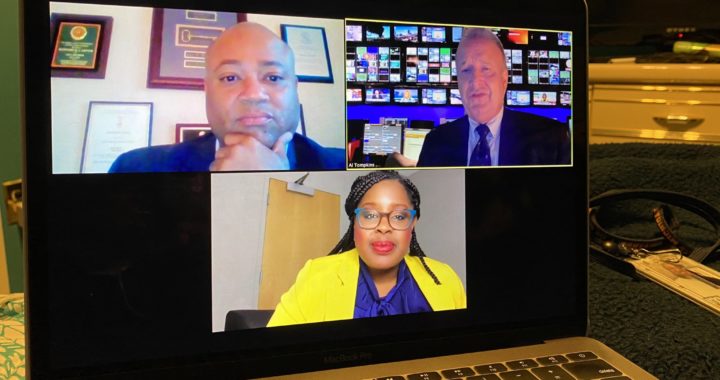
In response to the coronavirus pandemic, the National Association of Black Journalists (NABJ) recently held a webinar to discuss the tools, attitudes, and care every journalist should strive for today during a trying time. While it is important to get the story, taking care of yourself is equally as important. Here are some tips veteran journalists NABJ Region III Director Rod Carter (top left), Poynter staff writer and trainer (top right) and NABJ Region II Director Sia Nyorker gave during the webinar:
NABJ Region III Director Rod Carter (top left), Poynter staff writer and trainer (top right) and NABJ Region II Director Sia Nyorker speak on webinar about covering the coronavirus.
“Credibility is going to be critical in the days ahead,” he said. “If I do not believe you, then it won’t matter what urgent news you have.”
Tompkins said journalists should gain viewers’ trust by being honest and asking questions viewers want answers to. “You have to be really thoughtful about what you’re telling people,” he said.
“The best answers are from when we are not in interview mode anymore,” she said, speaking on her experiences interviewing everyday citizens. Nyorker said there were better conversations and answers to her questions post-interview.
3. Get Subjective Answers
During your interviews, it is important to gain clarity for your audience by asking questions that evoke emotion. Tompkins suggested journalists ask questions that are short and easy to understand.
“Subjective questions give you much better answers,” he said. When discussing how to speak with health officials, Tompkins recommended asking questions that are brief but yield accurate answers. “The longer the question, the crappier the answer,” he said.
4. Remain steadfast
With endless updates on the coronavirus, it may be difficult to know what the next story should be. Tompkins suggested journalists focus on the current issue surrounding the virus and make that the story.
He encouraged journalists to remain positive during an unoptimistic time. “It’s not true that you are the problem. The truth is you’re telling them stuff they do not want to hear,” Tompkins said.
NABJ Region III director Rod Carter believes there are positive stories out there to give people hope. “We’re really on the front line of keeping the public informed and what we do is important,” he said.
5. Take Time to Unwind
As with any exhaustive news cycle, journalists need to take a mental break. This is especially the case for those cooped up in their homes covering the virus.
“You’ve got to unplug. Do not make the last thing you do be consuming more news,” Tompkins said. “You’ve got to stop it. Do what we do with children — read a story. You have to start taking better care of yourself. This is going to be a marathon.”
Nyorker reminded media professionals they are not alone. “You can call (us)if you need to cry or bounce ideas,” she said. “Just remember we’re all in this together. None of this has been done before.”
Alexis Grace is a senior at Clark Atlanta University. She is also president of the school’s NABJ-CAU chapter.
FEATURE STORY: Atlanta journalists face disrupted newsrooms amid global COVID-19 pandemic
By: Darriea Clark
Adhering to the Centers of Disease Control and Prevention’s recommendation to social distance during the coronavirus outbreak, Atlanta newsrooms have had to adapt and find ways to continue to provide pertinent information to its audiences. They have faced changing schedules, increased meetings, parenting while working, and the decision to report from home or on the field.
“We don’t want reporters to take unnecessary risks,” The Atlanta-Journal-Constitution’s deputy managing editor Leroy Chapman said. “While there’s not a prohibition, we are pretty selective about assignments.”
Leroy Chapman. (Chris Hunt/AJC Special)
Chapman said the coverage of the Masters in Augusta is a cultural Georgia story that the AJC needed to report from the field. Other stories he mentioned cover how Georgia residents are dealing with or not following social distancing recommendations and how some are coming together to support their community through food drives, fundraisers, and personal protective equipment (PPE) creation.
Not all reporters have the ability to remain in the confines of their homes. Photographers bring stories and scenes to the audience, which is difficult to do while practicing social distancing. “I can’t work from home, because I can’t take pictures of my yard,” AJC photojournalist Alyssa Pointer said. “That’s not news.”
Pointer came in contact with a person who tested positive for COVID-19 while on assignment at the Georgia Legislature. After quarantining for two weeks, she made it a priority to obtain PPE equipment. She admitted to having concerns about her perception as a journalist and duty to remain neutral in reporting situations.
Alyssa Pointer (Photo by Kevin D. Liles/Getty Images)
“Wearing a mask is advocating for myself and telling myself I matter,” Pointer said. “Regardless of how everyone else in the media feels, I am going to protect my immune system and my body. It is also to make other people feel safe to at least have a conversation with me. (The subject) can feel like I’m trying to take the necessary precautions for all of us.”
While there has technically always been a capability to work remotely, WSB-TV anchor and reporter Lori Wilson said that social distancing is foreign for journalists. Prior to COVID-19, reporters worked directly with photographers, rode in cars with them, and were able to go straight to the source with their crew close in hand. “You were rushing toward the scene of anything terrible that was happening,” Wilson said. “Now, it’s really challenging.” There is less opportunity to track and hunt down leads.
Fortunately, technology provides avenues to connect and interview subjects digitally. Yet what’s missing is the ability for journalists to steer conversations and capture emotional responses that you can only get in person. Mannerisms and descriptors are lost. “Now it’s a little more cold and impersonal,” Wilson said.
Wilson reports from home and anchors from the WSB-TV studio. “We’re fortunate that we’ve got multiple studios and performance areas,” she said. “Even as we anchor, we’re on a separate set. Our makeup artists are wearing gloves and masks. It’s just one person with them in the room at a time whereas before we may have had three artists and three people getting their face done.”
Using an app provided by the station and a ring light, Wilson shoots her own live shots from her basement.
“I used to be able to sit back and relax while my photographer was setting up and worrying about the technical end,” Wilson said. “The live shots are scary but great. It’s a feeling of accomplishment when you get it done. I’m thinking about things I haven’t had to before a lot more.”
While interviewing subjects from home, Wilson developed a “third role” as a subject coach. She tries to ensure subjects are not moving while on-air and are well lit. Despite any amount of preparation, technology is a more unpredictable factor that provides difficulty. “It can be a challenge when someone else may not have a strong signal,” she said. She said Zoom is the best platform for interviews because it allows you to record directly on the device. This means you’re guaranteed a certain sound and picture quality. FaceTime is a little more tricky, but it’s the most common, she said.
Lori Wilson, CREDIT: WSB
“The standards of quality have changed a little bit, but we still want to put good stuff on the air and make it as clean as possible,” Wilson said.
With constant updates and misinformation on the coronavirus, consumers are turning to local newsrooms more than ever. “Our audience has gotten much bigger,” Chapman said. “They’re hungry for information. It is our job to make sure we’re focused on solutions.” To battle social media posts and chain messages that spread terror and disinformation, the AJC has decided to run explanatory journalism pieces that correct rumors regarding COVID-19. “In terms of us being able to vet for information, we have multiple sources to corroborate what we’re talking about. We’re fortunate to have beat reporters that have built great relationships with sources,” Chapman said.
“This is a big moment for local news,” Chapman said. “This is a time for us to demonstrate our value. If there’s a silver lining, maybe it’s that we’re able to help our community.”
As for the future of the journalism industry, Lori Wilson is saddened but hopeful. “I think for better or worse, this business will be different,” she said. “Life will be different. News, as we’ve traditionally done it, is probably going to stay the same but I think [it] will get slimmer. Across the board, I think we’ll start doing more with less. For journalists and people who want to tell stories, the opportunities are endless, and I think more and more people are realizing that now.”
Darriea Clark is a recent graduate of Syracuse University and Atlanta-based reporter.
This issue of The Byline was edited by Raisa Habersham and Tianna Faulkner.
The narrative of Black men in the media needs to change, in more ways than one. There are plenty of Black faces in front of the camera. Now is the time to have the discussion about the faces behind the camera. Who are the people making decisions about which stories are being told and how? AABJ will tackle this subject on June 1, 2019. This year’s focus for the Black Male Media Project is “Becoming a Gatekeeper.” We’ve invited six panelists in different decision-making roles to share how they landed their job, the impact it has caused, and how can we get more Black men involved in decision-making roles. This project was designed to help change the narrative around the lives and images of Black men in the news and in society, with a series of workshops nationwide to be held on Saturday, June 1, 2019. Participating NABJ chapters will promote the project – which is open to anyone who is passionate about this movement – using the hashtag #InspireBlackMen
After all, who’s best to tell the stories of Black men? Other Black men. Here’s a look at some of the guest speakers for this year’s event:
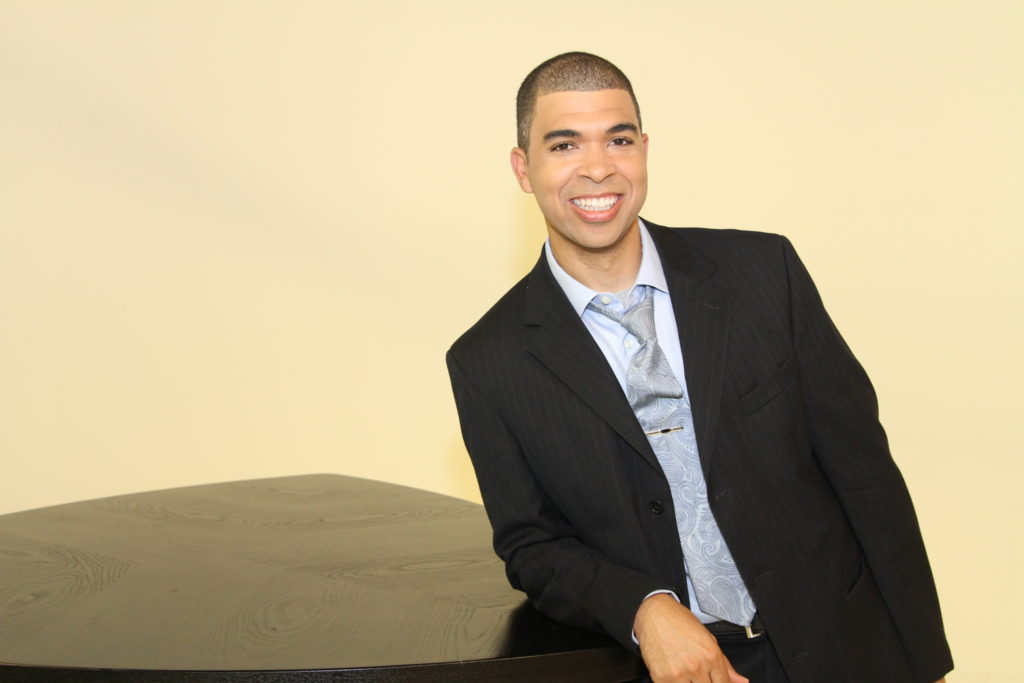
Tolly Carr Managing partner for HBCU Gameday Eric Ludgood Assistant News Director for Fox 5Collie Burnett President and CEO of AIB Network
Glenn Marshall Producer for Will Packer’s “PowerStarLive”
Drew Dawson Station Manager for Georgia Public Broadcasting
Not pictured Eric Burns, vice president of content production and sports at Georgia Public Broadcasting.
AABJ’s $43 for 43 fundraising campaign is still ongoing. In its 43rd year, we are asking members to donate $43 to go towards programming, scholarships, and events throughout the year. Be sure to invite your friends, coworkers and anyone you know that supports our members in print, communications, public relations, radio, broadcast, digital and the many trailblazers in the literary world. Be sure to share our campaign on your social media by using the hashtag #AABJ43.
Andrew Gillum, former Florida gubernatorial candidate, to be keynote speaker at CAU commencement
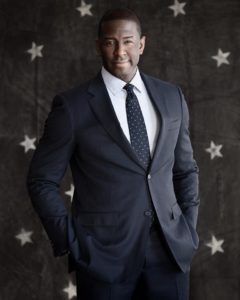
Andrew Gillum
By Camille Taylor
Andrew Gillum, former Florida Democratic gubernatorial candidate, will be the keynote speaker at Clark Atlanta University’s 2019 commencement May 19. Gillum ran a high profile campaign with celebrities and public figures.
“We need a speaker who can reach the students, not only emotionally but mentally,” said Dr. Margaret Spriggs, CAU chair of ceremonials. “This year at our commencement we want the students to know that they have a responsibility to uphold and to leave them with an example of how to lead in the future.”
Most of the time, high profile figures have calendars that needs to be adjusted at least one year in advance, and the committee at Clark was able to confirm Andrew Gillum within weeks of them reaching out.
“Our students are worth a leader who connects with their audience and Andrew Gillum provides that,” Spriggs said.
Last year, Don Lemon gave the keynote address for the class of 2018 and left the students with a message to “be aware of your environment.”
Camille Taylor is a sophomore at Clark Atlanta University
###
Be sure to buy the AABJ documentary “Black and Reporting”
Get your Emmy Award-Nominated copy of AABJ’s Documentary, “Black & Reporting: The Struggle Behind the Lens.”
Proceeds go to AABJ’s Xernona Clayton Scholarship Fund .
Anyone who wants to watch the entire documentary can buy it for $9.95 here.
###
Southern Fried Queer Pride: An Organization Making Space for Queer People in the South
By Breanna Durham
Starting initially as a PRIDE event first held in 2015, Southern Fried Queer Pride (SFQP) expanded into a full non-profit organization dedicated to showcasing queer and trans art, advocacy, and community building in Atlanta and abroad.
According to The Williams Institute, over 260,000 adults live in Georgia, 37 percent of them are African American. SFQP is one of multiple groups in Georgia working on LGBTQ issues and bringing this community’s stories and skills into the light.
Every month, members of SFQP gather together on the third Sunday to plan events, create programming and brainstorm ideas. The group has no dues, fees or prerequisites to become an organizer to these events.
Besides their two festivals, one in June in Atlanta and one in May in the Durham, North Carolina, the organization holds monthly events. Those events range from workshops and skill-sharing to productions and discussions. In their Southern Fried Forums (SFF), for example, they hold an open, community discussion around challenging topics like intimate partner violence and racism in the queer community. Their Cinequeer Film Series event features films directed, written and/or starring and centering queer and trans people of color. In March, they showed “America In Transition,” a documentary about social change from the perspective of trans people of color. They also have a seasonal music and art showcase spotlighting queer and trans people of color(QTPoC) called CLUTCH.
According to their website, the organization expects to open a space to hold events events and art exhibits and to have a resource center, potentially including a coffee shop, by 2020.
Breanna Durham is a free lance writer and staff writer at The McDuffie Progress
###
Member Spotlight: Cierra Johnson
Current position in AABJ?
Student member
How long have you been a member of AABJ?
Since July of 2017
Where did you attend college?
Clark Atlanta University; Class of 2019; B.A. in Mass Media Arts with a concentration in Journalism
How long have you lived in Atlanta?
Born and raised! 23 years
Current Occupation?
Programming Assistant and Producer at AIB-TV (Atlanta Interfaith Broadcasters)
What do you like most about being a member of AABJ?
I appreciate the mentorship that is provided. There have been many networking opportunities provided by AABJ and, from my experience, I have met members who have been intentional about remaining in touch with me and guiding me on my career and personal path. In addition to, I appreciate AABJs dedication to helping students with scholarships. Though I am no longer in college (as of recently), I will never forget when AABJ funded my trip for my first NABJ convention in 2017 and ensured I was given tips on how to have a successful experience at the convention.
What initially got you interested in the media/communications field?
As a child, I watched Monica Kaufman Pearson, a former anchor for WSB-TV, and I was inspired by how confident and well she was able to broadcast news. I knew I wanted to tell great stories and have a strong presence as an African American on camera. I also loved how visually appealing a news story could be, therefore I practiced graphic design, editing and anchoring each chance I could.
What are your favorite publications/outlets to get your news?
Director and screenwriter Ava DuVernay is someone in media I look up to. Her genius ability to highlight the real-life struggles and triumphs African-Americans face and her compassion for community inspires me to create programming that is true to people’s experience. I also look up to her because she welcomes opportunity for women directors to have a chance to direct her shows – she does not only seek creativity from her own mind.
What’s an interesting fact about you people wouldn’t have otherwise known?
I am a former volleyball player, and I still enjoy playing in my community. I am a great defense player! (People would not expect, because I have a quiet, reserved personality)
AABJ is kicking off our $43 for 43 fundraising campaign. In its 43rd year, we are asking members to donate $43 to go towards programming, scholarships, and events throughout the year. Be sure to invite your friends, coworkers and anyone you know that supports our members in print, communications, public relations, radio, broadcast, digital and the many trailblazers in the literary world. Be sure to share our campaign on your social media by using the hashtag #AABJ43.
AABJ honors Black media trailblazers at film screening
By Amir Vera
Some of the first reporters and anchors in Atlanta pose for a photo on February 9, 2019.
Until late 2018, there hasn’t been an organized record of the first black journalists in Atlanta.
There was no record of the challenges they faced unless it was by word of mouth.
The Atlanta Association of Black Journalists changed all that. In the span of two years, a lot of volunteer hours and countless interviews, members of AABJ organized all of that history to create a film dedicated to these stories.
“Black & Reporting: The Struggle Behind the Lens” is a firsthand account that charts the paths of 10 Atlanta broadcast pioneers. The organization held a screening in December during its annual scholarship reception and then again on February 9.
The February event featured eight of the 10 pioneers for a post-screening discussion on their experiences, the current state of journalism, it’s future and tips for young journalists.
“It took AABJ to tell the stories of the first black journalists,” said Collie Burnett, a former reporter at WSB Radio and one of the panelists, adding that major and local networks are just covering rappers, athletes and business leaders.
“Only when you control the means of distribution do have the capacity to tell the stories that need to be told and make a difference.”
AABJ Vice President of Print Amir Vera interviews Lorenzo “Lo” Jelks, the first black reporter in Atlanta, after a screening of “Black & Reporting: The Struggle Behind the Lens” on February 9, 2019.
Lorenzo “Lo” Jelks, the first black reporter in Atlanta, came to WSB in the late 1960s. He said he enjoyed the documentary screening and couldn’t wait to see the finished product. He also said he hopes viewers really understand not only the experiences of the trailblazers, but also “the pride associated with African Americans in the media.”
Jocelyn Dorsey, another trailblazer and former anchor/reporter at WSB-TV, spoke to that pride saying her fellow reporters helped her learn about the city. She even described some of the other trailblazers as brothers and sisters.
“There was a community movement, a civil rights movement that got us on the air,” Dorsey said. “We knew if we screwed up, it’d be difficult for another black person to take our place.”
Kerry Charles, a reporter and anchor at WAGA Fox 5, said watching the “more than 300 years of experience in the panel” was inspiring.
“They opened the door for me to have a voice in my newsroom and in the community.”
Cierra Johnson, a senior at Clark Atlanta University, was almost brought to tears during the panel.
“I tried not to cry because I really appreciate journalists that came before me,” she said. “Just watching them take the time to give their wisdom so I can excel, it made me feel no matter what I face in this industry I can get through it because they’re still here.”
Anyone who wants to watch the entire documentary can buy it for $9.95 here.
Amir Vera is AABJ’s vice president of print.
Editor’s Note: The Atlanta Association of Black Journalists would like to pass their condolences to the family of Civil Rights leader Lonnie King Jr., who died Tuesday at the age of 82.
###
AABJ member reflects on volunteering for Super Bowl LIII
By Almiya White
AABJ member Karvis Jones volunteered during Super Bowl LIII.
With a passion for service, FOX Sports South’s very own production assistant Karvis Jones found time to give back to the city that once welcomed him with open arms.
When Jones found out Super Bowl LIII was coming to Atlanta, he didn’t hesitate to sign up as a volunteer and demonstrate his southern hospitality.
“I think the biggest incentive of being a volunteer is to help raise Atlanta’s
profile as a city that continues to show the world that it can host some of the world’s biggest sporting events, as well as show the nation how diversity continues to make Atlanta a special place,” Jones said.
According WXIA-TV, more than 30,000 people applied and interviewed to be volunteers with the Atlanta Super Bowl host committee and only 10,000 were chosen.
“I found out that I was selected as a volunteer via e-mail. I was really excited when I got the news that I got selected because with the record number of applicants who applied to be volunteers, I knew I had a one-third shot of making the cut.,” Jones said, adding that the first person he told was his wife, Carrisa Jones.
“Volunteers spent two hours in training leading up to the Super Bowl where they learned the area around the Super Bowl campus, how to greet fans and how to report suspicious activities. The Super Bowl host committee spoke heavily on the topic of sex trafficking being that Atlanta is a hub for sex trafficking nationwide,” Jones said.
Jones was selected to serve on the street team where he said he welcomed visitors and gave directions to all of the must-see places in Atlanta. Jones said he worked three days out of the 10 days surrounding the Super Bowl.
“The culture of the Street Team was very friendly. The Street Team gave fans materials on how to get to the NFL Experience at the Georgia World Congress
Center, as well as Super Bowl LIVE at Centennial Olympic Park. The Street Team also helped fans find hotels, restaurants, the closest MARTA rail station and places around downtown Atlanta such as the King Center, the Sky View, the World of Coke and the National Center for Civil & Human Rights.” Jones said.
Volunteering for the Super Bowl didn’t guarantee tickets inside the game. However, volunteers were able to experience any and everything else by being in the heart of the action with events like Super Bowl Live and anywhere the game left its footprint. It was all to assist the 250,000 guests, WXIA-TV reported, who came to the city without even having an actual ticket to the game.
Not only were volunteers able to give back to the community, but they were able to do it in style. According to The Atlanta Journal-Constitution, the Super Bowl Host Committee provided 10,000 volunteers with uniforms from The Icebox, an Atlanta apparel and merchandise agency. Jones said the uniforms consisted of six cool swag components that included a jacket, a beanie cap/baseball cap, gloves, a polo shirt, scarf and a book bag.
According to The AJC, more than 500,000 people came to Atlanta, including 150,000 out-of-state visitors to experience Super Bowl LIII and the numerous events.
With two Super Bowls already in Atlanta, Jones said “we’re the city to show the world what we have to offer. We made history hosting Super Bowl LIII in Atlanta.”
Not only that, but Jones said volunteering for the Super Bowl was his way of giving back to the community that welcomed him with open arms when he moved to the city in 2006.
“I love serving people around the community and I believe when you serve others, it makes the world a better place to live as global citizens,” Jones said.
Almiya White is a junior at Clark Atlanta University.
###
Women’s History Month: Inventions by Black Women
By Ashlea Brown
Women’s History Month takes place every March. According to the United Nations’ website, the first National Woman’s Day was February 28, 1909, in the United States. From there it grew internationally in 1910 during a meeting in Copenhagen, Denmark, for a conference with over 100 women in attendance who decided there should be a Women’s Day to honor the movement for women’s rights and support for women’s suffrage, the UN website states. In 1913, the International Women’s Day website states it was established that March 8 would remain the global date for International Women’s Day. In 1981, Congress passed a resolution that authorized Women’s History Week that began on March 7. However, after much petitioning by the National Women’s History Project in 1987 the Women’s Week turned into Women’s History Month that is celebrated in March, according to the federal Women’s History Month website.
Women have made major contributions throughout history by being actresses, writers, activists and inventors. Every day, people encounter inventions made by black women that they may overlook.
Here is a list of women who have invented items you may have not known.
Patricia Bath
Patricia Bath was the first African American to complete residency in ophthalmology in 1973 according to biography.com. She invented the Laserphaco Probe for cataract treatment in 1986. This device is used to remove the cataracts, or cloudy blemishes formed over the lens of a person’s eye. She was able to restore the vision of several people who were unable to see prior to her invention.
The blue print of the closed-circuit television system that was used for home monitoring.
When people think about their modern home security, people can thank Marie Van Brittan Brown. She invented an early closed-circuit television system that was used for home monitoring and filed for patent for the invention in 1966 according to the history website America Comes Alive. Brown was influenced to create this security system, the website states, because of concern for crime and slow response from police. She was also influenced to create this security system so that she could identify those surrounding her home, America Comes Alive states.
Annie Malone
Annie Malone was a chemist and entrepreneur who became one of the country’s wealthiest African-American women in the early 1900s, according to the State Historical Society of Missouri. Malone developed a hair product that straightened black women’s hair with damaging it, the historical society states on their website. Malone moved her business to St. Louis in 1902 where she began selling a safe hair care for people of color. She went on to open the cosmetology school and training center known as Poro College in St. Louis in 1918, according to the historical society. Despite Malone’s success, the historical society says she is often overshadowed by a former employee, Madam C.J. Walker.
Mary Kenner
Mary Kenner invented the sanitary napkin with moisture-proof napkin pocket according to the Black History website Black Then. Her invention was a safer and much cleaner way for women to handle their menstrual cycles. However, her invention was not used until 1956, which was thirty years after she invented it. The company first interested turned her invention down once realizing she was black. She also invented the bathroom tissue holder and back washer, according to Black Then.
Sarah Boone earned patent rights to her improvements of the ironing board in 1892 according to the reference website ThoughtCo. Her new and improved invention led to better quality of shirt sleeves and women’s garments. Her new board, according to ThoughtCo, was narrow and curved which was a nice size to fit sleeve and women’s clothing. She stated in her patent application that the purpose of her invention was to “produce a cheap, simple, convenient and highly effective device, particularly adapted to be used in ironing the sleeves and bodies of ladies’ garments” according to biography.com.
Ashlea Brown is a senior at Spelman College.
A previous edition of this article had the incorrect picture of Marie Van Brittan Brown. That photo has since been replaced.
###
AABJ Member Spotlight: Kamaria Jackson
AABJ member Kamaria Jackson
How long have you been a member of AABJ?
I have been a member of AABJ for 2 years now.
Where did you attend college?
I attended Clark Atlanta University (CAU) for undergrad in which I obtained a degree in Mass Media Arts, concentrating in Television Production. I also obtained my Masters Degree in New Media Journalism from Full Sail University.
How long have you lived in Atlanta?
I’m a homegrown Georgia Peach, and have lived in Atlanta my entire life!
What is your current occupation?
I’m currently a video playback operator and trainer at the Mercedes Benz Stadium here in the heart of downtown Atlanta. I import and organize videos and clips for playback during live events such as Atlanta Falcons, as well as Atlanta United games. I’m also an educator in the Dekalb County School District.
What do you like most about being a member of AABJ?
AABJ is a great organization that connects media professionals, new and seasoned. I particularly love the fact that college students are encouraged to join as well, giving them early exposure to the industry by offering programs, conventions, and workshops that provide the necessary skills essential to being successful in the media field. AABJ has allowed me to reconnect with some of my fellow CAU alumni and build professional relationships through organized fellowship and networking.
What initially got you interested in the media/communications field?
For the majority of my childhood I had the goal of becoming a pediatrician. It wasn’t until I reached my junior year at Stephenson High School, that I actively became a member of the Production Department (JAG 8 News). There, I first learned how to operate a camera and edit via Casablanca. My teacher pulled me aside and noted that I had a great speaking voice, and should encourage me to audition for the JAG 8 news anchor position (which were the anchors who hosted school morning announcements and other school productions.) I auditioned and received the role. Upon further research on perfecting my TV presence, I was inspired by Atlanta native and popular local news anchor, Monica Kauffman, who had attained notable accolades as a journalist. From then on, I just knew that the media production industry was for me. Nothing beats having fun while loving what you do professionally!
What are your favorite publications/outlets to get your news?
Because I think it’s very paramount to know what’s going on in my community, local news is very important to me. I support all of the local stations in Atlanta, but in particular WSB-TV and well as FOX 5; in which I was afforded the opportunity to “job shadow” popular news anchor Lisa Rayam my junior year in high school.
Is there anyone in media you look up to? Why?
With the mass media field being a male-dominated industry, I’m inspired by all of the women who have paved the way for me to not only be a successful woman, but successful black woman in this fast paced industry. On many of my production-related social media posts, I love to represent by using the hashtags #BLACKWOMENINPRODUCTION, #BLACKGIRLMAGIC and #PRODUCTIONCHICKSROCK, giving distinct notoriety to the women who “blaze” the industry daily with fierceness, style, and grace.
What’s an interesting fact about you people wouldn’t have otherwise known?
Most people don’t know that I possess many talents. I play two instruments (clarinet and bass clarinet), I am a dance instructor and baton twirler, specializing in fire baton twirling. I’m also a freelance sketch artist. Most importantly, I am a mother to the best 10 year-old son I could have ever prayed for! He is the reason why I strive so hard for success everyday. Mommy loves you Kamden!