Your cart

THE BYLINE 05/2021

AJC managing editor Leroy Chapman shares how the newsroom handles burnout, remote work  

By: Jamila Wood 

The pandemic affected every aspect of our lives, and journalists have been handed a bigger responsibility. From police brutality to two historic elections in Georgia, journalists have had to cover it all while trying to maintain their mental health, which isn’t an easy task and can lead to burnout especially while doing your job in a remote work environment. 

While trying to meet the deadline of breaking news, personal problems came to the forefront for journalists as newsrooms had to change the work environment to fit a virtual world. 

And The Atlanta Journal-Constitution’s newsroom was no exception.

Leroy Chapman. (Chris Hunt/AJC Special)

“We had to be on top of what that [COVID] meant for schools, businesses, government, government services and of course sports was a big thing. It touched every single point,” AJC managing editor Leroy Chapman said. 

Newsroom burnout deals with journalists who faced issues in and out of work. 

“When you talk about the issue of burnout, the pandemic by itself was a huge burn. When you add the other issues, the social justice issues and covering protests in Atlanta and protesting (across the nation) lasted a long time, this city got involved after the death of George Floyd last May,” Chapman said. “Then a week later there was the death of Rayshard Brooks. Because it was right here in Atlanta, we [the AJC] became the center of some of the protests nationally and it was a lot.” 

Chapman said staff had to immediately adjust to working virtually from home. He added he saw a glimpse of their lives outside of work. 

“We have people who have families. They had to work under different conditions whether they were at home,” Chapman said. “Many of them have young children, which is another complicated factor. Another thing, we had a good amount of people on staff who lived alone. We had people who worked in isolation.”

But in some cases, working virtually formed a more personable relationship with other employees. Chapman said employees would take time out of the week to connect with each other outside of work, adding the AJC gave benefits packages to employees, which included 10 free therapy sessions. 

“What happens in the newsroom is that we tend to lean on each other. Unlike many workplaces, we rally and we stand in the middle of the room sometimes and give pep talks. It was tough to do that remotely, but we did some very intentional things,” Chapman said. 

“One is that we met every week with a select group of people and we went around the room and decided we were going to talk about everything but the newsroom. These sharing sessions became really cathartic for a lot of people because they were able to tell things they haven’t told other people,” he continued. 

Adjusting to working virtually had its difficulties and was also a learning experience for AJC staff. 

“We have a lot of folks who are taking care of their kids and parents. The ones who were taking care of their parents had great difficulty. You have a demanding job and have parents who need help,” Chapman said. “We had to think about ways to lighten the load for some folks to make sure they have what they need in order to take care of both children and parents. Also, we had a rash of deaths of family members in the newsroom.”

Chapman knows at least six people who lost a parent during COVID. “That’s a club nobody wants to belong to. There was difficulty because losing your parents during a pandemic and being able to bury your parents is complicated with COVID,” he said.  “Also, giving space for people to do it during a time where your job is demanding you to work even harder than you normally work. There were things we understood we had to do. You had to get involved with the lives of people, maybe a little bit more than you do in a normal circumstance.” 

But like any newsroom, the AJC is going through changes — some of which are likely to come in the next three to five years. The newspaper of record has moved its office space, which is not accommodating to all employees. Additionally, Chapman said no one has a permanent office and the paper has encouraged working where the news is happening. 

“The AJC is going to move from their old office to another office. 

“We have an opportunity to pivot toward working in a way where we minimize space and ownership of space. We are going to have a more situational hotel setting. We come to work and we work together when we need to. We will work where the news is or work in our home,” Chapman said. “I think what that does is takes away a lot of pressure to be in the office and be present in counting.”

Chapman said the office will be used for specific task-oriented work, adding that the remote work has highlighted that staffers can still be productive at home.   

“It makes the whole thing about health and distance look more manageable. We trust our people. We know they are working,” he said. 

Jamila Wood is a student at Clark Atlanta University. 


CNN Health Reporter Jacqueline Howard and AJC reporter Eric Stirgus talk reporting lessons learned from covering COVID-19

By Tiana Allen

When the COVID-19 pandemic forced residents into their homes over a year ago, Atlanta Journal-Constitution higher education reporter Eric Stirgus and CNN Health reporter Jacqueline Howard were among many journalist thrust into coronavirus coverage.

Last year, the two spoke with the Atlanta Association of Black Journalists about some of the things they learned while covering the pandemic when it was still very new.

As vaccines continue to rollout statewide, Stirgus and Howard speak with AABJ’s The Byline about what they’ve learned this past year and how they try to maintain self care while covering the yearlong pandemic.

Tiana Allen: Looking back from 2020, what have further findings about the pandemic taught you both?

Jacqueline Howard: A lot has changed and as time went on we saw the pandemic becoming more politicized [with masks, shut downs, and reopenings]. What I’ve learned from this is how important it is that our health officials are transparent about how COVID is spread. Regarding COVID-19 and the racial disparities, if we look to the past, we all kind of saw this coming. If we look back at the H1N1 influenza outbreak, and the studies that were done during that outbreak it showed racial disparities stating that the Black and Hispanic communities had increased numbers with H1N1. Now, if we look back to last year with COVID-19, we could have predicted the politicization of the same disparities we ran into with H1N1, the impact on public health, the need for transparency and how the public needed more of that. Moreover, we already saw the beginning signs of all the three areas that were mentioned.
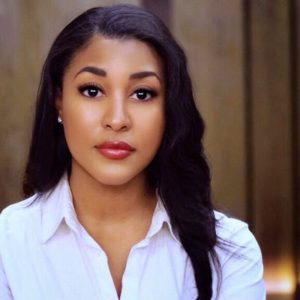
Jacqueline Howard, CNN Health reporter

Eric Stirgus: This pandemic has definitely exposed some of the issues surrounding access to care and disparities in the Black and brown communities. I was at a vaccine clinic in the Mexican Consulate in Atlanta with Morehouse School of Medicine, and the organizers were talking about some of the challenges with bridging access to care. There was literature and brochures regarding COVID-19, however most of it was not in Spanish. There weren’t mobile units going out to underserved communities or senior high-rises to get everyone tested.

These were some of the issues we faced in the beginning. This is why we saw Georgia at the bottom compared to other states when it came to testing rates. We saw Georgia and many other states were not accurately reporting data on who was getting tested and it took us weeks to figure out that Black and brown people were not even getting tested at the same rates as the general population. I looked on the [Georgia] Department of Public Health’s website, and it showed that Black residents in Georgia who’ve gotten at least one shot were at 25% as opposed to White residents who were at 33%, Asians at 58% and finally Hispanics who were at 21%. So, what I’m saying is, you’ve seen these disparities and access issues throughout this pandemic.

TA: COVID-19 has changed the way the media reports on most every topic. Jacqueline, as a health reporter, how has this affected your focus on covering other health related topics? 

JH: Since we are in a public health emergency, our entire focus is on the pandemic. But before the pandemic we were covering infectious diseases, cancer, maternal health and everything in medicine. I will say that during the pandemic we’ve seen a decline in cancer screenings and an increase of severe heart conditions, which could have been prevented sooner if people would have been accessing care during the pandemic.

The pandemic has led to people being hesitant to go to the hospital or doctor’s office for regular checkups as needed. Because of this, we have seen an increase of more severe disease overall. I’ve also noticed a decline in childhood vaccinations like MMR, and parents not keeping up with their children’s pediatric appointments. Another serious decline I’ve noticed is the occurrence in flu cases and other types of respiratory illnesses. It makes sense if you look at it. We are all socially distancing and wearing masks which prevents this. It’s all very interesting to know.

TA: Eric, how has the pandemic changed your focus from covering higher education topics?

ES: Well, I’ve been juggling higher education and the pandemic, but most times the topics have intersected. If you look at when the students had to leave campus and were trying to figure out remote learning, some campuses were settling to do a pass/fail option as opposed to giving out letter grades, which brought on a lot of criticism from public universities. There were some smaller schools that required students to be on campus but they had to wear masks indoors versus the larger universities who had student housing where the COVID-19 cases went through the roof nationally. I mean, there was a big deal with online learning versus in-person learning and now there is an issue whether all students should be vaccinated before coming back to class for this fall semester.

Schools in Georgia like Clark Atlanta University, Morehouse School of Medicine, Morehouse College, and Emory University have all required students to be vaccinated, whereas public universities have decided not to have the vaccine requirements. Overall, COVID-19 has become so much a part of everything we’ve been reporting now. I’m working on a story now about how Georgia was awarded 11 million dollars to use toward providing remote mental health services to college students. There are some challenges with this as well.

Eric Stirgus, AJC reporter

Basically, COVID-19 has been a part of everything I’ve reported on in higher education from finances, with healthcare and even with educational outcomes. I’ve reported on the fact that student enrollment has declined during the pandemic. It’s all encompassing.

TA: We’re more than a year into the pandemic. Have you seen anything different in the numbers regarding communities of color, specifically the Black community, with regards to COVID-19 testing or vaccination?

ES: The numbers have increased but there is still a strong number of Black people who have questions about the vaccine. I have some personal friends who still ask questions. The number one inquiry is about how quickly these vaccines were developed and how were they able to develop it so quickly. I’m even hearing that people are starting to change the word “questioning” to “hesitancy” because if they question it, it might bring a negative connotation to some folks. There are a ton of other problems in access to care from getting the vaccine to the elderly to those who have trouble with learning technology and those who are not able to get a ride to the testing or vaccination facilities.

Moreover, there are outstanding questions about the vaccination process itself, and for many Black people this includes conversations around the Tuskegee Experiment or Henrietta Lacks, which brings a lot of distrust. Secondly, there hasn’t been enough doses given to primary care physicians. The numbers overall have improved with Black people but still well below white Georgians. However, there’s been a huge campaign with celebrities touting getting the vaccine. Even Morehouse School of Medicine had several civil rights leaders come to get the vaccine. There’s been a push to get the Black community onboard. This has helped somewhat but there are still some logistical barriers. 

JH: As Eric stated, we’ve seen an increase in the data regarding the Black community receiving the vaccine, but there still is a gap. With that, there will be a push to get vaccines into primary care physicians offices because studies suggest that if your own doctor recommends and can administer the vaccine, then there is a greater trust with who receives the vaccine.

I also think we have to realize that the disparities in getting the vaccines are layered. Access is one thing, but also there are those who can’t take off work and make time to go get the vaccine, even further taking the time to get two doses. As you see, there are a lot of factors to this.

Yes, vaccine questioning exists, it also needs to be addressed, and there are health officials and those in public health who are addressing it. However, the disparity in vaccinations is a bigger issue in the communities that need them the most. We’ve seen some cases in NY where people of wealthier communities were traveling to Queens in order to get the vaccine. This was taking away from the people in that community who needed it the most. This is a part of the greater discussion.

TA: As the CDC releases new pandemic guidelines, how often do they conflict with some state requirements. 

JH: The CDC did state that if you’ve received both doses of the vaccine and it’s been two weeks since completion, you no longer have to wear a mask outdoors. This guideline was put in place in order to show people that if you’ve followed the precautions, your risk of contraction has now decreased and so the more stringent previous precautions are now a little more lax. This was also to showcase a reason to get the vaccine.

There has also been data showing that the vaccine has been working and we’ve seen a decline in COVID-19 deaths as well as hospitalizations among people who have received the vaccine. However there has been some questioning regarding this guidance. Comedian and host of The Daily Show Trevor Noah asked in one of his commentaries, if you are fully vaccinated then why can’t you go everywhere without a mask? Health officials replied that not enough people are vaccinated yet. Even if you are vaccinated and someone else isn’t, there is still a risk of it spreading indoors. We really can’t go back to “normal” until more people get the vaccine. We have to encourage people to get it.

ES: It goes back to the political divide again. There are some states that are conservative, but you also have sports teams that they are filling all seats at their games, and colleges allowed full capacity at commencement ceremonies. So, I think there is this eagerness to get back to the world we were in before COVID-19, and the criticism surrounding the mask mandates are still working to be resolved. The data is that the vaccines have been effective.

TA: What are you doing as journalists to make sure the information you are reporting is correct, and how are you fact checking information with new data frequently released?  

Eric: I’m lucky to have been working with many reporters that follow these stories. I’ve had many offerings to read articles from my editor and other team members that are also covering the pandemic. So, we’ve all been holding each other accountable. It’s also important to have many different sources.

Universities are always a good source to have because they have experts to talk to about the vaccine. Sometimes I even look at Jacqueline’s work and see what she’s put out. Also, the federal government, particularly the Biden Administration has been a lot more aggressive with providing updates to the media by briefing us three times per week to answer some of the questions we may have. I think that’s been beneficial as well.

JH: I want to agree with Eric, as we’ve seen an increase in briefings from the White House and Biden administration is helpful. As far as getting the right side of the story out, I see it as being no different from any other news story in journalism. It’s the basics, having those sources, checking in with them weekly about any new findings, that’s what we do for any topic. With this pandemic, we all had to return to the basics in order to make sure we get good journalism out there.

On my end at CNN, there has been a lot more collaboration between teams, task forces and beats who have made extra effort to work together to cover pandemic related stories with care and accuracy, not only this but with humanity. There is extra focus on getting the story right, but we can’t forget that this is something that is impacting human lives. We need more empathy in covering this. It’s just as important to keep ethics in mind as well.

ES: That’s a great point about empathy and telling the human side of this pandemic. Yes, this is a story about science but most importantly, it’s a story about people.

TA: Speaking of empathy, how hard has it been to keep your opinion out of the story if you are triggered or emotionally overwhelmed?

ES: I’d say, it’s important to stick to the facts as with all journalism. I’ve had family members and friends who tested positive for COVID-19 or have even died, as well as former colleagues. It is difficult on a personal level to some degree, but you have to be a professional. Our newsroom has been really great about taking time for us to talk about some of the things we’ve been dealing with and to take some time off.

It’s hard, but I take personal time off when I can. We also have group Zoom calls with colleagues. Not for anything in particular, but the opportunity for all of us to just see each other and interact from time to time. These things are helpful to have that type of normalcy again. It also helps us tell our stories better without being as stressed.

JH: We have to approach each story with objectivity and fairness. On the humanity aspect, sometimes there is a need to have a moral compass. For instance, we saw a rise of racism in the pandemic. There are no two sides to that, you can’t give a racist viewpoint to the story because there is only one side to report which is hate.

It’s also important to think about as journalists, we all have a moral compass. You also have to be careful when you are talking about telling two sides when you’re trying to be objective. There is only right and wrong, and hate is hate. The same applies when covering the pandemic. As with many other topics, you keep your personal views out of it. When you see a moral issue or misinformation, or even addressing conspiracy theories, it’s our job as journalists to say, “No. Here are the facts.” No, you cannot kill the coronavirus by drinking bleach or alcohol.

It’s important to correct these myths. Yes, keep your personal viewpoint out of it, but also don’t shy away from debunking misinformation and issues you see come up such as hate or racism. It’s our job as journalists to address this for the public and let them know what’s really happening.

TA: Journalists are providing so much information on a regular basis. How do you make room for self-care?

Jacqueline: One way is collaborating with your team, and two is taking time off for self-care. There has been a huge focus at CNN regarding mental health. I’m grateful for this effort because it impacts how we do our work. My colleagues and I have been talking about how the rise in police violence has taken a toll on journalists of color.

One personal hurdle I’ve had to overcome is what I remember hearing from my childhood: “You always have to work twice as hard to get the same as what everyone else is getting.” Because I heard that growing up, I found it hard to take time off. I hope this new focus on mental health and self-care helps to take us out of that mindset because I had to do it. I have to remind myself that no one’s going to look at me a certain way if I take time off. It’s OK to do this. Journalists of color can really benefit from focusing on self-care.

ES: In general, you can’t do your work at your best if you are stressed out or exhausted. Sometimes you do need to take time to relax and spend time with your family or friends. When you can do that, then you can work much better. I’m glad to see NABJ raising awareness about mental health in journalism and the workshops they’ve had surrounding self-care in addition to the fact that they continue to advocate for us in news rooms to make sure that we are taken care of.

I’ve covered some protests, and I remember being out there having to wear masks in the heat in addition to covering the pandemic while being emotional and having to cover all this. I’m hoping that newsrooms will continue to be aware of mental health and provide more resources where we can have these moments to have self-care.

Tiana Allen is a behavioral therapist and writer for The Byline. This is her first article with the publication.


This issue of The Byline was edited by Tianna Faulkner and Raisa Habersham.

THE BYLINE – 05/2020

Health reporters talk coronavirus and media coverage  

By Elisheva Wimberly

The Atlanta Association of Black Journalists (AABJ) hosted a webinar April 25 featuring CNN health reporter Jacqueline Howard and The Atlanta Journal-Constitution’s higher education reporter Eric Stirgus, who shared how the coronavirus has impacted their professional and personal lives. 

Hosted by AABJ President Amir Vera and AABJ Vice President of Print Raisa Habersham, the webinar provided insight into journalists’ coverage of the coronavirus pandemic  and how the shelter-in-place orders have affected their work. It also touched on challenges Howard and Stirgus face covering the virus and how they have navigated them.

Jacqueline Howard

Howard said she was excited about the way journalists are seen as the prime source of relative and factual information for the world. 

“When it comes to journalism, one thing that has emerged in this pandemic is that we are becoming the ones that connect the dots for people,” Howard said. “I’m really proud of journalists for doing this. It’s our responsibility to connect the dots now that we have this kind of data. It’s more important now than ever.” 

“The biggest challenge for me has been keeping up to date with all the information coming out,” Howard says, “Every day there’s a new press conference across the country. Sometimes it can be difficult to juggle, but you just say ‘hey, this is what I plan to tackle today and I’ll do the others tomorrow.’” 

The idea of a pandemic spreading has always been a major concern to health experts and scientists, especially with pre-existing scientific theories now coming true by certain scientists. Eric Stirgus says we need to listen to our fellow scientists. 

“One thing I’ve seen in the science industry in recent years is they explain things in the simplest terms”, Stirgus said.“Keeping up with science updates helps with your research and asking the question of how important or serious is this.”

Eric Stirgus

Since the pandemic began, many journalists are confined to their homes and have less access to newsrooms. “Covering it from home and not having the screens I would typically use has been challenging,” Howard said.  “It’s kinda crazy how it’s the biggest story of the decade and we’re doing it all from home.”

Before the pandemic, Stigus would bounce story ideas off colleagues, but that’s been difficult to do since they aren’t working in the office. 

“One challenge, since we’re not in the newsroom, is not interacting and conversing with different reporters,” Stirgus said. “We have a messaging app we use, sometimes it’s helpful and sometimes it’s time-consuming. It’s helpful technology-wise to have those tools but I’m also missing the human interaction.”

Keeping track of updated information is challenging, especially with constant information flooding news stations and websites, Howard and Stirgus said.

“One thing I started doing which is helpful is to constantly switch from different news outlets. I always monitor who’s doing what in different networks right now,” Howard said. “This is a local, national, and global story. Instead of keeping an eye on what’s going on in the global news, I’ve been focusing more on what’s going on in the international news. Coming out of the (United Kingdom) and Australia. That’s actually been a great way to find stories as well.” 

Stirgus made it a point to reach out to his interviewees in an effort not to misinform the public. 

“I’m not an expert in these topics, so I also follow up with them,” he said. “I’ll say, here’s what I have from an interview: Is this correct? Sometimes they’ll share additional information or correct me. Getting that additional information really does help me.”

Journalists from around the globe are challenged with informing the public from a distance. Jacqueline Howard and Eric Stirgus reminded everyone watching this webinar that they are not alone in this process and to remain confident in your work.

Elisheva Wimberly is a rising senior at Georgia State University. 


COVID-19: How the virus has affected AABJ members

COVID-19 has affected journalists across the nation, resulting in lost jobs, income and opportunity. We asked AABJ members how they’ve been affected by the pandemic. Here is what you said:

Greg Morrison: Taking in the news has been difficult

I have been working from home for five years, but I find myself in need of a hug from my grandchildren. I have stayed at home only going out for medical appointments. My daughter has been doing our grocery shopping. At first, we experienced food shortages in some stores, but things have

Greg Morrison

calmed down a bit. My capacity to absorb tragic news both locally and hearing about friends and people I know in other cities is being tested. I take the attitude that this too shall pass and we will emerge with a new respect for simple things. (To maintain work-life balance,) I work a few hours, take a walk, enjoy some music, work a few hours, and read for pleasure. Additionally, I walk a 3-mile route through the neighborhood a few times a week and reduce food portions at mealtime.

Greg Morrison, NABJ Treasurer and Executive Producer, Griotworks LLC. Dba Bumper2Bumpertv

Allison Joyner: Dealing with my mental health is now a priority

As a freelance writer, I am concerned about my niche, HBCUs, and how it

Allison Joyner

will affect the schools from an enrollment and fundraising standpoint. Dealing with my mental health has now become my priority, and it has caused me to only work a few hours a day. Having Zoom and FaceTime meetings with friends, family, and colleagues has helped, but I miss seeing them in person.

Allison Joyner, Freelance Writer

Joy Woodson: I’ve been working around the clock to get everything done

I am busier now than I was before the pandemic. And, I’m not sure why that is. Some of the increase in work is related to the shutdown, but some of it is not. My biggest concern isn’t even getting sick from COVID-19, it’s the stress that a situation like this creates all the way around. I like working from home, but when you’re basically stuck inside, it’s not the same: It’s confinement. And, that’s not good for sanity or productivity over the long term.

Joy Woodson

In addition to work and all the new procedures just to get groceries, I was an MBA student in my last semester. One of my professors did very little to change our assignments and deadlines, despite classes being canceled for a spate. I ended up working around the clock to get everything done in my life, school, and job. I try to run two to three times a week to help with the stress of it all, and I turned off notifications on my phone. I know things are due for work, but I can’t have my phone going off a million times a day for every meeting or group chat notification.

(To relax), I’ve been running, listening to podcasts, and talking to friends and family. I hadn’t listened to podcasts before all this, and I find them very helpful now when I need to tune out the news.

Joy L. Woodson, GALILEO Assistant Director, Marketing Communications

Ila Wilborn: I live with an essential worker

I’m doing well. My biggest concern is the well-being of everyone around me.

I have an essential worker in my household and I worry about their health, as well as mine since we are around each other daily. Working from home has been a bit of a challenge. My job is a bit more difficult than it would be

Ila Wilborn

if I were in the newsroom. However, I’m coping the best I can by continuing to work through the tough days, asking for help when I need it, and planning in advance. I try to debrief every day from work by talking to family and friends. Additionally, I work out daily and I’ve made it a priority to eat healthy foods. It’s more difficult to eat out now so that helps!

Ila Wilborn, Production Assistant, CNN Newssource

The vignettes were edited for length and clarity. They were complied by AABJ VP of Print Raisa Habersham.


Christine Swanson directed “The Clark Sisters: First Ladies of Gospel.” (Credit: Lifetime)

‘Clark Sisters’ director, magazine editor discuss representation in the film industry

By Greer Wilson

As many around the world discussed COVID-19, Clark Atlanta University Mass Media Arts Alumni Society treated students to a virtual lunch and learn session last month.  

The society in conjunction with the school’s mass media arts program hosted “For the Culture: The Rise of Black Culture In Television & Film” with “The Clark Sisters: First Ladies of Gospel” filmmaker Christine Swanson and Stephanie Eugene, managing editor of Cinema Noir, a website dedicated to celebrating the African diaspora in Hollywood.

Christine Swanson

The women discussed the importance of networking and representation in media. Swanson said building a network as a student is vital because the same students you are working with now are the same people you will work with in the next 10 to 20 years. 

“Create relationships and working relationships that are mutually beneficial and functional for where you are,” she said. “Understand that you are not just going to school. This industry is not based on talent or grades. It is relationship-based.”

Swanson said in many cases, people get film jobs based on word of mouth. “Lay the groundwork and build the relationship in an organic way,” she said. 

Eugene and Swanson also touched on the difficulties of selling and telling your stories as black people and getting others to see your vision. Eugene said part of the problem is people haven’t been exposed to a different point of view. 

“I think as far as our stories being told, we’re not a monolith, there are nuances in the Black experience,” Eugene said. “Over time, we see more and more of that in the mainstream media but I do think there is room for more.” 

Swanson said telling the Clark Sisters’ story on screen meant a lot to her because she wanted to create something people can connect to.

Stephanie Eugene

“I love normalizing gospel singers from Detroit … to me they were always larger than life,” she said.  “Just because the world didn’t know them in the way that we see them does not negate the need or the capacity to show them in that light. That’s not the goal. The goal is to humanize these women in such a way that other people can connect and relate to.” 

Eugene said branding is also important when it comes to the film industry, emphasizing that authenticity is key when developing your personal brand. 

“I think it’s really important, it’s so easy to fall into the trap of copying what you see,” she said. “You may not understand what someone else’s angle is or process, or target demographic. You may not understand what goes behind a brand. I really just caution you to not take any shortcuts because it really does come down to authenticity at the end of the day.”

Greer Wilson is a recent Spelman College graduate who writes for Around The Rings, a website covering the Olympics.


This issue of The Byline was edited by Raisa Habersham and Tianna Faulkner.

THE BYLINE 04/2020

Maintaining Your Mental Health During the Coronavirus

By Elisheva Wimberly

COVID-19, a respiratory disease more commonly called the coronavirus, has shaken the world to its core. School districts transitioned to online learning following shelter-in-place orders; restaurants closed their dining rooms, only allowing drive-thru and carryout orders only; and the unemployment rate has risen drastically as people, including journalists, have lost their jobs. 

As the United States grapples with the repercussions of the coronavirus, it’s also important for journalists covering these stories to take care of themselves. Using this epidemic positively by concentrating on self-care can help reduce the risk of stress and depression. Clinical psychologist and Agnes Scott College professor Dr. Janelle S. Piefer spoke with The Byline about how to take a mental break amid the coronavirus pandemic. Here are some of her tips:

Janelle Piefer.

1. Go easy on yourself

Be gentle with yourself. You can do well one day and then struggle the next day being under quarantine. Piefer says it’s important not to be the “ideal coper,” a standard perpetuated in the media to go above and beyond in times of crisis that are often very difficult to control. “Be the best version of yourself and not the perfectionist standard,” she said. “It’s not going to be one single right way for everyone. When people set unobtainable goals they are least likely to finish them,” Piefer said. It’s important to identify achievable steps that can help you and avoid those set by society.

2. Carve out time for things that make you happy

Meditation, social interactions over the phone, google hangout or watching a Netflix show, will help keep you mentally balanced. “Having a release along the way will result in an emotional marathon release,” Piefer said. “People tend to be recharged when they connect with things important to them.” It may be meditative to go on a bike ride, dance, paint or give back to others. Find moments where you feel centered, clear and present in the moment.

3. Taking social media breaks 

If you’re on it too much, social media can get overwhelming. Carve out time to get news updates to obtain information where you’re getting more knowledge and you’re well informed. Journalists need boundaries centered around self-care in terms of secondary exposures. “There needs to be a place where you separate work identity and social life otherwise it will become overly immersive,” Piefer said. “Be more intentional where you take off your journalist hat and put on your self-care hat.”

4. Get some fresh air 

Sitting on your balcony, bike riding, walking or even going out on your front yard will clear your head. Georgia’s shelter-in-place orders allow residents to go out for grocery store runs and to get some exercises, so use the outside air to your advantage. Piefer urged everyone to read the order and figure out what they’re comfortable doing within the confines of it. “Some people will say they’re comfortable going in their backyard and not going past there,” Piefer said.

5. Use counseling and teletherapy

Covering the coronavirus can weigh on any journalist and it may be difficult to get therapy in person. Piefer recommended teletherapy, which allows you to have access to mental health services online. Mental health service sites Therapy for black Girls specializes in support for black women. Magazine site Psychology Today has a searchable database for teletherapy in your area. 

Piefer also has a teletherapy referral guide which provides information about where to find teletherapy and wellness consultations. She also recommends reaching out to insurance companies; many are waiving copays and deductibles. “I think it can be really helpful, especially with all the insurance companies’ resources. It’s pretty unprecedented times that they are offering these resources,” Piefer said.

People of color are going to be impacted, especially financially, as they were during the recession and the great depression, Piefer said, adding black women tend to suffer financially the most. “We know after the immediate physical crisis ends we will be dealing with the mental health crisis for quite some time,” she said.

Elisheva Wimberly is a rising senior at Georgia State University.


Five Tips for Covering the Coronavirus

By Alexis Grace

The novel coronavirus, also known as COVID-19, has done more damage than most expected. The respiratory illness that spreads through contact has not only led to statewide shelter-in-place orders but has heavily impacted America’s workforce. While many are out of jobs, the coronavirus’s media coverage has been increasing every day causing media professionals to work a little harder than usual. 

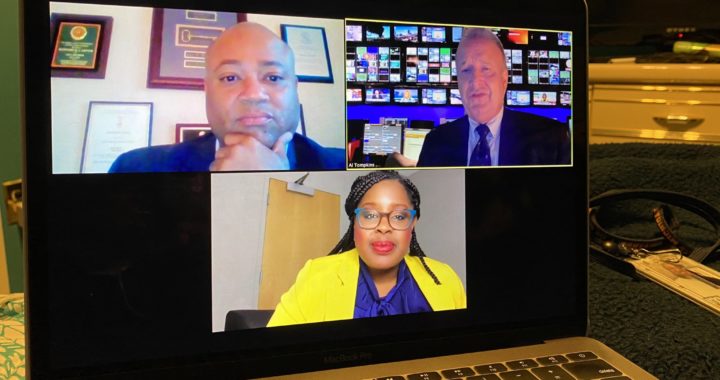
In response to the coronavirus pandemic, the National Association of Black Journalists (NABJ) recently held a webinar to discuss the tools, attitudes, and care every journalist should strive for today during a trying time. While it is important to get the story, taking care of yourself is equally as important. Here are some tips veteran journalists NABJ Region III Director Rod Carter (top left), Poynter staff writer and trainer (top right) and NABJ Region II Director Sia Nyorker gave during the webinar:

NABJ Region III Director Rod Carter (top left), Poynter staff writer and trainer (top right) and NABJ Region II Director Sia Nyorker speak on webinar about covering the coronavirus.

1. Credibility is Key

Poynter Institute Coach and Multimedia Teacher, Al Tompkins emphasized the importance of getting things done correctly.

“Credibility is going to be critical in the days ahead,” he said. “If I do not believe you, then it won’t matter what urgent news you have.”

Tompkins said journalists should gain viewers’ trust by being honest and asking questions viewers want answers to.  “You have to be really thoughtful about what you’re telling people,” he said.

2. Be Personable

Reflecting on her work, NABJ Region II Director and Cleveland 19 News reporter Sia Nyorker said interviewees may be more comfortable in a conversational setting during interviews.

“The best answers are from when we are not in interview mode anymore,” she said, speaking on her experiences interviewing everyday citizens. Nyorker said there were better conversations and answers to her questions post-interview. 

3. Get Subjective Answers

 During your interviews, it is important to gain clarity for your audience by asking questions that evoke emotion. Tompkins suggested journalists ask questions that are short and easy to understand. 

“Subjective questions give you much better answers,” he said. When discussing how to speak with health officials, Tompkins recommended asking questions that are brief but yield accurate answers. “The longer the question, the crappier the answer,” he said.

4. Remain steadfast

With endless updates on the coronavirus, it may be difficult to know what the next story should be. Tompkins suggested journalists focus on the current issue surrounding the virus and make that the story. 

He encouraged journalists to remain positive during an unoptimistic time. “It’s not true that you are the problem. The truth is you’re telling them stuff they do not want to hear,” Tompkins said.

NABJ Region III director Rod Carter believes there are positive stories out there to give people hope. “We’re really on the front line of keeping the public informed and what we do is important,” he said. 

5. Take Time to Unwind

As with any exhaustive news cycle, journalists need to take a mental break. This is especially the case for those cooped up in their homes covering the virus. 

“You’ve got to unplug. Do not make the last thing you do be consuming more news,” Tompkins said. “You’ve got to stop it. Do what we do with children — read a story. You have to start taking better care of yourself. This is going to be a marathon.”

Nyorker reminded media professionals they are not alone. “You can call (us)if you need to cry or bounce ideas,” she said. “Just remember we’re all in this together. None of this has been done before.”

Alexis Grace is a senior at Clark Atlanta University. She is also president of the school’s NABJ-CAU chapter


FEATURE STORY: Atlanta journalists face disrupted newsrooms amid global COVID-19 pandemic

By: Darriea Clark 

Adhering to the Centers of Disease Control and Prevention’s recommendation to social distance during the coronavirus outbreak, Atlanta newsrooms have had to adapt and find ways to continue to provide pertinent information to its audiences. They have faced changing schedules, increased meetings, parenting while working, and the decision to report from home or on the field.

“We don’t want reporters to take unnecessary risks,” The Atlanta-Journal-Constitution’s deputy managing editor Leroy Chapman said. “While there’s not a prohibition, we are pretty selective about assignments.”

Leroy Chapman. (Chris Hunt/AJC Special)

Chapman said the coverage of the Masters in Augusta is a cultural Georgia story that the AJC needed to report from the field. Other stories he mentioned cover how Georgia residents are dealing with or not following social distancing recommendations and how some are coming together to support their community through food drives, fundraisers, and personal protective equipment (PPE) creation. 

Not all reporters have the ability to remain in the confines of their homes. Photographers bring stories and scenes to the audience, which is difficult to do while practicing social distancing. “I can’t work from home, because I can’t take pictures of my yard,” AJC photojournalist Alyssa Pointer said. “That’s not news.”  

Pointer came in contact with a person who tested positive for COVID-19 while on assignment at the Georgia Legislature. After quarantining for two weeks, she made it a priority to obtain PPE equipment. She admitted to having concerns about her perception as a journalist and duty to remain neutral in reporting situations.

Alyssa Pointer (Photo by Kevin D. Liles/Getty Images)

“Wearing a mask is advocating for myself and telling myself I matter,” Pointer said. “Regardless of how everyone else in the media feels, I am going to protect my immune system and my body. It is also to make other people feel safe to at least have a conversation with me. (The subject) can feel like I’m trying to take the necessary precautions for all of us.”

While there has technically always been a capability to work remotely, WSB-TV anchor and reporter Lori Wilson said that social distancing is foreign for journalists. Prior to COVID-19, reporters worked directly with photographers, rode in cars with them, and were able to go straight to the source with their crew close in hand. “You were rushing toward the scene of anything terrible that was happening,” Wilson said. “Now, it’s really challenging.” There is less opportunity to track and hunt down leads.

Fortunately, technology provides avenues to connect and interview subjects digitally. Yet what’s missing is the ability for journalists to steer conversations and capture emotional responses that you can only get in person. Mannerisms and descriptors are lost. “Now it’s a little more cold and impersonal,” Wilson said. 

Wilson reports from home and anchors from the WSB-TV studio. “We’re fortunate that we’ve got multiple studios and performance areas,” she said. “Even as we anchor, we’re on a separate set. Our makeup artists are wearing gloves and masks. It’s just one person with them in the room at a time whereas before we may have had three artists and three people getting their face done.”

Using an app provided by the station and a ring light, Wilson shoots her own live shots from her basement. 

“I used to be able to sit back and relax while my photographer was setting up and worrying about the technical end,” Wilson said. “The live shots are scary but great. It’s a feeling of accomplishment when you get it done. I’m thinking about things I haven’t had to before a lot more.” 

While interviewing subjects from home, Wilson developed a “third role” as a subject coach. She tries to ensure subjects are not moving while on-air and are well lit. Despite any amount of preparation, technology is a more unpredictable factor that provides difficulty. “It can be a challenge when someone else may not have a strong signal,” she said. She said Zoom is the best platform for interviews because it allows you to record directly on the device. This means you’re guaranteed a certain sound and picture quality. FaceTime is a little more tricky, but it’s the most common, she said.

Lori Wilson, CREDIT: WSB

“The standards of quality have changed a little bit, but we still want to put good stuff on the air and make it as clean as possible,” Wilson said.

With constant updates and misinformation on the coronavirus, consumers are turning to local newsrooms more than ever. “Our audience has gotten much bigger,” Chapman said. “They’re hungry for information. It is our job to make sure we’re focused on solutions.” To battle social media posts and chain messages that spread terror and disinformation, the AJC has decided to run explanatory journalism pieces that correct rumors regarding COVID-19. “In terms of us being able to vet for information, we have multiple sources to corroborate what we’re talking about. We’re fortunate to have beat reporters that have built great relationships with sources,” Chapman said. 

“This is a big moment for local news,” Chapman said. “This is a time for us to demonstrate our value. If there’s a silver lining, maybe it’s that we’re able to help our community.” 

As for the future of the journalism industry, Lori Wilson is saddened but hopeful. “I think for better or worse, this business will be different,” she said. “Life will be different. News, as we’ve traditionally done it, is probably going to stay the same but I think [it] will get slimmer. Across the board, I think we’ll start doing more with less. For journalists and people who want to tell stories, the opportunities are endless, and I think more and more people are realizing that now.”

Darriea Clark is a recent graduate of Syracuse University and Atlanta-based reporter.


This issue of The Byline was edited by Raisa Habersham and Tianna Faulkner.