Your cart

THE BYLINE – SUMMER 2021 ISSUE

Greetings AABJ members,

First, I want to thank you for your continued support and readership.
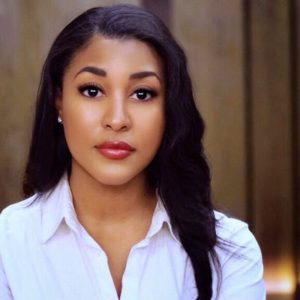
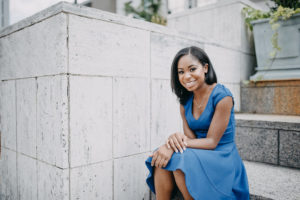
Raisa Habersham

Second, you may notice this edition of The Byline is a hybrid issue. You’ll read stories focused on men in media and the challenges that led to their triumphs. We’ll also have a quick Q&A with Aviation Queen and The Points Guy senior editor Benet Wilson on preparing for virtual convention. We hope you find this issue insightful and useful as we take a brief publishing break for August.

Raisa Habersham, Vice President of Print 


Metro Atlanta journalist Donnell Suggs on his transition from freelance to full time reporter

By Elisheva Wimberly 

When Donnell Suggs first moved to Atlanta in 2006, he started working at The Atlanta Daily World and The Atlanta Voice. According to Suggs, newspapers were more prevalent back then, but it was equally as difficult to get on staff at these papers. Suggs, being new to Atlanta and not knowing anyone in the business, wanted to be involved in journalism and freelance reporting became a window of opportunity. 

Publications during that time had budgets for freelance journalists and those freelance stories helped him apply for reporter positions and gain additional experience. Suggs worked at his college newspaper at the New York College of Technology. He also wrote a few sports stories for small print publications in Brooklyn, N.Y.

“I didn’t come to Atlanta with a ton of experience but I had to hustle and I was willing to go and cover that football game for 35 bucks,” Suggs said. ”Papers will always take you on if you’re willing to work cheap.” 

Since Suggs was willing to work for low wages, he used freelance writing to break into the industry. Suggs reminisced on his experience when he came to Atlanta and said that was ultimately the best course for him. The need for inexperienced journalists is not the same today as it was when Suggs first came into the industry.

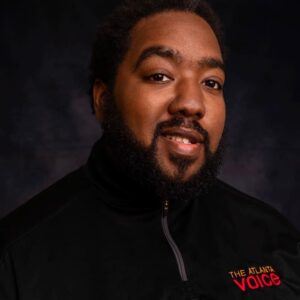
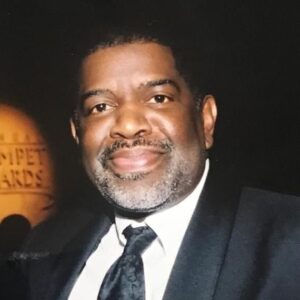
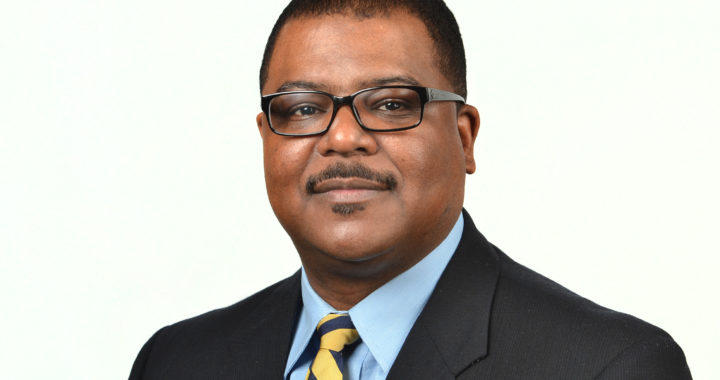
Donnell Suggs, reporter with the Atlanta Business Chronicle. (Courtesy of Donnell Suggs)

“Today, you all have so many options,” he said. “Online existed in 2006, but it wasn’t nearly as strong as it is today. We didn’t have specialty websites like the AJC.”

Before digital media became so popular, Suggs pitched to print publications. His dream was to cover baseball games in the paper as a subsequent love for him and his father’s love for baseball. Suggs said the sports department has always been fully covered by people. 

Atlanta, being a big sports market, made Suggs realize he had to make himself available. When Suggs pitched to print publications he understood he had to give them something good, whether that be reporting in the rain, traveling to work, or turning in a story at 11 p.m. Suggs always made himself available to turn in the assignment.

Now, Suggs writes full time for the Atlanta Business Chronicle. “There’s someone that is 35 and 45 dying to get into the business,” he said. “I did not dream of being a real estate reporter in Atlanta.” Suggs’ goal was to get to the AJC or the Atlanta Business Chronicle. As a daily print and online journalist, Suggs says it is important to keep fighting for your spot. 

Although Suggs has been covering a wide range of subjects for 15 years, he says taking the traditional route is not necessary in today’s time. Social media platforms such as Facebook, Twitter, TikTok, and even blogs can help inexperienced journalists get hired at major newspaper publications.

Donnell Suggs, reporter.

Suggs told The Byline he applied for the Atlanta Business Chronicle (ABC) five years ago but knew he wasn’t ready to take on the position. Suggs was hired by one of ABC’s recruiters. He reports all of the big real-estate deals happening in the city of Atlanta. Suggs always dreamed of working for the ABC and received one of only 16 jobs on the paper under their real estate reporters. 

“I was waiting for this moment and now it’s like we’re here.” Suggs said, adding the Atlanta Business Chronicle serves a specific demographic because it’s a business newspaper. “I haven’t had this much pressure in a while,” Suggs says. “The rest of the staff has been there for over a year, it’s a lot of pressure but I love it.”

With his new position at the ABC, Suggs said he hopes to see more Black representation in the paper. Suggs says most Black representation does not get as much recognition unless they’re a prominent Black figure or it’s a pressing movement happening such as Black Lives Matter. Suggs wants to be a representation for his son, his stepdaughter and his community and is working toward that goal in one of Atlanta’s top prominent papers. 

He recommends joining the Atlanta Association of Black Journalists (AABJ) or the National Association of Black Journalists (NABJ) if you’re not already a member, adding that joining these organizations provided him with connections and strengthened his confidence.

“Seeing these people made it seem like I could be at a major paper publication and still be Black,” Suggs said. “You need to be around your own people, Black or white. There is no better way to do your craft than to be around your own people who do it professionally.”

Suggs’ goal is to one day become an editor. He wants to be able to hire someone like him at the age of 30 with his same drive to get out quality stories. Suggs advised any journalist to not give up or take a year off. 

“You will win and you’ll get to where you want to be but you can’t be above the journey.” Suggs says.

You can read Donnell Suggs articles at www.bizjournals.com.

Elisheva Wimberly is a student at Georgia State University.


AJC reporter Ernie Suggs talks about his pandemic T-Shirt A Day posts 

By Kassidy Jack

COVID-19 has affected our lives in ways that we had never imagined. It forced college students to leave their campuses, left many people unable to work, and required essential workers to put their lives on the line daily. 

One main change that COVID-19 also brought along was quarantine in the beginning stages of the pandemic. People were forced to stay indoors unless it was urgent. But Atlanta Journal-Constitution reporter Ernie Suggs came up with a creative way to spend his days in quarantine: Suggs uploaded a daily picture with a different T-shirt onto his social media. And 365 days later, he is still posting them. The Byline spoke with him about his reasoning and the joy it brought onlookers during the pandemic.
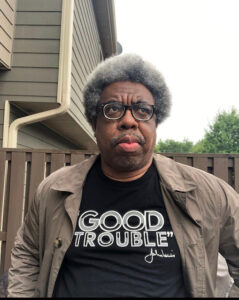
AJC reporter Ernie Suggs wears a “Good Trouble” T-shirt in honor of the late Congressman John Lewis and late Civil Rights pioneer C.T. Vivian. (Ernie Suggs’ Instagram)

Kassidy Jack: What inspired your initial t-shirt post?

Ernie Suggs: Over the years, I’ve worked in a corporate setting as a newspaper reporter, and I go to work every day with a tie or polo shirt. So, over the years, I’ve collected all these t-shirts that I’m never able to wear. During the pandemic, I’ve been working from home. Because of that, I decided these t-shirts would be my work uniform. I started posting them on Facebook, Twitter, and Instagram and it just kind of took off.  I think I did about 160 days straight, took a bit of a break during the winter, and I just started back up last week. It was also something fun and brought some levity to the tragedy of this pandemic. I still probably have 100 t-shirts that I still haven’t worn. 

KJ: Did you think that a year later, you’d still be posting your t-shirts?

ES: I knew that if we were still in the pandemic and I was still working from home, I would. I have 250 nice new T-shirts. So, until I go back to work, I’m still going to be wearing them. I also knew I’d be posting until I got tired, or people got tired. But people don’t seem tired, and neither am I. 

KJ: How do you think your posts affected the lives and spirit of your followers?

ES: I think it gave and still gives people something to look forward to. I believe our timelines are inundated with a lot of negativity, namely surrounding politics. So, my T-shirt posts are just this positive thing. It isn’t controversial, just fun. I’ve even gotten people who send me shirts because they enjoy the posts so much. Throughout this whole process, I think I’ve probably gotten 20 T-shirts. So, it’s been a good thing going on.

KJ: Which t-shirt post has been your favorite?

ES: I love my fraternity ones. I am also a big fan of Prince. I try to have a theme for each week. That helps it become more manageable. Sometimes, I’ll do Prince, the fraternity, foreign or local cities, or even historically black colleges. Choosing the themes are always fun. 

KJ: What have people said about your posts? Have you seen anyone take up your challenge? How have people reacted? 

ES: When I first started, I had people on Twitter who decided to take on the challenge. They said they had some cool T-shirts and wanted to wear them. They slowly fell off, so I guess I’m the champ! But I think that it’s become kind of like this whole social media event that people are drawn to. Last year, I did a Prince week and got retweets from Wendy & Lisa, who were in Prince’s band. I also try to tag any organizations I’m representing, so it’s also fun when they retweet, comment, or send me something. That happens probably once or twice a week. 

KJ: How do the posts make you feel? 

ES: I’m no social media maven, but this is a way for me to expose myself and get out there once a day, so people know I’m still here. Yeah, we’re in a pandemic, but I’m doing fine. I just hope that I can put a smile on someone’s face or meet new people throughout this whole process. And as far as motivating me, I mean for one, I have to wear something, right? It has also helped me to develop a routine throughout this pandemic which I think is super important.

Kassidy Jack is a student at Clark Atlanta University.


Atlanta Voice sports reporter Anfernee Patterson reflects on finding his first job in a pandemic

By Anfernee Patterson

It seems March 2020 was yesterday. I was in Macon covering the basketball high school state championships, which featured Atlanta Public School teams Douglass High School girls and Therrell High School boys. It was a fun weekend, as usual, covering sports as one team won their second straight championship. I was there covering it for The Atlanta Voice, but as I drove back to Atlanta, I did not think that it would be my last time covering a sporting event until August 2020.

Last year, when COVID put the nation at a standstill, a lot of things became uncertain. Are sports going to be around? Is the world going to get back to normal? Will I be able to do sports journalism? Will I be able to do my internship? Am I going to make next month’s rent while being out of work?

As these questions swirled in my head, I prioritized completing my classwork and paying my bills. On top of that, I had to ensure my resume, writing and work samples and broadcast reel were ready to post and send to potential employers.

When the sports world began to shut down, my internship was placed on hold. I saw it coming and knew it was out of my control. This particular internship was something I thought would put me in my sports journalism career permanently and open up numerous doors as I graduated. During the summer and preceding months, I wondered if that internship would still be available. I kept in contact with the coordinator, but the opportunity just was not there. 

I applied for numerous sports and news jobs at various newspapers and television stations. In some cases, I never heard back; in others, I received rejection letters. I attended the annual NABJ Convention and job fair, but had no luck.

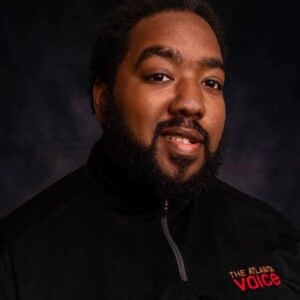
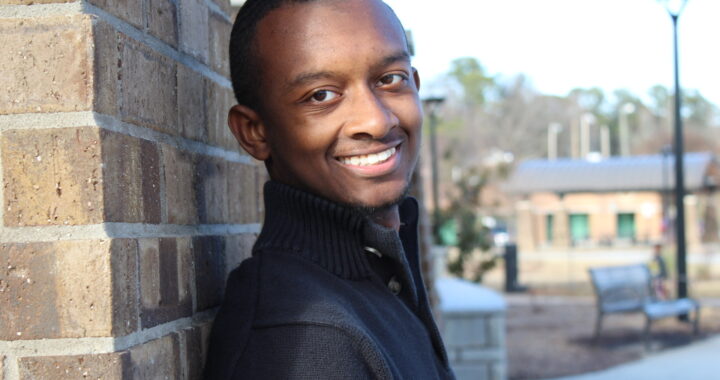
Anfernee Patterson, sports reporter for The Atlanta Voice.

To keep myself busy, I formed a podcast with my friends at The Atlanta Voice, where I interned during the summer; I kept my mind focused and created content. To maintain my skills, I practiced standups (where TV reporters stand in front of a camera and narrate part of a story) or took photos throughout downtown Atlanta. I also updated my equipment so I could have better content and materials for my stories and podcast.

Apart from keeping my skills fresh, I drove around when I could, I exercised, and I tried to get out of the house — I did everything I could to ensure I was prepared for any opportunity and in good mental health. But In the end, I had to move back to my hometown, Manchester, Georgia, which still gets me down to this day. At the time, I did not have a job nor enough money to afford rent during the pandemic. 

That was a dark moment. I have a love-hate relationship with my hometown, and it left me feeling stagnant and lost. I eventually became depressed; I went almost two weeks without social media and without speaking to my friends and loved ones. I had hit rock bottom: I just graduated college and had nothing to show for it. I felt everything I did was for nothing, and I had to just figure things out and give myself time.

With the sports season being in question, I wondered about the future of sports journalism. Would it be sustainable? How long will it last? Will it be a one to two year hiatus before they play again? Is it even safe for players to play sports and reporters cover it and do their job efficiently? This and many more questions came to my mind.

As states announced plans to hold in-person or virtual school, some states such as California canceled the football season. In Georgia, it was surprising to learn the Corky Kell Classic and high school football would be played. But that decision would be a blessing in disguise for me. The Atlanta Voice called me to cover as much high school football as I could. 

I was taken aback by the call, as it seemed nearly impossible that I would be able to cover sports. But reassuring knowing that my job valued high school sports coverage and the reporting I have done. 

Today, I still cover sports for The Atlanta Voice, the first place that gave me an opportunity. I may be a freelancer and I still have to commute to Atlanta from Manchester, but I am glad I get to do what I love. It is also a good feeling knowing that what I’ve worked for has paid off. While I may not be exactly where I want to be, getting this opportunity lets me know that I am on the right track. 

Finding work in an ongoing pandemic can be tough. I’m always willing to give advice to anyone entering the journalism field after college. So, here are a few things that I think helped me, and may be of help to you:

  • Get as much experience while you are in college and save all of your work.
  • Network. Always be nice and respectful to people and follow up. It may not mean much at the moment but do it because you genuinely care. Always surround yourself with mentors, colleagues and friends who understand you and have your best interests at heart.
  • Get involved. Join NABJ, AABJ, campus newspapers and television stations that will help you get that experience.
  • Always ask questions and don’t hesitate to jump at an opportunity. Whether it is to cover a specific event that you enjoy, a potential job opportunity or just a chance to help you in your journalism career, ask to do it. I truly believe that a closed mouth cannot be fed and that no question is a dumb question.
  • Be true to yourself but never be afraid to grow. Stay true to your values and what makes you special because that is what makes you unique and sets you apart. Don’t try to be something or somebody else. But always figure out ways you can be a better journalist and produce better content. Determine the best way to be a better you.
  • Find balance. Do things outside of journalism that matter to you and keep your mind fresh. Whether it is exercising, reading a book or traveling, take time for yourself because you earned it and need it.

As I reflect on the pandemic and my professional journey, I am thankful to God that I am blessed to do what I love. I am grateful for my life and for having the sense of mind to keep working and prepare for my opportunity. It is my hope that I continue to elevate as a sports journalist, but also that anybody reading my story who feels that they’re in the same position never stops and keeps pushing.

Anfernee Patterson covers sports for The Atlanta Voice.


Quick tips on navigating NABJ’s virtual convention

By Kassidy Jack

For the second consecutive year, NABJ’s convention will be held virtually. While some are not new to virtual conventions, there may be a few newly graduated students or working professionals who are first timers and need advice on how to navigate a virtual convention. The Byline spoke with Benét Wilson, senior editor at The Points Guy, founder of Aviation Queen, and longtime mentor to Black journalists about preparations and tips for this year’s virtual NABJ Convention. 

Kassidy Jack: What are some things you’ve been doing to prepare for the convention?

Benét Wilson: Well, to start with, I’ve been checking my internet connection frequently. That was an issue I ran into a lot last year. I’ve also looked at the schedule and created calendar reminders for every session I want to attend, whether it’s a panel or a plenary session. 

KJ: What is something that last year’s convention taught you, and how will you use it this year?

BW: It definitely taught me to watch the time because many of the sessions would immediately follow one another. By using the calendar, I’ll see the notification pop up and move on to my next event.
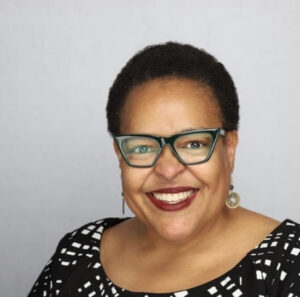
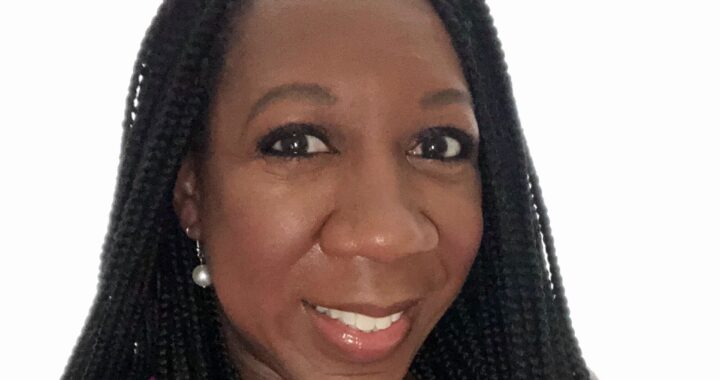
Benet Wilson, senior editor for The Points Guy and longtime NABJ mentor.

KJ: How do you recommend networking in a virtual setting?

BW: Social media, LinkedIn, and Google are your best friends. If there are specific people that you know you want to speak with, names you recognize, or even titles you’re interested in, find them on social media. You can simply say, “I would love to get in touch with you either before, during, or after the convention.” 

KJ: What are some resume and cover letter tips?

BW: Well, I’d be the perfect person for that question. I’ve reviewed more than 400 resumes and cover letters for NABJ members since 2009. As far as resumes, the first tip I suggest is always keeping them updated. Once you’ve done that, have someone review it for a new set of eyes. Ideally, you want a professional. Lastly, for resumes, always customize them for the job you want. Review the qualifications and skill sets, and be sure you are representing those on your resume. You can’t use a generic resume for every job. 

As for cover letters, you want to tell a story. One of the best cover letters I read was done by a student getting her journalism degree, but she was also on her college’s women’s basketball team. She talked about her experience on the basketball team and how those experiences applied to her work ethic for journalism. It was brilliant, and it told the employer, “This is why you want to hire me.”

KJ: What advice would you give to people about the type of clothing and background type they should use for virtual meetings?

BW: You don’t have to wear a ball gown. You don’t have to wear a suit. Look presentable. Wear a nice shirt. Bottoms and shoes don’t matter because no one can see those, honestly. If you have a virtual background, you can put it up as long as it isn’t too busy. You can even blur your background. One thing I will tell people is not to use Zoom makeup. Finally, just because you’re behind a screen doesn’t mean you shouldn’t give any effort to how you are presenting yourself, especially in a professional setting.

Kassidy Jack is a senior at Clark Atlanta University.


This issue of The Byline was edited by Tianna Faulkner and Raisa Habersham. The Byline is taking a hiatus for the month of August.
THE BYLINE 05/2021

AJC managing editor Leroy Chapman shares how the newsroom handles burnout, remote work  

By: Jamila Wood 

The pandemic affected every aspect of our lives, and journalists have been handed a bigger responsibility. From police brutality to two historic elections in Georgia, journalists have had to cover it all while trying to maintain their mental health, which isn’t an easy task and can lead to burnout especially while doing your job in a remote work environment. 

While trying to meet the deadline of breaking news, personal problems came to the forefront for journalists as newsrooms had to change the work environment to fit a virtual world. 

And The Atlanta Journal-Constitution’s newsroom was no exception.

Leroy Chapman. (Chris Hunt/AJC Special)

“We had to be on top of what that [COVID] meant for schools, businesses, government, government services and of course sports was a big thing. It touched every single point,” AJC managing editor Leroy Chapman said. 

Newsroom burnout deals with journalists who faced issues in and out of work. 

“When you talk about the issue of burnout, the pandemic by itself was a huge burn. When you add the other issues, the social justice issues and covering protests in Atlanta and protesting (across the nation) lasted a long time, this city got involved after the death of George Floyd last May,” Chapman said. “Then a week later there was the death of Rayshard Brooks. Because it was right here in Atlanta, we [the AJC] became the center of some of the protests nationally and it was a lot.” 

Chapman said staff had to immediately adjust to working virtually from home. He added he saw a glimpse of their lives outside of work. 

“We have people who have families. They had to work under different conditions whether they were at home,” Chapman said. “Many of them have young children, which is another complicated factor. Another thing, we had a good amount of people on staff who lived alone. We had people who worked in isolation.”

But in some cases, working virtually formed a more personable relationship with other employees. Chapman said employees would take time out of the week to connect with each other outside of work, adding the AJC gave benefits packages to employees, which included 10 free therapy sessions. 

“What happens in the newsroom is that we tend to lean on each other. Unlike many workplaces, we rally and we stand in the middle of the room sometimes and give pep talks. It was tough to do that remotely, but we did some very intentional things,” Chapman said. 

“One is that we met every week with a select group of people and we went around the room and decided we were going to talk about everything but the newsroom. These sharing sessions became really cathartic for a lot of people because they were able to tell things they haven’t told other people,” he continued. 

Adjusting to working virtually had its difficulties and was also a learning experience for AJC staff. 

“We have a lot of folks who are taking care of their kids and parents. The ones who were taking care of their parents had great difficulty. You have a demanding job and have parents who need help,” Chapman said. “We had to think about ways to lighten the load for some folks to make sure they have what they need in order to take care of both children and parents. Also, we had a rash of deaths of family members in the newsroom.”

Chapman knows at least six people who lost a parent during COVID. “That’s a club nobody wants to belong to. There was difficulty because losing your parents during a pandemic and being able to bury your parents is complicated with COVID,” he said.  “Also, giving space for people to do it during a time where your job is demanding you to work even harder than you normally work. There were things we understood we had to do. You had to get involved with the lives of people, maybe a little bit more than you do in a normal circumstance.” 

But like any newsroom, the AJC is going through changes — some of which are likely to come in the next three to five years. The newspaper of record has moved its office space, which is not accommodating to all employees. Additionally, Chapman said no one has a permanent office and the paper has encouraged working where the news is happening. 

“The AJC is going to move from their old office to another office. 

“We have an opportunity to pivot toward working in a way where we minimize space and ownership of space. We are going to have a more situational hotel setting. We come to work and we work together when we need to. We will work where the news is or work in our home,” Chapman said. “I think what that does is takes away a lot of pressure to be in the office and be present in counting.”

Chapman said the office will be used for specific task-oriented work, adding that the remote work has highlighted that staffers can still be productive at home.   

“It makes the whole thing about health and distance look more manageable. We trust our people. We know they are working,” he said. 

Jamila Wood is a student at Clark Atlanta University. 


CNN Health Reporter Jacqueline Howard and AJC reporter Eric Stirgus talk reporting lessons learned from covering COVID-19

By Tiana Allen

When the COVID-19 pandemic forced residents into their homes over a year ago, Atlanta Journal-Constitution higher education reporter Eric Stirgus and CNN Health reporter Jacqueline Howard were among many journalist thrust into coronavirus coverage.

Last year, the two spoke with the Atlanta Association of Black Journalists about some of the things they learned while covering the pandemic when it was still very new.

As vaccines continue to rollout statewide, Stirgus and Howard speak with AABJ’s The Byline about what they’ve learned this past year and how they try to maintain self care while covering the yearlong pandemic.

Tiana Allen: Looking back from 2020, what have further findings about the pandemic taught you both?

Jacqueline Howard: A lot has changed and as time went on we saw the pandemic becoming more politicized [with masks, shut downs, and reopenings]. What I’ve learned from this is how important it is that our health officials are transparent about how COVID is spread. Regarding COVID-19 and the racial disparities, if we look to the past, we all kind of saw this coming. If we look back at the H1N1 influenza outbreak, and the studies that were done during that outbreak it showed racial disparities stating that the Black and Hispanic communities had increased numbers with H1N1. Now, if we look back to last year with COVID-19, we could have predicted the politicization of the same disparities we ran into with H1N1, the impact on public health, the need for transparency and how the public needed more of that. Moreover, we already saw the beginning signs of all the three areas that were mentioned.

Jacqueline Howard, CNN Health reporter

Eric Stirgus: This pandemic has definitely exposed some of the issues surrounding access to care and disparities in the Black and brown communities. I was at a vaccine clinic in the Mexican Consulate in Atlanta with Morehouse School of Medicine, and the organizers were talking about some of the challenges with bridging access to care. There was literature and brochures regarding COVID-19, however most of it was not in Spanish. There weren’t mobile units going out to underserved communities or senior high-rises to get everyone tested.

These were some of the issues we faced in the beginning. This is why we saw Georgia at the bottom compared to other states when it came to testing rates. We saw Georgia and many other states were not accurately reporting data on who was getting tested and it took us weeks to figure out that Black and brown people were not even getting tested at the same rates as the general population. I looked on the [Georgia] Department of Public Health’s website, and it showed that Black residents in Georgia who’ve gotten at least one shot were at 25% as opposed to White residents who were at 33%, Asians at 58% and finally Hispanics who were at 21%. So, what I’m saying is, you’ve seen these disparities and access issues throughout this pandemic.

TA: COVID-19 has changed the way the media reports on most every topic. Jacqueline, as a health reporter, how has this affected your focus on covering other health related topics? 

JH: Since we are in a public health emergency, our entire focus is on the pandemic. But before the pandemic we were covering infectious diseases, cancer, maternal health and everything in medicine. I will say that during the pandemic we’ve seen a decline in cancer screenings and an increase of severe heart conditions, which could have been prevented sooner if people would have been accessing care during the pandemic.

The pandemic has led to people being hesitant to go to the hospital or doctor’s office for regular checkups as needed. Because of this, we have seen an increase of more severe disease overall. I’ve also noticed a decline in childhood vaccinations like MMR, and parents not keeping up with their children’s pediatric appointments. Another serious decline I’ve noticed is the occurrence in flu cases and other types of respiratory illnesses. It makes sense if you look at it. We are all socially distancing and wearing masks which prevents this. It’s all very interesting to know.

TA: Eric, how has the pandemic changed your focus from covering higher education topics?

ES: Well, I’ve been juggling higher education and the pandemic, but most times the topics have intersected. If you look at when the students had to leave campus and were trying to figure out remote learning, some campuses were settling to do a pass/fail option as opposed to giving out letter grades, which brought on a lot of criticism from public universities. There were some smaller schools that required students to be on campus but they had to wear masks indoors versus the larger universities who had student housing where the COVID-19 cases went through the roof nationally. I mean, there was a big deal with online learning versus in-person learning and now there is an issue whether all students should be vaccinated before coming back to class for this fall semester.

Schools in Georgia like Clark Atlanta University, Morehouse School of Medicine, Morehouse College, and Emory University have all required students to be vaccinated, whereas public universities have decided not to have the vaccine requirements. Overall, COVID-19 has become so much a part of everything we’ve been reporting now. I’m working on a story now about how Georgia was awarded 11 million dollars to use toward providing remote mental health services to college students. There are some challenges with this as well.

Eric Stirgus, AJC reporter

Basically, COVID-19 has been a part of everything I’ve reported on in higher education from finances, with healthcare and even with educational outcomes. I’ve reported on the fact that student enrollment has declined during the pandemic. It’s all encompassing.

TA: We’re more than a year into the pandemic. Have you seen anything different in the numbers regarding communities of color, specifically the Black community, with regards to COVID-19 testing or vaccination?

ES: The numbers have increased but there is still a strong number of Black people who have questions about the vaccine. I have some personal friends who still ask questions. The number one inquiry is about how quickly these vaccines were developed and how were they able to develop it so quickly. I’m even hearing that people are starting to change the word “questioning” to “hesitancy” because if they question it, it might bring a negative connotation to some folks. There are a ton of other problems in access to care from getting the vaccine to the elderly to those who have trouble with learning technology and those who are not able to get a ride to the testing or vaccination facilities.

Moreover, there are outstanding questions about the vaccination process itself, and for many Black people this includes conversations around the Tuskegee Experiment or Henrietta Lacks, which brings a lot of distrust. Secondly, there hasn’t been enough doses given to primary care physicians. The numbers overall have improved with Black people but still well below white Georgians. However, there’s been a huge campaign with celebrities touting getting the vaccine. Even Morehouse School of Medicine had several civil rights leaders come to get the vaccine. There’s been a push to get the Black community onboard. This has helped somewhat but there are still some logistical barriers. 

JH: As Eric stated, we’ve seen an increase in the data regarding the Black community receiving the vaccine, but there still is a gap. With that, there will be a push to get vaccines into primary care physicians offices because studies suggest that if your own doctor recommends and can administer the vaccine, then there is a greater trust with who receives the vaccine.

I also think we have to realize that the disparities in getting the vaccines are layered. Access is one thing, but also there are those who can’t take off work and make time to go get the vaccine, even further taking the time to get two doses. As you see, there are a lot of factors to this.

Yes, vaccine questioning exists, it also needs to be addressed, and there are health officials and those in public health who are addressing it. However, the disparity in vaccinations is a bigger issue in the communities that need them the most. We’ve seen some cases in NY where people of wealthier communities were traveling to Queens in order to get the vaccine. This was taking away from the people in that community who needed it the most. This is a part of the greater discussion.

TA: As the CDC releases new pandemic guidelines, how often do they conflict with some state requirements. 

JH: The CDC did state that if you’ve received both doses of the vaccine and it’s been two weeks since completion, you no longer have to wear a mask outdoors. This guideline was put in place in order to show people that if you’ve followed the precautions, your risk of contraction has now decreased and so the more stringent previous precautions are now a little more lax. This was also to showcase a reason to get the vaccine.

There has also been data showing that the vaccine has been working and we’ve seen a decline in COVID-19 deaths as well as hospitalizations among people who have received the vaccine. However there has been some questioning regarding this guidance. Comedian and host of The Daily Show Trevor Noah asked in one of his commentaries, if you are fully vaccinated then why can’t you go everywhere without a mask? Health officials replied that not enough people are vaccinated yet. Even if you are vaccinated and someone else isn’t, there is still a risk of it spreading indoors. We really can’t go back to “normal” until more people get the vaccine. We have to encourage people to get it.

ES: It goes back to the political divide again. There are some states that are conservative, but you also have sports teams that they are filling all seats at their games, and colleges allowed full capacity at commencement ceremonies. So, I think there is this eagerness to get back to the world we were in before COVID-19, and the criticism surrounding the mask mandates are still working to be resolved. The data is that the vaccines have been effective.

TA: What are you doing as journalists to make sure the information you are reporting is correct, and how are you fact checking information with new data frequently released?  

Eric: I’m lucky to have been working with many reporters that follow these stories. I’ve had many offerings to read articles from my editor and other team members that are also covering the pandemic. So, we’ve all been holding each other accountable. It’s also important to have many different sources.

Universities are always a good source to have because they have experts to talk to about the vaccine. Sometimes I even look at Jacqueline’s work and see what she’s put out. Also, the federal government, particularly the Biden Administration has been a lot more aggressive with providing updates to the media by briefing us three times per week to answer some of the questions we may have. I think that’s been beneficial as well.

JH: I want to agree with Eric, as we’ve seen an increase in briefings from the White House and Biden administration is helpful. As far as getting the right side of the story out, I see it as being no different from any other news story in journalism. It’s the basics, having those sources, checking in with them weekly about any new findings, that’s what we do for any topic. With this pandemic, we all had to return to the basics in order to make sure we get good journalism out there.

On my end at CNN, there has been a lot more collaboration between teams, task forces and beats who have made extra effort to work together to cover pandemic related stories with care and accuracy, not only this but with humanity. There is extra focus on getting the story right, but we can’t forget that this is something that is impacting human lives. We need more empathy in covering this. It’s just as important to keep ethics in mind as well.

ES: That’s a great point about empathy and telling the human side of this pandemic. Yes, this is a story about science but most importantly, it’s a story about people.

TA: Speaking of empathy, how hard has it been to keep your opinion out of the story if you are triggered or emotionally overwhelmed?

ES: I’d say, it’s important to stick to the facts as with all journalism. I’ve had family members and friends who tested positive for COVID-19 or have even died, as well as former colleagues. It is difficult on a personal level to some degree, but you have to be a professional. Our newsroom has been really great about taking time for us to talk about some of the things we’ve been dealing with and to take some time off.

It’s hard, but I take personal time off when I can. We also have group Zoom calls with colleagues. Not for anything in particular, but the opportunity for all of us to just see each other and interact from time to time. These things are helpful to have that type of normalcy again. It also helps us tell our stories better without being as stressed.

JH: We have to approach each story with objectivity and fairness. On the humanity aspect, sometimes there is a need to have a moral compass. For instance, we saw a rise of racism in the pandemic. There are no two sides to that, you can’t give a racist viewpoint to the story because there is only one side to report which is hate.

It’s also important to think about as journalists, we all have a moral compass. You also have to be careful when you are talking about telling two sides when you’re trying to be objective. There is only right and wrong, and hate is hate. The same applies when covering the pandemic. As with many other topics, you keep your personal views out of it. When you see a moral issue or misinformation, or even addressing conspiracy theories, it’s our job as journalists to say, “No. Here are the facts.” No, you cannot kill the coronavirus by drinking bleach or alcohol.

It’s important to correct these myths. Yes, keep your personal viewpoint out of it, but also don’t shy away from debunking misinformation and issues you see come up such as hate or racism. It’s our job as journalists to address this for the public and let them know what’s really happening.

TA: Journalists are providing so much information on a regular basis. How do you make room for self-care?

Jacqueline: One way is collaborating with your team, and two is taking time off for self-care. There has been a huge focus at CNN regarding mental health. I’m grateful for this effort because it impacts how we do our work. My colleagues and I have been talking about how the rise in police violence has taken a toll on journalists of color.

One personal hurdle I’ve had to overcome is what I remember hearing from my childhood: “You always have to work twice as hard to get the same as what everyone else is getting.” Because I heard that growing up, I found it hard to take time off. I hope this new focus on mental health and self-care helps to take us out of that mindset because I had to do it. I have to remind myself that no one’s going to look at me a certain way if I take time off. It’s OK to do this. Journalists of color can really benefit from focusing on self-care.

ES: In general, you can’t do your work at your best if you are stressed out or exhausted. Sometimes you do need to take time to relax and spend time with your family or friends. When you can do that, then you can work much better. I’m glad to see NABJ raising awareness about mental health in journalism and the workshops they’ve had surrounding self-care in addition to the fact that they continue to advocate for us in news rooms to make sure that we are taken care of.

I’ve covered some protests, and I remember being out there having to wear masks in the heat in addition to covering the pandemic while being emotional and having to cover all this. I’m hoping that newsrooms will continue to be aware of mental health and provide more resources where we can have these moments to have self-care.

Tiana Allen is a behavioral therapist and writer for The Byline. This is her first article with the publication.


This issue of The Byline was edited by Tianna Faulkner and Raisa Habersham.

THE BYLINE 04/ 2021

How Clark Atlanta professor balances his freelance career, influences students

By: Jamila Wood 

When he is not teaching Clark Atlanta University journalism students the ins and outs of the business, Christopher Daniel is racking up bylines for the likes of The Daily Beast, The Undefeated, HuffPost, Atlanta Magazine, and  NBC News.

But, the award-winning journalist’s love of words, entertainment and culture began well before he started helping students jumpstart their career in the media industry. 

Daniel found a love for entertainment with his childhood being surrounded by constant music. His mother was a general manager at night clubs and his father a DJ. At nine, Daniel was captivated by Nelson George’s writing style and Ed Bradley’s interview skills. 

“One of the first books that I remember reading was this book called ‘The Death of Rhythm & Blues’ by one of my favorite writers, Nelson George,” Daniel said. “I just noticed that as a nine year old reading this adult book that the way he wrote about was the same way I thought about the music that I heard in my house.”  

The writing passion for Daniel started early and was seen through his constant love for reading magazines at the supermarket and carrying his own notebook. 

“I would literally go to the supermarket and read magazines. I could rundown the bylines of all my favorite writers. I used to walk around with a notebook and write all the time,” he said.

Christopher Daniel

Daniel started his career through his involvement in nonprofits and wanted to cover things that carried purpose. Eventually, his work spoke for itself and opened endless doors of opportunity. 

“At the time there weren’t a lot of people covering it [nonprofit events]. I made it my thing. Every weekend I was at The High Museum, Georgia Aquarium or the Fernbank Museum. I was networking with all these executives and different people. They would see my blog post about who received an accolade at the gala that year,” Daniel said. 

“They would reach out through  LinkedIn or through my email. A lot of it was connecting with communications teams that work with these nonprofits,” he continued. “Naturally, all of these people wanted to invite me to lunch and I started going to events like The Commerce Club. I was just out and talking about things that I did.” 

With Daniel’s immense amount of passion, he went into his career with a strategic mindset that prepared him to handle any difficulty — including maneuvering the challenges of virtual teaching as a professor. 

“As a journalist, it wasn’t hard at all. It was more of a challenge at Clark Atlanta, where I teach. That was because I wasn’t really sure of the content management system or learning management system that we [the school] would have to use to communicate with the students,” Daniel said. “The challenge was trying to figure out how we would transition from the physical setting and deliver it to the virtual setting.” 

Daniel expresses that his strategic networking helped his career and assisted him in gaining more opportunities during the pandemic. 

“I had so many relationships that I built over the years and most of them started by showing up to places and someone referring me because of something they read in a smaller publication. I was just making sure that when I went places I had strategic networking,” he said. 

Now, after making a name for himself, Daniel uses his connections in media to help students at Clark Atlanta University, has dedicated his career to giving more Black writers opportunities, and tries to be a form of representation for his students.

“I knew if there was an assignment I was going to get it. I also knew if they needed students that were good in PR and journalism and would ask for my recommendation,” Daniel said. “That’s why so many students at Clark Atlanta right now are doing well. Why, because they asked questions and followed every move that I was making. It really rubbed off on them by paying attention to the bylines. It really encouraged students to do it because I was doing it.”

But Daniel also cautioned against feeding into misconceptions people have about the entertainment industry whether you’re consuming media or working in the field. 

“You still have to research people and watch tv shows up close and listen to full-length albums and mixtapes. You should be able to read voraciously,” Daniel said. 

As Daniel reflects on his career, he realizes the importance of always executing quality work. Daniel has received endless attention from the entertainment industry and multiple interviews and is thankful to receive the opportunity to share his story with up-and-coming Black journalists. 

Daniel urged rising journalists to “keep your ear to different topics and different things people are talking about. Pay attention to what these editors and producers are doing on social media. 

“A lot of times they put their emails and social media handles out there. They also share the pay and how to pitch,” he said. “It’s one of those things that if you are going to be virtual, you have to utilize the virtual in all possible ways.”

Jamila Wood is a Clark Atlanta University student. 


PR Veteran Carlos Scott talks career, gives insight on the PR industry 

By Da’Zhane Johnson

From crisis management to event planning, publicist Carlos Scott has been able to establish upstanding brands and reputations for celebrities. The marketing extraordinaire is known in the PR industry for his ability to strategically navigate a myriad of matters for his clients.  Scott’s expertise has led him to be seen on CNN in 2016, where he gave professional insight on the scandal surrounding Olympic medalist Ryan Lochte, who fabricated a story about being robbed at gunpoint with three other swimmers. Carlos also spoke on his experiences and his responsibilities at N-Vision Marketing, his Atlanta-based marketing firm. Scott spoke to AABJ’s The Byline about his marketing and PR expertise.

DJ: Tell me how you became interested in the PR industry? Did someone inspire you, or did you discover the industry on your own?

Carlos Scott

CS: It was really my sister who introduced me. After leaving the military, I actually found myself in the music industry as a songwriter. I was able to sign a deal with a record label and started writing for a new artist. I remember sitting in a meeting for about four hours waiting to play the new records we recorded, but that never happened. We spent hours discussing the artist’s image and reputation. We even talked about her dermatologist! That’s when I realized what importance PR, marketing and image had, not only on artists, but on any talent.

DJ: What do you believe is the most difficult part about your job?

CS: I would say the most difficult part can be the clients. You can get clients who are “a problem child.” Another thing is the communication and elitism in the industry. It’s always about respect for me. I can send emails and people do not respond because they see I’m not worthy or they’re not interested. To me, that’s disrespectful. You should treat everyone equally in this industry because you never know who will be your boss.

DJ: As a PR veteran, have you seen any PR trends occur in the past year?

CS: I have definitely seen some trends change. I told a friend of mine earlier this week that the ability to adapt and embrace technology has been the biggest trend. People who couldn’t do those two things probably weren’t able to keep business coming in during COVID-19. In times like this, it’s good to keep your ear to the streets and your mind open.

DJ: Social media has allowed for news to travel across the world easily. It is possible for anyone or anybody to trend on Twitter. Do you believe this has added pressure for publicists when they are managing a crisis situation?

CS: Absolutely. Social media marketing is actually something we specialize in. You just have to learn how to be smart and intentional with every post. We have clients who just don’t need social media because they are so well-known. Some clients just don’t need it for their own good. In those cases, we usually will manage their social media accounts ourselves.  

DJ: What does your typical workday look like? Was it altered at all because of COVID-19?

CS: A typical workday for me doesn’t really exist. Every day can be different depending on the client. Some days I am at my desk emailing pitches. Other days I am helping clients with interviews. The pandemic didn’t hurt business for us actually. The only thing that stopped was traveling. I used to fly from four to five times a month, but that stopped once the world shut down last March.

DJ: What advice do you have for current students who are studying to become a PR expert like yourself?

CS: I would advise any beginner to get an internship first. I say that because it will help you determine if this is the business you really want to be in. I’ve had interns work for me, and say, “You know, Mr.Scott, I’d like to thank you for this opportunity, but this just isn’t for me.” The work is more labor intensive than people think. You need to study the craft in general, get an internship to discover which entity you want to do — whether that be corporate or entertainment — then study this entity. 

Da’Zhane Johnson is a student at Clark Atlanta University. 


This issue of The Byline was edited by Raisa Habersham and Tianna Faulkner. 

THE BYLINE 03/2021

AABJ Mourns the loss of Atlanta Voice editor Marshall Latimore

AABJ Family,

We are mourning the death of Marshall A. Latimore, chief content officer and editor-in-chief of The Atlanta Voice. Latimore was an advocate for Black student journalists, a champion of HBCUs and a great friend.
A graduate of Tennessee State University, Latimore, 36, has served as a page designer for Alabama Media Group, Gatehouse Media and the USA Today Network. He also served as the creative director for duGard Communications and HBCUStories Inc. and publisher and editor-in-chief of STAYONTHGO magazine.

AABJ mourns the death of Marshall Latimore, who served as editor-in-chief of The Atlanta Voice. He was 36.

A champion of the Black press, Latimore spent the last three years at The Atlanta Voice, developing young reporting talent and increasing the newspaper’s digital footprint.

“We at The Atlanta Voice are coming to grips with the sudden and unexpected loss of our Executive Editor and Chief Content Officer, Marshall A. Latimore,” Janis Ware, The Atlanta Voice publisher, said in a statement. “Marshall stood in the epicenter of this Atlanta treasure as we have transformed The Atlanta Voice into a multi-media powerhouse set to grow our legacy for generations to come. His loss is not only ours, his family and loved ones, but also our community’s. His leadership cannot be replaced but his direction will be followed as our mission continues to be a voice for the voiceless. His presence will be missed but his voice will continue on in every aspect of our future. Marshall was loved and cherished by all whom he met.”

Latimore was recently interviewed for the February issue of AABJ’s The Byline on the importance of the Black press and had this to say: “Our purpose is ensuring that the people who have been the most oppressed and disenfranchised have a voice and are able to tell their stories that are based on the truth.”

AABJ extends its deepest condolences to Latimore’s family, friends, colleagues and his Atlanta Voice family.


WSB’s Nicole Carr’s Journey to Investigative Reporting 

By Kassidy Jack

As a child, Nicole Carr was always talkative and curious. She would frequently try to listen to the conversations between her parents, aunts, and uncles. 

At the same time, her heart was always in writing. She still has little books she wrote as a child that she would bind with yarn. But her very first news article would come when she was in the eighth grade when she wrote about Terence Roberts, one of the members of the Little Rock Nine, the first Black students ever to attend classes at Little Rock Central High School in Little Rock, Arkansas. 

Roberts spoke to Carr’s class, and her teacher at the time asked her to write about it. From there, Carr’s interest in journalism piqued: The summer before 10th grade, she studied journalism at Cambridge for a summer prep program. She later attended Winston Salem State, where she served as editor-in-chief of the campus’ paper. Carr then attended Syracuse University, where she obtained her master’s degree in broadcast journalism. Soon after, she began her career as an intern at the Fayetteville Observer in Fayetteville, North Carolina. 

Nicole Carr is an investigative reporter for WSB-TV.

“I liked talking to people. I liked finding things out. And so I think that is what kindled my interest in journalism,” Carr said.

But in between then, Carr’s life was filled with the news, driven in large part by her dad’s Army background. Because Carr grew up in a military family, she traveled to various places and was constantly exposed to essentially history in the making. She remembers TV cameras being around at a homecoming for her father’s unit as they returned from the African countries of Mogadishu and Somalia. 

The movie “Black Hawk Down” was released, based on a mission her father was involved with in Fort Campbell, Kentucky. Carr said that most of her time spent with her father was consumed by them watching CNN, as her father always wanted to remain informed. 

“Growing up, we were always in the middle of historical significance, and it always made me wonder ‘what’s going on?’” Carr said. 

After working in Fayetteville, North Carolina, Carr moved to Wilmington, North Carolina, where she was able to get live reporting experience, such as covering hurricanes. She then moved to Atlanta to be a general assignment reporter for WSB-TV from WVTD in Durham, North Carolina. 

After nearly two years at WSB, Carr was promoted to investigative reporter. Carr said she never specifically decided on becoming an investigative journalist, but decided to take the initiative and time to dive deeper into her stories led her to investigative journalism. 

“I wasn’t looking for a title, but I also knew that standing out and having some deeper reporting in a largely competitive newsroom could show that I could hang with the best of them,” said Carr. 

 Like many of her peers, Carr has faced many challenges as a Black journalist. One of the reoccurring issues she has dealt with is the perception of bias or being tone-deaf because of how she may speak on a particular topic. 

“I think the perception of someone who looks like you handling certain stories might make people uncomfortable, for whatever reason,” Carr said. No matter how professionally she handles a story, there is always an assumption that her stance is somehow subjective. “We address problems by bringing attention to them.”

Carr said one of her proudest stories is of a lady who was billed $10,000 for a DNA test she hadn’t authorized. She was a mental health patient, and her doctor had forged her signature on the test. By the time Carr and the rest of her team had finished the story, the business was under a state investigation and shut down soon after. “I think that’s the power of journalists; we were able to expose something that no one was confronting,” she said.

Carr wants to be remembered as a truth-teller, whether that makes people uncomfortable, whether it helps people, whether there’s a fall out from it, or all three. 

“I think truth is light,” Carr said. “We’ve gotten caught up in the way of both siding parts of our reporting that doesn’t require that. It requires us to plainly tell the truth that’s in front of us.”

When asked about her career goals within the next five to ten years, Carr explained she sees herself doing journalism differently. She wants to go back into the more in-depth storytelling. She aspires to be in a position that will allow her to take more time with her stories and delve into accountability journalism. She wants to write more and eventually work on documentaries. 

To aspiring journalists, Carr says to remember there is no one way to achieve a goal. It is okay to admire people and study the methods used, but you also have to always do what is best for you.

“There was a time when they would teach women in television not to get married or have a family until you’ve gotten into your career,” Carr said. 

While she understood where the advice came from, she acknowledged that wasn’t her path, and she has been able to have it all: a successful career and personal life. “If I stopped today, I’d say good job,” Carr said.

Kassidy Jack is a student at Clark Atlanta University.


Digital marketing specialist Kimeko McCoy explains the digital space 

By: Jamila Wood 

Kimeko McCoy has an astute knowledge of branding and marketing in the digital space. She is a freelance journalist and digital marketer. McCoy has worked with WarnerMedia as a digital marketing specialist and coordinator and at the Atlanta Journal-Constitution as an audience development specialist. Now, she is a marketing reporter for Digiday. She takes the time to elaborate on her experience and the responsibilities of a marketing reporter. 

JW: Can you explain the responsibilities of a digital marketing specialist? 

KM: In my formal role as a digital marketing specialist, I was in that role as a social media marketer strategist and audience development. I spent maybe three or four years in that role at various companies. My experience was an all-hands-on-deck situation. People think that digital marketing is just email marketing and social media. There are so many facets to push people along your marketing funnel. It looks different for everybody. It depends on the service or product. For me personally, television required a lot of legwork. You had to work with teams that were knowledgeable about traditional out-of-home marketing. It is a project management team effort. 

JW: What was the difference between being an audience development specialist and a digital marketing reporter?

Kimeko McCoy is a marketing reporter for Digiday.

KM: As a digital marketing reporter, I look at the marketing landscape. I see where people are investing their ad dollars, what is important to them as far as the marketing funnel and where brands are seeing the most success. As we are in a global pandemic, what’s the best ways businesses have been able to market to their consumers to keep your business thriving. An audience development specialist, I was on the opposite end of that. I used SEO, social media newsletters to make sure I am getting traction to the stories, videos and other digital aspects. 

JW: How do you feel about social media encouraging an industry of marketing specialists? Do you think social media influencers are well-versed to share tips about marketing and passing it off as a way to quit your 9 to 5? 

KM: I think it could be a bit misleading. I think when you have somebody who has success and doesn’t divulge how they got there then it can be harmful for people who are looking to you as an industry leader. If you’re a celebrity and you say “I am going to start selling a book about how to live your best life.” Well if you are not divulging that you have a makeup team, nanny, personal chef. I do think it’s a little misleading to encourage people to buy your product. Especially if you are pitching as a DIY and you are not telling people you had help along the way. It’s the same thing for social media marketing. I think oftentimes it waters down what a social media marketer or digital marketer is because there are unproven, debunked shortcuts that have been introduced. For example, buying followers or using this hashtag strategy and you will be able to gain followers by the morning. There’s nothing wrong with trying and testing different strategies it all depends on what your brand is and what you are trying to do. You have to take it with a grain of salt. Keep in mind that what works for someone else’s brand may not work for yours. 

JW: What is one common theme you find within all social platforms?

KM: There is no common. You have to approach every single platform differently. There are a lot of people that are trying to use the same video on all platforms. What is proven successful on Tik Tok is not going to be proven successful on Reels. You have to approach each platform separately. 

JW: Which social platform gives journalists and digital creators the opportunity to grow organically? 

KM: For journalists, I would say Twitter is a phenomenal help. As a content creator, I think Instagram is still pretty heavy. Tik Tok is kind of storming into that space so we will see. But, I think you are starting to see a rise in Clubhouse. There might be a space for a new type of influencer as social platforms continue to rise. 

JW: What should journalists keep in mind when building their brand? 

KM: The key for me has been just being extremely online. Including yourself in conversations, making sure you are making those connections, and don’t be afraid to talk to people. I don’t know how you are going to be a journalist and be afraid to talk to people. That’s step number one. You can be afraid to slide into someone’s DMs, quote tweet, retweet someone, or engage with them. Not even as a source but get your name out there and make sure you are staying on top of things. I think things happen in a digital space so quickly that if you’re not somebody that utilizes that digital space you will find yourself left out of conversation pretty quickly. 

JW: What advice do you have for individuals wanting to be a digital marketing specialist? 

KM: Put yourself in those spaces and make yourself available. Talk to the people in those spaces and connect with them. A couple weeks before I started this role, I was hosting coffee meetings where I would hop onto a Zoom or Google Hangout and just talk to people and let them pick my brain. It proved to be a very helpful space just talking and getting to know people throughout your career and I think that helps put a name with a face. 

Jamila Wood is a student at Clark Atlanta University. 


This issue of the Byline was edited by Raisa Habersham and Tianna Faulkner. 


THE BYLINE 02/2021

Black Women Continue To Break Barriers in Journalism 

By Elisheva Wimberly

Savannah Morning News Executive Editor Rana Cash and Miami Herald Executive Editor Monica Richardson never thought one day they would be history makers. Cash and Richardson are the first Black women to hold their positions at their respective newspapers. 

“I recognize it’s historic and meaningful to a lot of people here in Savannah,” Cash says. “You step into a space that has never been occupied by a person of color before means a lot to me.”

Monica Richardson, executive editor for The Miami Herald.

Cash recognizes that being a part of a history comes with a great responsibility. Occupying this position at this moment in our country with the outpour of race relations, Cash admits, is no more than perfect timing. Richardson assumes the same responsibility with her new role. Richardson says there’s a part of her that will be glad when we don’t have to celebrate these types of first and they become a part of our norm.

“It is long overdue. It’s 2021 and we’re still celebrating a lot of these first,” says Richardson.

Richardson declares that even though she is the first Black woman to have this role she is still an avid and experienced journalist who does not want to be overshadowed by her race and gender.

On the other side, Richardson is honored to carry such a confounding responsibility to represent people and communities who never thought this might be possible.

“I have a greater purpose and calling in this world that has nothing to do with the business, ” Richardson says, “It has everything to do with helping to make a difference.” Representation is helping to make that difference.

Neither Cash nor Richardson ever had ambitions to become executive editors.  Cash spent a majority of her career as a reporter. Cash covered college football and basketball at The Dallas Morning News and moved into management at The Atlanta Journal-Constitution, where she was a reporter for seven years and covered college athletics.

Rana Cash, executive editor for The Savannah Morning News.

Most of her career has been in sports even though she’s always had an interest in news. “I found myself wanting to be involved in coverage such as COVID-19 and the loss of Breonna Taylor,” Cash says. 

Cash has always been drawn to leading people. Her leadership skills were natural because she never craved a title. Cash has had mass amounts of support from people surrounding her. She only hopes that other people also aim to reach their goals. 

“It’s not hard to take someone average and make them good, it’s harder to take someone good and make them great,” Cash says, “I’ve reached for more and I’ve always pushed other people to reach for more.”

Just like Cash, Richardson always felt like she needed to do more. Richardson has also had plenty of mentors who have helped her along the way. She always needed to prepare for the next step in her career. Now, she’s concerned with her next move having purpose.  

“When people see me in a meeting or on the other side of a call and I look like them, I can fulfill my greater purpose,” Richardson says.

Richardson started her first newspaper in middle school. Journalism is all she’s ever wanted to do. She started at a small newspaper at Culpeper, Virginia making minimum wage. She worked for  The Florida Times-Union in Jacksonville, the Lexington Herald-Leader and moved to Atlanta as an editor in one of their bureaus. Richardson spent most of her journalism career in Atlanta and says she would not trade her experience for anything. 

Richardson always felt like she could have a voice even outside her own job. She spoke up when she saw something wasn’t right and believed that the best leaders operate outside their own job description, not stay in a box. 

“Always see yourself as a leader,” Richardson says. “It’s important to speak up for what’s right and learn as you go. You have to think beyond yourself.”

Both Richardson and Cash have goals for their newsrooms to continuously create notable journalism. Both the Miami Herald and the Savannah Morning News have a history and brand of creating celebrated journalism, and these two women are making it a mission to continue that tradition. 

Both women want the people in their newsrooms to feel empowered and they both desire to reach and connect with communities to best serve them to do their best work and be successful.

Elisheva Wimberly is a student at Georgia State University.


The Importance of the Black Press 

By Jamila Wood 

The Black press has been an integral part of the Civil Rights Movement in Atlanta and known to give a voice to the voiceless. This election term, the Black press has been put to work with local runoffs and the presidential election.

The Atlanta Voice is known for effortlessly highlighting the Black community within Atlanta. The newspaper was founded during the Civil Rights movement in 1966 by the late Ed Clayton and the late J. Lowell Ware. 

“Our purpose is ensuring that the people who have been the most oppressed and disenfranchised have a voice and are able to tell their stories that are based on the truth,” said Marshall Latimore, current editor-in-chief of the historical newspaper.

Marshall Latimore, editor-in-chief for The Atlanta Voice.

For the past four years, the mainstream news outlets, such as CNN and ABC, have been labeled “fake” due to the amount of political tension the world has endured under former President Donald Trump. Former three time Editor- In- Chief of The Voice, Stan Washington shares how influential the black press is during election season. 

 Washington recalls an article he wrote titled “#Election2018” where he described the ballot to voters who may not be as informed. He continues to share that it is important for journalists to take the approach of informing the masses. 

And where publications in predominantly Black cities lack the cultural awareness to provide astute coverage for Black residents, Black-owned papers fill that void.

Stan Washington, former editor at The Atlanta Voice and dedicated Atlanta Association of Black Journalist Member.

Latimore worked for a publication in his hometown Birmingham, AL, a predominantly Black town with black local leaders. Unfortunately, the front page did not reflect the town’s population. 

“They are making decisions about covering this Black city and most of them don’t live in the city. It would be very frustrating at times,” he said. “The big stories would always be negative stories about Black politicians, Black corrupt business or Black crime. In every city there are a variety of negative and positive things going on. You make a choice in how those stories are covered.”

The Black press’s influence transcends election season. It is a space to employ Black journalists and grant them a starting point. Washington truly believes that the Black press can prepare the next generation of journalists. 

But Washington said journalists still need to have basic skills and adopt an entrepreneurial mindset. “Young journalists are going to have to be more entrepreneurial,” he said. “They are going to have to learn how to be a single person LLC. Learn how to build their own brand and outlet. Have a real mission to serve the people and not to become famous.”

Latimore emphasized the importance of solid reporting and mastering the detailed skill of storytelling, saying “the way you tell a story matters.”

Jamila Wood is a student at Clark Atlanta University.


This issue of The Byline was edited by Tianna Faulkner and Raisa Habersham. 

THE BYLINE 01/2021

A Letter from The President 

Greetings and Happy New Year AABJ family, 

I hope you have all had a wonderful and safe holiday season. 

This past year was very unpredictable and crazy for all of us. Some of us by now, know someone one adversely affected by the deadly COVID-19 pandemic that has killed more than 370,000 people in the United states.  

Some of us have also been deeply affected by the pandemic in ways we haven’t expected. We’ve lost loved ones whom we mourn with you. We’ve had to be journalists from home while managing families. We’ve had to find ways to connect with loved ones we were used to seeing every day or at least once a week. 

Because of COVID-19, the then-newly elected AABJ board moved many of our events to an online virtual format. But, that didn’t stop the momentum of the new board. 

Behind the scenes, we worked tirelessly to ensure members still felt like you had a local NABJ chapter to call home. Whether it was our first virtual event with WSB anchor Jovita Moore or our partnerships with Pope Productions and The Black Man Lab AABJ made sure members had interactive events that helped them grow as journalists and media professionals. 

On a national level, the organization participated in NABJ’s first virtual national and joint regional convention, both of which had high attendance. 

As we head into 2021 and with the continued uptick in COVID-19 cases, our events for the foreseeable future will continue to be virtual. Our members’ safety is one of our top priorities, and hosting an in-person event compromises that. 

Despite the challenges the past year has brought us personally, professional and mentally, AABJ is here to continue working for you. We are working to provide continued virtual programming and essential professional training that will enhance your skills in the new year. 

We will continue to keep you informed on the organization’s activities this year through our AABJ Facebook group, exclusively for members, as well as AABJ’s Instagram and Twitter pages. We thank you for your continued support this past year and look forward to working with you all in 2021.

Your president, 

Amir Vera


Journalism Veteran and AJC Columnist Gracie Staples Shares Her Story

By Jamila Wood 

Few have had the storied career that Gracie Staples has had. The warmingly inviting journalist has covered a myriad of topics, including education, politics, and lifestyles, all while making it a point to highlight issues affecting Black people and fairly represent them in her reporting. 

Staples has an expansive resume that includes 23 years at The Atlanta Journal-Constitution, a legacy institution from which she is soon retiring. 

A first-generation college graduate from the University of Southern Mississippi, Staples’ teachers encouraged her writing and storytelling talent. 

“Well when I started college, I had no idea what I might do because I was the first one in my family to attend college,” Staples said. “I had a high school English teacher who told me that I had writing talent. I went to junior college first because I needed to work and stay at home. I met a teacher at Southwest Mississippi junior college, and she was the one who suggested that I take some journalism courses. The rest is history.” 

Staples has written for many publications before making AJC her home including The Chicago Tribune, The Seattle Times, The (Toronto) StarBaltimore Sun, and Kansas City Star. As difficult as it may be for someone with a versatile amount of bylines, Gracie described her career in a few words: exciting, rewarding, fulfilling, and fruitful.

Gracie Staples, AJC columnist

“I think the exciting thing about it [her career] was every day I got to wake up and do the thing that I loved most and get paid for it,” she said. “It was rewarding because I felt like it was my way of making a difference in my little part of the world. I didn’t think it would be that when I started. I thought that it would just be me telling people stories and recording history. But, it turned out to be far more than that. I could see how it could make a difference in people’s lives if I used my talent the right way.”

Gracie recalled many stories she’s written that have made an impact on many lives, including one of her first big stories at the AJC about a young woman living in a hotel with her mom whose dream was to go to West Point.

“People have read my words and not only open their hearts but open their pocketbook,” she said. “When I got [to the AJC], a young woman was living in a hotel with her mother. Her dream was to go to West Point. I went over and I talked to them. 

“She needed I think less than one hundred dollars to get there,” Staples said. “I wrote this story about her journey and why she wanted to go to West Point. It was published the next day.” 

Staples said her work email was flooded with people who wanted to help her. 

“We had to set up a bank account where she could get the money,” she said. “I think she ended up getting more than twenty thousand dollars. On top of that, I think it was [then Atlanta] Mayor Shirley Franklin at the time that reached out to her mom and actually helped her find a home.”

It’s not unusual for Staples’ stories to have a positive or emotional effect on people in the metro Atlanta community. She credits the impact of her approach to writing heartwarming and impactful stories. 

“I really go with what’s in my gut. When I am talking to people, I’m just not listening to them and hearing words. I really try as best as I can to experience what they are saying to me,” she said. “When I’m done if it’s something that really strikes me I know that that’s what I call my line. That’s what I’m going to build my story around. That’s the engine. I think the thing that I remember most is the thing that’s going to move people because that’s what moved me.” 

Staples tries her best to go against stereotypes among Black people and other minorities in regards to her stories. Staples said a lack of perception in regards to Black people can invalidate a story. 

“When I was at the Fortworth Star-Telegram there was a dog on the side of the freeway and people were trying to take care of it,” she said. “They were writing stories about this dog every day. The stories were going on the cover of the metro section. At the same time, there were Asian grocery store owners in Black communities shooting and killing Black customers. 

“I was writing the story about why that was happening and the fact that there weren’t many major grocery stores in Black communities. So, they [African Americans] were forced to go patronize these businesses. The stories that I was writing were being buried in the metro section. I was so frustrated and angry. I did not know what to do. Did I say anything? Yes, I did. Did it make a difference? No, it didn’t,” she said. 

Aside from her writing style, Staples’ personal childhood stories have connected with readers, gaining her column more attention and in some cases asking her to speak about her life at their churches. One story Staples recalled was how she found comfort in a toy monkey her sister bought her for Christmas one year after her mother passed. Staples was a teenager at the time.

“I was like a lot of kids when you lose a parent. I had my dad but he was not that responsible. I was just so afraid that I would never get another Christmas present as long as I lived,” Staples said. Staples’ sister, who was about six years older than her, assumed the maternal role and raised her siblings along with their paternal grandmother. 

“The first Christmas after my mother passed, my sister gave me a [toy] monkey. Way back when these stores used to give you stamps when you bought groceries. You could redeem the stamps for merchandise. My sister took these stamps and she got me this monkey,” Staples said. 

“This monkey became my Jehovah Girah. It was sort of like God would provide for me for the rest of my life. I wouldn’t have to worry about anything because He was in my life and He was going to make sure I had everything I needed,” she said. “That’s what He’s done. It was a reminder to me that God would provide. And when I tell you He has done that for me.”

With Staples’ tenure coming to a close, she’s most looking forward to not doing anything for the first two to three months. Among her lists of things to do includes reading and long walks with her husband. Travel plans made will have to be delayed due to the pandemic.

“It’s a little bit of a damper that we are in the middle of a pandemic because I really wanted to take off as soon as I retired and go on a long trip. My husband and I had planned a trip to Rome, Italy, Spain and we were going to go to Paris again,” she said. “But, it looks like that is going to be closer to summer or even the fall next year because of COVID. 

“I think I want to take swimming lessons because I was always afraid. When I was a little girl my oldest brother drowned saving one of our cousins. So I have always been afraid of trying to swim. I think I’ve gotten over that finally after like fifty years,” Staples said. 

Staples is also considering writing a book at the urging of her family. “I don’t know if I’m going to do that but I might. When I started to talk about my monkey, I almost started to cry again. I think there is something there that I need to say and get it out, ” she said. 

Staples ended the interview with some insightful words that have been a part of her career: 

“Whatever you do in the newsroom with your life, just be true to yourself. That’s really important. I will say don’t lose the best parts of yourself. There are things that will make you lose sight of what’s important,” she said. 

“When I first got into this business, it wasn’t my goal to try to save the world or make any changes because I didn’t believe that I could. But once I figured out that I could really do some good, I didn’t let anything get in the way of that,” Staples said. “Even if a story I told didn’t make a difference in the world as a whole, I was always proud to be able to give someone else a voice. Giving a voice to the voiceless is just as important as doing your part to change your little part of the world.”

Jamila Wood is a student at Clark Atlanta University.


Ida B. Wells’ descendant Tiana Ferrell talks her career, ancestor’s legacy 

By Kassidy Jack

Pioneering investigative journalist Ida B. Wells is most known for covering lynchings and as a founder of the National Association for the Advancement of Colored People, the NAACP. 

Wells’ legacy lives on through the many Black journalists she’s inspired, including her great-great-granddaughter Tiana Ferrell

Ferrell, a writer and playwright, was inspired by Wells to pursue her own voice through writing and journalism. Inspired by her ancestor, Ferrell wrote The Ladies Car which depicts Wells as a young teacher fighting for equality in the segregated South.

Tiana Ferrell (Credit: In Contact)

AABJ’s television program In Contact interviewed Ferrell for a recent episode. Here is a portion of that interview where Ferrell talks about her career and Wells’ legacy: 

Q: You’re a descendant of Ida B. Wells Barnett. Can you talk to us about what impact she has had on you?

Tiana Ferrell: I was always very shy and timid growing up, even till this day. My family kept telling me about this heroin that I was related to. After reading her biography, I just felt this freedom fighter awaken in me. And that shy, little timid girl went away, and I was like, wow, I am destined for greatness. 

Q: I know over the last few years you have written several articles for different publications. Please talk about your experiences as a writer?

Tiana Ferrell: Well, I have always been told that I was a phenomenal writer by all of my teachers from high school and college. I actually attended Rust College, formerly called Shaw University, where Ida received her early childhood education. I remember my freshman year at Rust College, my English professor said, “I don’t give 100s because there’s no such thing as a perfect paper.” Well, I got a 100 on one of my writings and she helped me realize that writing was my gift. I was getting offers to write for different publications. I became a journalist, just like Ida. If someone had something to say, I was able to easily express it on paper.

Q: I understand Ida B. Wells was expelled from Rust College. Can you talk to us a little bit about that?

Tiana Ferrell: Oh, yeah. You know, when Ida B. Wells thought that something wasn’t right, she would tell you about it. No questions asked. She didn’t care what the consequences or repercussions were, she was going to let you know. And that was sort of the story of her life where she just got expelled and kicked out of different institutions that she was always working with. And I remember in college, somebody said to me, “Oh, you’re related to Ida B. Wells, she was such a troublemaker.” I said, “If you consider Ida B. Wells a troublemaker, then I too want to make trouble.” 

Q: The Ladies Car was the first play that you wrote. Can you share what led you to write the play?

Tiana Ferrell: Absolutely. I was speaking to my best friend, Kim and I told her I wanted to write a play, but I didn’t know what it was going to be about. And then I hear, Ida B. Wells say, “Me.” I just kept thinking about it and decided to base the play on the story of the lady’s car. I started rereading Ida’s diary, and her autobiography, and I kept interviewing my grandmother and just trying to channel Ida. I wanted it to be entertaining and educating, but I also wanted to make Ida human. It was very special for me, debuting The Ladies Car in Ida’s hometown of Holly Springs, Mississippi. The natives came to me after the show and said, “Tiana, I did not know about the lady’s car.” It just validated my reason for bringing it to the stage.

Q: With the civil unrest in this country and the deaths of Black people at the hands of officers can you share your thoughts about the protests? 

Tiana Ferrell: I think that the protests were at a point where no one was hearing our cry. We were asking for a seat at the table, asking for a conversation and nobody was picking up. So, the protest was a demand. No one was talking about the cause until somebody threw a brick through the window. And this isn’t anything new. We saw this with Rodney King. But this time, it happened at this point in our nation’s history where the administration that we have was pouring fuel and gasoline to the fire of the race relations that we have in this country, in addition to the pandemic that was going on.

Ferrell can be reached on Instagram and Twitter at Tiana Ferrell. She is also available on Facebook. You can keep up with Ferrell and her work at tianaferrell.com

 Kassidy Jack is a writer for The Byline and a student at Clark Atlanta University.


This issue of The Byline was edited by Raisa Habersham and Tiana Faulkner.

THE BYLINE 11/2020

Journalists provide post-Election Day analysis for Morehouse College event

By Elisheva Wimberly 

A week after Election Day, Morehouse College’s Journalism and Sports Program hosted its annual post-election analysis discussion. The college has held the discussion since Barack Obama was elected president in 2008.

Led by program director and Morehouse College professor Ron Thomas, this year’s event, which included a panel discussion with diverse journalists, focused on the presidential race, Georgia Senate runoffs and the state’s transformation to a “blue state.”

NBC News White House correspondent Geoff Bennett said covering President Donald Trump changed his life and spoke on what made the past for years difficult for him as a reporter.

“You can’t trust people who are saying things which are close to the president,” Bennet said. “The biggest part is separating the noise.” Bennett said relaying words precisely as they appear from President Trump is crucial in not hiding the truth.

Morehouse College hosted it’s annual post-Election Day analysis event. (Credit: Morehouse Journalism & Sports Program).

“If the president is using racist language, call it racist and not racially charged. Be empowered in the newsroom and say it on air.”

Panelists also discussed the varied reactions to Kamala Harris becoming Vice President-elect. Christina Greer, a Fordham University at Lincoln Center political science professor, has reviewed women’s history in politics over time and said President Trump’s resistance to accept the election results is not about Joe Biden, but Harris.

Biden will be 78 years old on January 20. If inaugurated, he will be the most senior president ever to take office, and could lead to Biden not seeking a second term, Greer said.

“They cannot fathom a Black woman, an Indian woman, a child of immigrants, a graduate of an HBCU possibly as a leader of the free world,” Greer said. “It’s not about Joe. I think it’s about this idea that a black woman could be in charge of the United States of America.”

The divide between both the Democratic and Republican parties in this country has led Greer to believe we’re at a point of no return.

“We’ve shown time and time again in the past four years that white supremacy, anti-Black racism, and patriarchy are the foundation and bedrock of this nation, and we have not moved very far away from it,” Greer said.

Apart from the presidential race, Georgia will have two Senate runoff races between Democratic nominee Jon Ossoff and Republican incumbent David Perdue and between Democratic Nominee Rev. Raphael Warnock and Republican appointee Kelly Loeffler.

“It’s important to note over the past 20 years, Democrats have always lost the runoffs. But their showing in the 2018 runoffs was stronger than it has been,” Morehouse College political science professor Adrienne Jones said. “For this particular runoff election, all eyes are on Georgia. Hopefully, people will stay motivated and realize the high stakes.” Jones added Biden and Harris’ ability to run the government will be enhanced by Georgia democrats winning the Senate races.

“There’s a risk in both races, but this is a different kind of runoff Georgia has seen before,” Jones said. “We should expect different and improved results.”

Republicans invested in Latino voter registration all over the country. President Trump received Latino support in Florida and Texas. Mariela Romero, the producer of Univision news magazine Conexión Fin de Semana, said the support of a Hispanic person comes from either what country they’re from or where their family is from.

Romero said many Latinos voted for Trump due to false claims that Democrats are socialists. Ads compared Joe Biden and Kamala Harris to Venezuelan socialists and Cuba’s Castro family.

“It was shocking. It was completely false,” Romero said. “It executed rapidly, and people were fighting like the democrats were the worst thing that happened to this country.”

Many Latinos living in rural areas are also exposed to talk radio. Romero said Democrats have to do a better job in reaching those communities, adding the message that comes from propaganda, social media, and radio is compelling.

Romero also said religion plays a role: Many Latinos are Catholic or becoming Evangelica and some of those churches are very anti-LGBTQ and anti-abortion. While Trump lost the support of white Catholics, he gained approval from Latino Catholics, she said.

“The lesson for the Democratic party is: The Latino electorate is too diverse to pigeon hole,” Romero says. “Democrats have to send targeted Latinoes to the Hispanic community.”

Elisheva Wimberly is a student at Georgia State University.


Robin Roberts inspires women during United Way leadership breakfast

By Greer Wilson

The United Way of Greater Atlanta’s Women United hosted its 13th Annual Women’s Leadership Breakfast on Oct. 30 with Good Morning America co-anchor Robin Roberts as the keynote speaker.

The intimate event was a virtual conversation with topics ranging from the progress of women to how COVID-19 and racial injustice have thrusted issues of inequity into the headlines.

“We’re not complaining — we’re explaining. Full justice is not served until those who are not affected are as outraged as those who are,” Roberts said.

Monica Kaufman Pearson, a retired anchor for WSB-TV, served as moderator for the program. Pearson, a staple in Atlanta, has a long friendship with Roberts. Back in 2012, Roberts served as emcee for Pearson’s retirement party held in the Fox Theatre while battling her newly diagnosed myelodysplastic syndrome, or MDS.

Robin Roberts spoke about her career and triumphs at the United Way of Greater Atlanta’s annual women’s breakfast. (Credit:United Way of Greater Atlanta)

As keynote speaker, Roberts detailed the highs and lows of her lifetime. She fondly shared her journey to becoming a successful anchor and the struggles of being a Black woman in journalism.

“I made it very clear: I am proud of who I am doing the work like everyone else,” Roberts said. She recalled working multiple jobs, even working as a school bus driver on her quest to make a name for herself in media.

The youngest of four children, Roberts grew up in Pass Christian, Mississippi.

“I grew up knowing 3 D’s in my family: discipline, determination and da-Lord.” The euphemisms instilled by her family led her to the path of success and stressed the importance of a familial unit.

Before landing a permanent role as co-anchor for Good Morning America in 2005, Roberts worked with ESPN for 15 years, hosting Sportscenter and covering the 1992 Olympic Games in Barcelona. Roberts also helped shape ESPN’s coverage of women’s college basketball. Her reporting repertoire earned her many accolades throughout her career, including the Walter Cronkite Award for Excellence in Journalism and an induction into the Broadcasting & Cable Hall of Fame.

But apart from her success, Roberts had her share of struggles. In 2012, Roberts was diagnosed with MDS, a rare blood disorder affecting the bone marrow. Rather than dealing with the diagnosis privately, Roberts became a public advocate using her platform to spread the message and encourage viewers to become more educated on the diagnosis. The coverage of her diagnosis earned her a Peabody Award. Roberts believed she was a messenger as a public figure to overcome adversity and inspire others worldwide.

“It’s not what you accomplish, it’s what you overcome to get there,” she said.

Greer Wilson is a recent Spelman College graduate. 


Georgia State student recounts virtual NABJ student project experience

By Tyrik Winn

Georgia State University student Tyrik Wynn participated in his first NABJ/NAHJ virtual convention this past summer as part of the organization’s Student Projects.

The program provides students with reporting, writing and leadership experience during the convention held in August. Initially, Wynn wasn’t sure if he would be able to participate in the program, but program organizers learned of his journalism experience and brought him on board. Wynn shared his experience about NABJ Student Projects with AABJ:

When I first joined the project, NABJ hosted anchor auditions for the newscasts. The next day, I was able to meet everyone who was a part of the project, and try out for the anchor audition. The mentors said I did an amazing job with reading the script, but they said I was extremely loud and I needed to tone my voice down. I took their advice and began to work on volume control while on camera.

Shortly after the audition, Denise James, one of my broadcast mentors, gave me my next assignment which required me to produce three packages within one week. When the convention week came, I was ready and thought student projects were going to be a breeze, I was sadly mistaken. I had my work cut out for me.

Tyrik Wynn (Credit: Tyrik Wynn)

Since I had three packages, I had to schedule over 10 virtual interviews. I was also told I had to anchor two newscasts as well. I was learning how to work under pressure and tackle multiple projects at once.

One of my news packages focused on Dorothy Tucker’s first year as NABJ president. My other two packages were on NABJ elections and the NABJ/NAHJ’s first joint virtual convention.

Working on Tucker’s first year as NABJ president was my favorite assignment because I was able to interview her, which I considered a big honor. Tucker opened up to me about her first year and even talked about her experience having the coronavirus and how it affected her work.

The schedule for the NABJ Student Projects was very demanding. Each day, we began at 9:30 a.m. and my workday often ended with late nights. For one week, my life revolved around student projects; I couldn’t focus on anything else.

Tyrik Wynn is a junior at Georgia State University.


AABJ Members can donate money to AABJ using their Kroger Card

Did you know that AABJ is part Kroger’s Community Rewards program?

Yes, every time you use your Kroger Plus card when you checkout at any Atlanta division Kroger location (Georgia, east Alabama and South Carolina), AABJ can earn money — but you must sign up online for a Kroger.com account.

Signing up for a Kroger.com account also allows you to manage your card information, including address, phone number (in case you don’t have your Kroger Plus card, you can still get your savings by entering your phone number on file), track your fuel point, load digital coupons to your card and if you are a Kroger Pharmacy customer, even manage your prescriptions and refills.

If you don’t have a Kroger.com account, here’s how to set yours up and donate to AABJ.

— From Eric Nickens Jr., AABJ Secretary


This is edition of The Byline was edited by Raisa Habersham and Tianna Faulkner. The Byline will be taking a hiatus for Decemeber and will return in January. Have a happy holidays and new year!

THE BYLINE 10/2020

AJC Washington Correspondent talks elections, Black voters and Georgia’s role in the election

By Elisheva Wimberly

With Election Day fast approaching, long lines are already wrapped around early voting locations in Georgia — a state considered battleground territory this presidential election and one that has come under fire for rampant voter suppression.  The Atlanta Journal-Constitution’s Washington, D.C. reporter Tia Mitchell has a virtual front seat to all the action.

Mitchell came to the AJC in 2017 after covering crime, education, local government and state politics in Florida with various newspapers. As the AJC’s Washington correspondent, Mitchell covers Georgia’s delegation and national issues for a Georgia audience. The Byline spoke with her about the upcoming election season and the roll Georgia plays in it:

Q: What does this election mean for Black voters in Georgia?

TM: This is a very important election because people realize that it matters who represents you in all government levels. The President of the United States is one. The President of the United States has a tremendous amount of executive powers. We see it play out as far as the Supreme Court, and we see it play out as far as healthcare and abortion rights; we’re seeing it play

Tia Mitchell, AJC Washington Correspondent

out as far as immigration, policing, and racism. We should remember we have to pay attention up and down the ballot because yes, who is president matters, but the Congress members also matter. As voters, we have to decide which policy we like best and use that to inform us of who we want to represent us in Washington.

Q: How do you think we, as voters, should take time to learn about the candidates?

TM: It’s a personal responsibility and a civic duty. We talk about the “John Lewises” of the world and the Civil Rights leaders. We say we honor them. Well, John Lewis laid his life on the line many times for African Americans’ right to be able to vote. It wasn’t easy, we romanticize it, and now that Black folks have been voting for a generation, it’s easy to take it for granted. If we truly say we want to honor him and others, we’ve got to spend a little time doing our part. You have to take half an hour to google the candidates and see what they’re talking about. You have to take 15 minutes to tune into their debate or read articles about the race. You can go to the AJC or your local paper to see what’s being written about them. Take a minute and google them so you can see on their websites what they care about.

Q: How do you feel about Georgia being a purple state? What are some key races in Georgia? How does it feel that Georgia is a battleground state?

TM: It’s really interesting to see Georgia enter the conversation as a battleground state. I’m always skeptical because most of my career was in Florida, a battleground state. In the past 10 to 12 years, statewide elections have all been won by Republicans. For me, it’s harder to say Georgia is purple, but we cannot deny Georgia is purpling. We can’t deny how close Stacey Abrams got (to being elected Georgia’s first Black woman governor), but the question is: Is this the year a Democrat finally wins statewide in Georgia. Trends have to start with Democrats winning statewide to say that Georgia is a purple state.

Q: What are you covering election-wise right now?

TM: Because of coronavirus, it changed. I’m not doing as much traveling as I used to. However, we’re still covering the debates, covering the candidates, and covering the fact that Joe Biden is more competitive in Georgia than any Democrat has been in recent years. We’re also covering endorsements and advertisements, and I’m covering congressional races. I plan to travel to Atlanta ahead of the general election to cover the final days of the general election campaign.

Q: Are you expecting any surprises in this upcoming election?

TM: It’s hard to say because it’s so unpredictable. When I started in Washington, we were covering impeachment. We never thought we’d be writing about a pandemic. I don’t know if anyone predicted how competitive Joe Biden would be in Georgia. Things come up, scandals come up, and it’s just never what you would expect.

Q: Aside from being an AJC reporter, you’re also chair of the NABJ Political Task Force. How did you get started with the task force?

TM: In early 2019, one of the major news networks announced their political task force team, who will be covering the presidential race, and their team was all white. Everyone was coming for that network, saying their team had no diversity. NABJ, rightfully so, put out a press release saying the lack of diversity was a problem. And Marlon Walker, NABJ’s VP of Print at the time, told me to send him a proposal after I told him there was no action being done. And I said that’s what I get for opening my mouth. At the time, I was just a local government reporter, but I had a passion for politics.

It was always hard to get my foot in the door, even in NABJ, because there weren’t many political journalist opportunities. I saw there was a political task force, but they weren’t very active. I started reinvigorating the task force. We had elections, and that is when I was elected chair. I connect managers to our task force, who want a diverse staff.

Since then, we’ve had programs, webinars, and networking events in Atlanta. We share ideas, resources, best practices, and job openings. We’re currently increasing our board so more people can work on the task force.

Q: What tips can you give people who are engaging in political reporting

TM: For me, it’s two things. Some journalists have an ultimate goal, and everything they do is an incriminate step toward that goal. I am not one of those people. I’ve always been someone to look at the opportunities before me and either pursue it or don’t. I started as a night cops reporter right out of college. I tried it, enjoyed it, and got a local government job through my educational beat. I realized then that I liked political and government reporting. I wouldn’t have known that had I not tried it. One of my pieces of advice is to try it. Even if it appeals to you in a small way, try it. Take those opportunities that come before you because you never know what doors it’ll open. Take those opportunities but also make your opportunities.

Elisheva Wimberly is a senior at Georgia State University and a member of the school’s NABJ student chapter.


AABJ webinar explores the challenges in recruiting athletes in NASCAR, baseball

By Greer Wilson

If you were to count the number of Black athletes on your fingers and toes, you’d probably wouldn’t have enough to finish the count. Black athletes comprise 74% and 70% of the NBA and the NFL, respectively. But when you look at other major sports, such as NASCAR and Major League Baseball (MLB), Black people are highly underrepresented. 

On opening day this year, Black players comprise 7.8% — 80 players — of 30-man rosters, injured and restricted lists, according to an analysis by USA Today Sports. In NASCAR’s 73-year history, only two Black drivers have competed in the sport’s full Cup series: William Darrell “Bubba” Wallace and Wendell Scott, according to a Washington Post article about the lack of diversity in the sport.

Pictured from top to bottom: NASCAR Senior Team Coordinator Jasmine Neely  about and Fox Sports Associate Producer David Cason

The Atlanta Association of Black Journalists hosted “Minorities in Sports,” a webinar that focused on Black journalists covering sports that lack racial diversity. The webinar, which featured NASCAR Senior Team Coordinator Jasmine Neely and Fox Sports Associate Producer David Cason, also covered the limited reporting opportunities Black journalists have in sports reporting compared to their white counterparts.

Neely, a native of Charlotte, North Carolina, was introduced to the auto racing company after accepting the NASCAR Drive for Diversity Internship as an undergraduate student. Neely said she was not exposed to Nascar growing up, but was drawn to the sport while working as an intern.

After experiencing a positive work environment as an intern, Neely sought out full time employment with NASCAR. During her tenure, she was a part of discussions for NASCAR to remove the Confederate flag, which was steeply associated with the sport. 

This past June, Wallace, the only black driver in NASCAR’s top racing series, publicly made a plea for the organization’s removal of the Confederate flag. 

“I think even before that, when the George Floyd situation happened, we had come together as a company more so in a smaller setting on Zoom of course,” Neely said. “It was a NASCAR ally counsel, and I was excited to be a part of it.”

Cason was inspired to work within the sports field, after watching Atlanta Braves games with his mother growing up. The Atlanta native accepted a position with Fox Sports, which deepened his love of baseball.

“We did the Braves post-game shows, which led me to being in the locker rooms and eventually being able to travel with the team,” he said.

Both panelists work in sports industries typically not occupied by blacks. While both acknowledged the lack of diversity within their respective companies, they also emphasized the importance of representation needed within the spaces. 

“I think the reason African Americans are not drawn to baseball, at least as of yet, is for one it’s slow, and it’s kind of boring to some people. There’s not alot of us that play baseball professionally, on (television),” Cason said. “If you don’t see someone that looks like you, you don’t have representation. You don’t relate to it. It’s also an expensive sport to play. Whereas with basketball and football you just need a ball and some friends. Baseball, you need a ball, bat, gloves, a big open field to play.”

Despite the challenges and accessibility of the sport, Cason said he hopes interest of baseball in the Black community will return. 

“I know there’s a lot of programs to get young people more involved with baseball,” he said. “Baseball’s trying to promote the younger players. The Afro and Latino players are being promoted a lot. Hopefully more diversity, and people who look like us will start participating in baseball.” 

Despite preconceived notions people have about the sport, Neely said NASCAR is working to attract more coverage that will lead to a more diverse audience, but she said there are challenges. 

“African American media are not quick to cover NASCAR because of the stigma that is put on it. Things that people have heard about in the past, I do get those questions ‘Hey are there Confederate flags?’ ‘The people there, are they racist?’ I get those questions,” Neely said. “It’s really just a matter of seeing for yourself and coming with an open mind. That’s how we get new people to cover the sport.”

Greer Wilson is a recent Spelman College graduate. 


ANNOUNCEMENTS

AABJ offers digital events for members

Througout October and November, AABJ is hosting series of digital workshops focused on repprting, podcasting and mental health. Be sure to check your email for the Zoom registration link for these upcoming events:

October 27 at 6 p.m.: Mental health workshop with MIMs Connect
November 12 at 7 p.m.: Podcasting Workshop with Pope Productions
November 19 at 6 p.m.: Writing for Digital Workshop with MIMs Connect

NABJ hosting its digital and joint regional conference 

The National Association of Black Journalists is hosting its first-ever virtual, joint regional conference Nov. 21. Members can register for the daylong conference for $35. The registration deadline is November 18, 2020, at 11:59 p.m. ET.


This edition of The Byline was edited by Tianna Faulkner and Raisa Habersham.

THE BYLINE 09/2020

How I found two jobs in a relentless pandemic 

By Alexis Grace 

How does it feel to be a graduate? It’s the question everyone has asked with pride and joy in their voice. That question has a different meaning for recent graduates such as myself and fellow colleagues, who received diplomas, but went without a ceremony due to the COVID-19 pandemic. At the beginning of March, we had no idea that our last moments walking throughout Clark Atlanta University’s campus would abruptly end. 

There was a sense of confusion, continually asking myself “what’s next,” “how am I going to get a job due to the high unemployment rate and lack of hiring” and “Should I move in with my parents until everything blows over?” 

Graduating from college is not just a milestone, it’s a transition into adulthood. The everyday struggles of the world can be daunting, with warnings to enjoy college while you can because time flies. This statement has been continuously said without knowing there was such a unique meaning for the class of 2020.

Alexis Grace, Clark Atlanta University graduate.

But my worries aside, I maintained hope and patience that I would find a job. The summer before my senior year, I participated in the NABJ Student Multimedia Projects. Throughout my time in the program, different universities and recruitment programs from media outlets would stop to speak with us and seeing the work. 

There, I ran into James Washington and Janis Ware, general manager and publisher, respectively, of The Atlanta Voice, a Black-owned newspaper based in Atlanta. They saw the work I did in the program and wanted to see my work at The Voice. While they knew I could write, they never knew of my other hats, from graphic design and layout to social media management. 

I was an intern at The Voice for two years prior to student projects, writing articles about different events happening across the city. I loved to write, but I wanted to gain more experience on the digital side of things, so James, or Washington as he is often called, said he would contact me closer to my graduation date.

Between student projects and graduation, I became NABJ-CAU president and interned with CNN’s digital programming team. I worked on a few personal projects while gaining credentials and certifications for programs on LinkedIn and HootSuite

My talents and hardwork opened doors for me to gain connections and meet valuable people in the media industry. My internships and other media work also taught me the importance of holding on to and building relationships. In my case, my meeting with Washington and Janis led to social media jobs for The Atlanta Voice and The Dallas Weekly, a Black-owned newspaper based in Texas. I went from having no job to two positions in less than a month. 

If the pandemic never happened, I would not have looked into pursuing another degree. Several universities waived GRE requirements, which worked in my favor because I hated the test and the preparation that went into it. I am now in my first semester at Agnes Scott College, pursuing my master’s in writing and digital communication. 

For anyone still looking for a job, my advice to you is this: Never burn bridges that you have not fully built yet. You never know what is on the other side. Also, do not limit yourself on what you can do. There are so many resources and opportunities waiting for you. 

Alexis Grace is a 2020 graduate of Clark Atlanta University. She currently works as a social media editor for Black-owned publications, The Atlanta Voice and The Dallas Weekly.


Reflections from the NABJNAHJ Virtual Convention

The convention was ‘very beneficial’

By Kassidy Jack 

With the recent changes to life as we know it as a result of the COVID-19 pandemic, nothing has been the same, and people are still adjusting to the new norm. The National Association of Black Journalists (NABJ) and the National Association of Hispanic Journalists (NAHJ), however, did not let the virus stop them from holding their annual convention. 

I attended the organizations’ first joint virtual convention and career fair, a four-day event catered to aspiring and active journalists, media executives, journalism educators, public relations professionals and students.

Kassidy Jack, Clark Atlanta University

All sessions, workshops, plenaries, forums, networking activities, meal events and the highly anticipated career fair were held online. There were so many excellent speakers and panelists.

Some of my favorite sessions included “Bearing Witness While Black: African Americans, Smartphones and New Protest #Journalism,” led by MSNBC’s Trymaine Lee and author of Bearing Witness While Black, Allissa V. Richardson. During this session, Richardson discussed what inspired her to write her book, Bearing Witness While Black, as well as how to avoid being traumatized by microaggressions Black people experience daily. I learned about the difficulties’ reporters face covering Black Lives Matter protests while dealing with their mental and how Richardson has personally learned to cope while still executing her assignments. 

Another notable session was “Entrepreneurship for the Next Normal,” in which Black women business owners, Tina Wells, founder of Buzz Marketing Group, and Yolanda Owens, owner of Iwi Fresh, discussed how COVID-19 affected their businesses. The women also shared creative tools and tactics they used to help their businesses survive such a crazy time. I loved the inspiration that filled the virtual room and the transparency from the panelists. I do not think there was one person who left this session without feeling motivated and valiant in continuing their respective endeavors despite COVID-19.  

Besides the online sessions, I was thankful that convention attendees could playback any session after it ended. For someone like myself who wanted to be in about 30 sessions at once, this was very beneficial.

NABJ and NAHJ did a remarkable job with their very first virtual joint convention. This was my first convention, and I can only imagine how much better the live event is.

Kassidy Jack is a junior at Clark Atlanta University.

The convention ‘was a changing moment in my life and career’

By Ariyana Griffin

I have always loved journalism and media, but was nervous about officially taking it from a hobby to my undergraduate major and career path. After getting my feet wet by joining my school’s newspaper, The Panther, I switched my major to journalism from sociology.  Through my school, Clark Atlanta University, learned about NABJ and joined immediately. Being new to the organization, I was not familiar with the convention. So, when a classmate sent me a tweet about a chance to attend the convention, I knew I had to take this opportunity to gain some exposure. It was the perfect way to get acquainted with the organization and some of the opportunities NABJ has to offer.

Thanks to Craig Brown, a Clark Atlanta University graduate, and AABJ’s

Ariyana Griffin, Clark Atlanta University

parliamentarian, I was granted access to the NABJ Virtual Convention on August 5-8, 2020. It was amazing to be in a space with people who look like me and who are passionate about journalism and everything it entails. I also appreciated that the convention incorporated current events and subjects such as social justice issues and the COVID-19 pandemic because it made the convention interesting, engaging, and modern.

Sessions such as the W.E.B. Du Bois Plenary, “Progress Before, Progress After: The Criminal Justice System and COVID-19” and “Where Do We Go From Here: What’s Our Collective Strategy to Overcome Social Injustice?” helped me better understand the correlation between the work that activists do and the work that journalists do to inform the public. 

Hearing panelists with differing viewpoints gave me a wider horizon about many topics, including prison reform. Maria Hinojosa, anchor and executive producer of Latino USA, said Latinos are often unheard when it comes to reform discussions. While learning that upset me, I was even more motivated to do work that is inclusive. 

Hearing speakers, journalists, and activists discuss their passion was a changing moment in my life and career because it motivated me to write about civil rights issues, police brutality, social justice issues, and the history of these topics that are often not taught. While my first convention was virtual, the sessions have me excited for next year’s convention in Houston, Texas.

Ariyana Griffin is a mass media and arts major with a concentration in journalism and a sociology minor student at Clark Atlanta University. She also runs a blog, Equal Justice for Some, focused on highlighting injustices. She is originally from Inglewood, California. 


APS Superintendent discusses her goals for the school year

Atlanta Public Schools Superintendent Lisa Herring spoke with Condace Pressley, host of AABJ’s monthly program In Contact, about her new role and how she’s managing the district in the middle of the COVID-19 pandemic. Herring has more than 25 years of experience in education and is a graduate of Spelman College and Georgia Southern University. Prior to joining APS, Herring served as the superintendent of the Birmingham City Schools in Alabama. Here is a portion of the interview:

Talk to us about your vision and some of your goals for the Atlanta Public Schools.

Lisa Herring: My vision as an educational leader, specifically as a

Lisa Herring, APS Superintendent

superintendent, is to ensure that we first remember that our core business is teaching and learning. And secondly, in that core business of teaching and learning, there’s a model that focuses on three key areas: the student, the teacher, and the content of what we teach. I’ve been fortunate to serve in urban school settings. My vision for Atlanta Public Schools is perhaps threefold. Number one, it is one in which we see a high level of academic progress and success for all students that we serve. Number two, that as we define that progress, and measure it, and that we look at it through a lens of equity. And then third, I do believe that every child that enters into our systems should exit, not only having fully identified their gifts, but being able to have the necessary skills to then transition to the next level of their life’s journey.

What are those one or two things that are going well in APS,  and how do you seek to build upon them?

LH: Let me let me take a moment to brag about our outstanding leaders and high performers within the school system over the last several years. I know this as a former superintendent, some of the most critical decisions we make are tied to principalship selection and district leaders who help support schools. I am so impressed with not just the caliber of staff, but the love and loyalty and investment in the work and the children that I have seen. I’ve observed in the last several months individuals that perhaps we would call them in any other field essential workers. Those who have been frontline and sharing that Atlanta Public Schools continues to run and operate in a fluid successful manner, even with restrictions during a pandemic, whether that’s the school bus driver whose role has changed now into food delivery services, or school nurses, or school psychologists and counselors who’ve not only taken additional approaches to how we make sure that people are well. And because of the pandemic, we’re all cognizant and conscious about the cleanliness of our surroundings. And I’m not saying that it wasn’t [before the pandemic]. But given what we had, we’ve taken it to another level. I am clear that we have a high level of dedication to excellence in Atlanta Public Schools.

It’s one thing to start a new position at the end of a school year or at any point during the year. But to do so in the middle of a global pandemic, for which there is no vaccine is quite the undertaking. How would you characterize your transition, and as we wrap up your thoughts, again, just looking ahead to this exciting new challenge that you’ve accepted.

LH: The challenge is indeed exciting and new in that, as familiar as the city is, being the superintendent in the city as a new role and opportunity, being a superintendent, whereas it may not be new, the superintendent of city of Atlanta, or Atlanta public schools is new for me. I’m very thoughtful every day I think about are we doing enough or doing too much in certain categories. I worked very hard as a leader to not make decisions that I have to second guess. And I also want to make certain that the team of leaders around me feel empowered to execute whatever expectations are put in front of them.

That being said, we have to be very thoughtful about our practices and our actions. We have to have a level of reflection when we need to reevaluate but we also have to do things with a sense of urgency. And yet in the midst of all of that, we also have to remember that we’re not on an assembly line building cars, but we’re virtually in homes and in front of individuals. Still trying to impact minds and the thinking process, it’s a heavy weight. I think about it every day.

And then I think about the fact that we’re also trying to do it and keep ourselves healthy, and keep the people that we serve healthy. And all of us are only individually responsible for that part. We couldn’t have guessed this season. Our goal in Atlanta Public Schools, is that a year from now or two years from now, when they’re trying to figure out how to make certain that when and if it should ever reoccur, maybe they’ll look at APS for some guidance there. We want to be a model for what is right. What is right, not just in terms of the work, but that we do right by people, and most importantly, children.

This interview was edited for length and clarity. The full interview may be viewed Sundays throughout September at 10:30 a.m. on AIB-TV.


This issue of The Byline was edited by Raisa Habersham. 

THE BYLINE 07/2020


Atlanta reporter recounts covering the first night of protests in the wake of George Floyd’s death

By Raisa Habersham

I woke up early May 29 to see CNN reporter Omar Jimenez cuffed and arrested on live TV while covering the protests in Minneapolis, Minnesota, in the wake of George Floyd’s killing by a white police officer.

The tears streamed down my face as the network replayed Omar’s encounter with law enforcement. That moment reminded me of the many times my mother begged me not to cover protests.

“I don’t want anything to happen to you,” she’d say.

Raisa Habersham, reporter

As the footage played on seemed like a loop, I confided in my husband about what many Black journalists were dealing with while covering protests — well before the media uprisings in newsrooms across the nation. Not long after, I gathered myself and braced for the call — the one I knew my editor would make to me, asking if I’d cover a protest later that day.

I said yes. I’m always eager to cover a protest, it’s the language of the oppressed and essential to knowing what challenges communities are facing. I’d covered several Black Lives Matter protests before then, starting in 2016, when Atlanta had a five-day stretch of them in the wake of Alton Sterling and Philando Castile’s deaths and reports a hanged Black man was found in Piedmont Park.

A protester carries a sign honoring George Floyd, the Minneapolis man killed after an officer held his knee to Floyd’s neck. (Credit: Raisa Habersham)

But on May 29, the spirit of my late grandmother, Theolanders J. Veal, ran through me. A 911 operator from Macon, Georgia, she was one of the few Black women working in her call center. She took her job seriously and had little tolerance for racism — to put it as politely as possible.

I felt her spirit watch over me as I packed my backpack — two laptops, two water bottles, plenty of snacks, a portable charger, masks to avoid COVID-19, extra iPhone charging cords, a sweatshirt in case it got cold and an umbrella. The protest was expected to be two hours long, but given what how protests turned in other cities, it was better to be safe than sorry.

By 3 p.m., I’d made it to Centennial Olympic Park where thousands of people gathered to march to the Georgia Capitol, for a brief sit-in. The trek led marchers along Marietta Street, where I spoke to a teary-eyed, native Atlantan, outside a nearby business about the protests. By the time we got to the capitol, I spoke with another protester, originally from New York, who said she’d been protesting since Eric Garner’s killing, which spawned a new statement in the movement: “I can’t breathe.” They were also George Floyd’s final words.

Atlanta police and protesters face off in front of the CNN Center. (Credit: Raisa Habersham)

But that tidbit didn’t make the AJC’s digital file. Right as I was about to send an updated feed for our live blog, I got word that the now dispersed crowd was in front of the CNN Center. I ran that way and saw protesters face off with Atlanta police. With each passing minute, the crowd grew angrier, throwing water bottles and glass bottles at officers. At one point, a lieutenant announced the group was violating an ordinance by standing in the middle of the street and would be arrested if they didn’t move. On top of that, Atlanta police brought out their SWAT team.

It didn’t dawn on me that I would be in for a long night until the famous CNN Center sign was vandalized and soon after the actual building. In the background, a car blared Tupac songs as officers moved to stand in front of the building to prevent people from entering.

And while all this was going on, I was avoiding the text message from my mom asking if I was covering the protests. I didn’t want to worry her. I didn’t respond to her until about 2 a.m., when I finally got home.

People deface the CNN sign outside the CNN Center on Marietta Street in downtown Atlanta.

In the middle of it all, I got a call from Atlanta Mayor Keisha Lance Bottoms’ spokesman alerting me to a joint press conference with her and then Atlanta Police Chief Erika Shields. As I ran to the presser, a mob of people ran my direction; I hid behind a light pole to protect myself from a potential stampede. It wasn’t until later when I realized tear gas was fired and eventually a police car was set on fire.

As I raced to the press conference, the scene throughout other parts of downtown Atlanta was serene. People were chilling at a hookah lounge, other were grabbing a bite to eat. Apart from me, one other person had on a mask. It was as if COVID-19 didn’t exist.

At the presser, there was a different reality: Vandalism ran rampant in downtown Atlanta and rumors of crowds heading to Buckhead to commit property damage. Mayor Bottoms was not pleased. I’d covered press conferences with the mayor before and have interviewed her on occasion. I’ve never seen her react the way she did to the scene she saw that night. The caring mother in her was visible, and she didn’t mince words: “Go home because I can’t protect you.” It was an emphatic display of emotion from an otherwise composed Atlanta mayor who’d spent the past months urging residents to stay safe amid COVID-19.

Atlanta Mayor Keisha Lance Bottoms tells protesters to “go home” during a joint press conference with former Atlanta Police Chief Erika Shields, Bernice King, and rappers T.I and Killer Mike. (Credit: Raisa Habersham)

After the presser, a colleague was supposed to relieve me of my duties. I’d been out there for about six hours at that point and I’d contributed to other stories during the day. I’d essentially worked a 12-hour shift. He was to drive me to my car and I head home, except my car was stuck in the CNN parking deck where the bulk of the action remained.

We spend the night riding around Atlanta, observing the scene and gathering color for the live blog. In downtown Atlanta, we saw burned police cars, a vandalized College Football Hall of Fame building, and shattered glasses outside a nearby Starbucks and the McCormick and Schmidt’s. Perhaps, ironically, local businesses were unscathed near Centennial Olympic Park (at least that I saw). The outer edges of the park looked like a warzone you’d see in movies.

A car is on fire outside Centennial Olympic Park, where protesters earlier gathered. (Credit: Raisa Habersham)

After about an hour downtown, my colleague and I drove to Buckhead where hordes of people were already at Lenox Mall, hoping to vandalize the building. Atlanta police had already set up camp at the mall. So, protesters headed to other parts of the neighborhood. Vandals threw objects at the Target, shattering the glass; across the street at small strip mall, vandals damaged a glass window at a FedEx.

The damage didn’t end there. The Corner Bakery and the Maggiano’s Little Italy on Peachtree Road were vandalized and there were reports of a fire in the area. At one point, officers threw tear gas at protesters. The stench got in my eyes briefly, reminding me of the stories my dad told me and my brother about being a Marine.

A small trash can is on fire at a MARTA bus stop near Lenox Square mall. (Credit: Raisa Habersham)

As the night raged on, my colleague and I headed south to take me home. A warm bath, Popeyes and a massage were waiting on me. I finally texted my mom. It was 2 a.m. In the days covering COVID-19, things had been a blur. But that day, May 29, I’ll always remember.

Raisa Habersham is an Atlanta-based freelancer reporter, whose work has appeared in The Atlanta Journal-Constitution and The Daily Beast. She is also AABJ’s Vice President of Print.


AJC, WSB reporters offer tips for covering protests

By Elisheva Wimberly 

The recent killings of Black people at the hands of police officers have sparked protests nationwide, including in Atlanta, which garnered national attention following the fatal shooting of Rayshard Brooks. Recent peaceful protests gave way to rioters who burned, looted, and destroyed buildings around the city and two reporters — The Atlanta Journal-Constitution reporter Eric Stirgus and WSB reporter Matt Johnson— were in the middle of it during the first night of protests in May, days after George Floyd was killed after a white police officer knelt on his neck for over eight minutes. The two spoke to The Byline on how to cover protests, especially when they become high risk.   

Stirgus said he saw the protest on WSB that evening and asked if his colleagues needed help.

Eric Stirgus, AJC reporter

“My original orders were to relieve another reporter but he didn’t want to leave, by the time I got there it was nightfall, a couple of minutes later I saw people throwing objects at police and breaking the glass to the CNN on Marietta Street,” Stirgus said. “Once nightfall hit, things had the potential to become violent.”

Johnson said the first night of protests was “unexpected.”

“About an hour or two before everything blew up there was a peaceful protest through downtown Atlanta. Then before we knew it the (Atlanta police) car caught on fire,” Johnson said. “Above all, we weren’t really prepared for a riot. We were psychologically not prepared, we had no security. Our job was still to paint the picture and to stay as composed as possible. It was probably one of the biggest challenges in my career.” 

Peaceful protests aren’t always prone to turn violent. Critics criticized the media for showing profuse attention to the riots rather than the peaceful protest that occurred in Centennial Olympic Park earlier during the day. Johnson said reporters’ response to criticism shouldn’t ever censor their content.

“It’s such a complex issue. As a reporter, you’re caught in the middle of all the sides. You can’t get caught up in too much of the criticism. If you’re at a riot and you focus on only peaceful protest you can be accused of whitewashing a situation,” Johnson said. “When it first started you could see the distinction between the peaceful presentation at Centennial Park whereas across the street was the rioting and looting. You can give the proper perspective while giving accurate information of what is happening in front of you.”

Stirgus recommended reporters arrive at protests early and speak with organizers. “If you’re listening to what the main organizers have to say and you’re being observant you may see things that may interest you as a reporter.”

Matt Johnson, WSB reporter

Stirgus also suggested keeping your smartphone with you as a trusty tool to help cover protests, wearing comfortable shoes, and bringing goggles in case you’re sprayed with tear gas “One of my coworkers brought a helmet with ‘Press’ written across the top,” he said.

Before Johnson steps close to a protest he’s covering, he makes sure his press badge is on him and visible.

“I’m always with a camera guy so I’m more identifiable than a print reporter. You want to have your press pass visible if your legitimacy is ever questioned,” he said. “You have to bring an open mind, perspective, and the ability to do your job in the scariest circumstances.”

Johnson made it clear journalists need to have situational awareness; understanding when a protest is about to take a turn is crucial for your safety. When things seem like they’re about to take a turn, Johnson said communicate with your news station.

“There have been journalists who have been shot at and physically assaulted, so don’t lose track of your safety,” he said.

But while focusing on your safety is crucial, Johnson said ensuring your caring for your mental health is equally important when covering ongoing protests. 

“You can get flashbacks and feel like it’s still happening. When it’s over, just take a break,” Johnson said. “Take care of your mental health. You’re experiencing more than the average person is experiencing.” 

By Elisheva Wimberly is a rising senior at Georgia State University.


How to become a freelance journalist: A Q&A with Atlanta-based reporter Jewel Wicker 

By Greer Wilson

With many journalists losing jobs due to the coronavirus pandemic or looking for a new start following the racial inequity fallout in mainstream newsrooms, some may be considering freelance reporting. And as newsrooms begin adapting to their work-from-home policies due to COVID-19, many publications and outlets are looking for freelance writers to help with the steady news cycle. 

But making that move can be difficult if you’re accustomed to the hustle and bustle of daily news reporting. 

Jewel Wicker,  an Atlanta entertainment and culture writer, made the transition to freelance reporting in 2017, after a year with The Atlanta Journal-Constitution’s features team. Wicker, whose byline has appeared in Atlanta Magazine, Billboard and Creative Loafing, spoke with The Byline on her freelance career and provided tips on what others can do to have a smooth transition out of the newsroom and into freelance reporting.

Jewel Wicker

How did you get your start and what was the first publication you wrote for?

Jewel Wicker: As a freelancer, I got my start three years ago this month. The first publication I wrote for was Creative Loafing. One of the things that I did when I first went to freelancing was reaching out to the publications here in Atlanta that I had previously worked for. When I was in college, I wrote a freelance article for Creative Loafing. Right after I graduated college, I interned with Atlanta Magazine, and I worked on staff with the AJC before going freelance. So I reached back out to Atlanta Magazine and Creative Loafing to let them know that I was now a freelancer, and I could write entertainment and culture if they were looking for someone to do so. I had a column for a year with Creative Loafing for about once a week and also did some work with Atlanta Magazine. About three months into going freelance, I had taken a class on how to pitch and I co-pitched Billboard. I started writing for them, and that was the beginning of writing for a national publication. 

For someone starting out, what would you recommend for them to develop a writing routine?

JW: For me it differs. I found that if I schedule off time on my calendar to write that’s more effective because sometimes I get flogged down with interviews. If I have a story coming up, I’ll put a few hours on my calendar to write a draft. On the day I need to write, I schedule it and it will show the writing block for this story. So, I know not to schedule interviews or any other tasks during that time. A lot of times, I write better when I first get up or start doing other tasks and get into the groove. I might struggle to get into the writing grooves later in the day. But sometimes I wake up in the morning and can’t find the words. Sometimes I don’t write until nighttime. It really just depends. 

What advice would you give on making pitches?

JW: So, one of the things I did when I first started freelancing, I realized I wasn’t that good at pitching because I was used to being a staff reporter. So, co-pitching wasn’t something I had to do. I took a class on how to pitch as a freelance reporter. I highly recommend it if you can find an online class that caters to pitching as a freelance reporter. I understand that can be cost-prohibitive; the alternative suggestion is searching pitching as a journalist or similar keywords on Twitter. A lot of sample pitches will come up. (There are) a lot of writers and editors for major publications who make Twitter threads, and post on social media sharing the best way to format a pitch, the information that could be in a pitch, and how much reporting that should be in a pitch. They just give a lot of the best tips and tricks as well as some things you don’t do. That’s a free and easy way to get a look at the best practices from the leading editors and reporters in the industry. 

Do publications have their writing styles? Would you advise people to practice their writing styles before pitching?

JW: I would say practice for pitching, but I would also say it’s really important to read what that publication writes about. You could pitch the same story to different publications, but the angle and the tone might slightly change based on who you are pitching to. So I would say, if you’re going to pitch a publication, be very well versed in the type of writing and reporting they do. That’s going to help formulate the pitch to them and that increases your chances of getting your pitch accepted. Publications can tell if you don’t read them because your pitch is far beyond their scope. 

How would you advise freelancers starting out on how to protect themselves from stories being stolen if rejected?

JW: Unfortunately, that is a risk that a lot of freelancers fear. I always advocate for not sending complete stories. Send just enough information to give the publication confidence that you are the perfect person for this story. 

How would a freelancer try to pitch to publications if there is a job board?

JW: One of the newsletters I follow is @studyhallxyz. They publish a weekly job board for full-time positions, fellowships and grants but also for freelance submissions. They scour the internet because a lot of editors will tweet and say “I’m looking for this topic, this is what I’m paying, please email me at this email address to pitch me.” They will combine all of those pitches and put them all in one place so you don’t have to follow all of these editors to see. I highly recommend following them. I think I pay $10 to $11 a month (to subscribe to the newsletter). But as a person of color, if that is cost-prohibitive to you, I believe you can get access to the job board for as little as $1 a month.

Greer Wilson is a recent Spelman College graduate. 


This issue of The Byline was edited by Raisa Habersham.