THE BYLINE 09/2020

How I found two jobs in a relentless pandemic
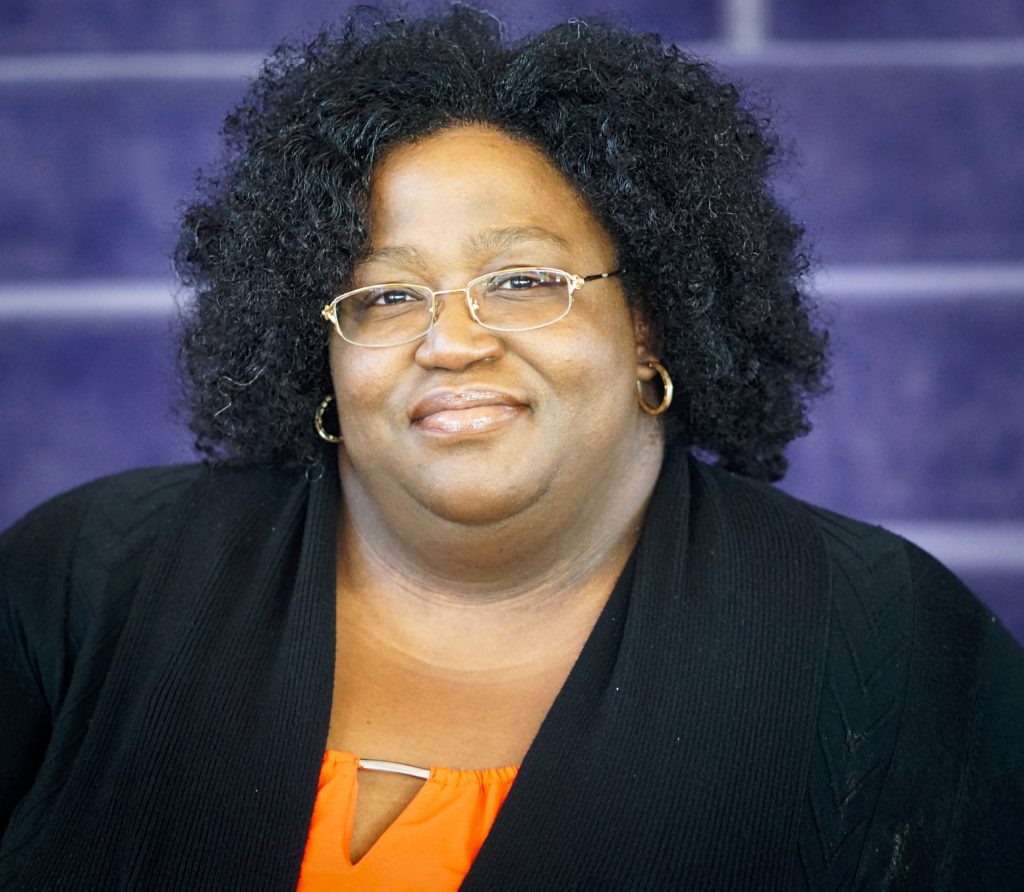
By Alexis Grace
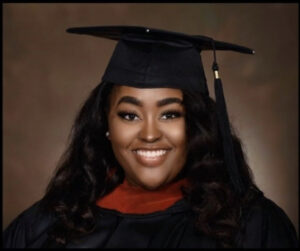
How does it feel to be a graduate? It’s the question everyone has asked with pride and joy in their voice. That question has a different meaning for recent graduates such as myself and fellow colleagues, who received diplomas, but went without a ceremony due to the COVID-19 pandemic. At the beginning of March, we had no idea that our last moments walking throughout Clark Atlanta University’s campus would abruptly end.
There was a sense of confusion, continually asking myself “what’s next,” “how am I going to get a job due to the high unemployment rate and lack of hiring” and “Should I move in with my parents until everything blows over?”
Graduating from college is not just a milestone, it’s a transition into adulthood. The everyday struggles of the world can be daunting, with warnings to enjoy college while you can because time flies. This statement has been continuously said without knowing there was such a unique meaning for the class of 2020.
But my worries aside, I maintained hope and patience that I would find a job. The summer before my senior year, I participated in the NABJ Student Multimedia Projects. Throughout my time in the program, different universities and recruitment programs from media outlets would stop to speak with us and seeing the work.
There, I ran into James Washington and Janis Ware, general manager and publisher, respectively, of The Atlanta Voice, a Black-owned newspaper based in Atlanta. They saw the work I did in the program and wanted to see my work at The Voice. While they knew I could write, they never knew of my other hats, from graphic design and layout to social media management.
I was an intern at The Voice for two years prior to student projects, writing articles about different events happening across the city. I loved to write, but I wanted to gain more experience on the digital side of things, so James, or Washington as he is often called, said he would contact me closer to my graduation date.
Between student projects and graduation, I became NABJ-CAU president and interned with CNN’s digital programming team. I worked on a few personal projects while gaining credentials and certifications for programs on LinkedIn and HootSuite.
My talents and hardwork opened doors for me to gain connections and meet valuable people in the media industry. My internships and other media work also taught me the importance of holding on to and building relationships. In my case, my meeting with Washington and Janis led to social media jobs for The Atlanta Voice and The Dallas Weekly, a Black-owned newspaper based in Texas. I went from having no job to two positions in less than a month.
If the pandemic never happened, I would not have looked into pursuing another degree. Several universities waived GRE requirements, which worked in my favor because I hated the test and the preparation that went into it. I am now in my first semester at Agnes Scott College, pursuing my master’s in writing and digital communication.
For anyone still looking for a job, my advice to you is this: Never burn bridges that you have not fully built yet. You never know what is on the other side. Also, do not limit yourself on what you can do. There are so many resources and opportunities waiting for you.
Alexis Grace is a 2020 graduate of Clark Atlanta University. She currently works as a social media editor for Black-owned publications, The Atlanta Voice and The Dallas Weekly.
Reflections from the NABJNAHJ Virtual Convention
The convention was ‘very beneficial’
By Kassidy Jack
With the recent changes to life as we know it as a result of the COVID-19 pandemic, nothing has been the same, and people are still adjusting to the new norm. The National Association of Black Journalists (NABJ) and the National Association of Hispanic Journalists (NAHJ), however, did not let the virus stop them from holding their annual convention.
I attended the organizations’ first joint virtual convention and career fair, a four-day event catered to aspiring and active journalists, media executives, journalism educators, public relations professionals and students.

All sessions, workshops, plenaries, forums, networking activities, meal events and the highly anticipated career fair were held online. There were so many excellent speakers and panelists.
Some of my favorite sessions included “Bearing Witness While Black: African Americans, Smartphones and New Protest #Journalism,” led by MSNBC’s Trymaine Lee and author of Bearing Witness While Black, Allissa V. Richardson. During this session, Richardson discussed what inspired her to write her book, Bearing Witness While Black, as well as how to avoid being traumatized by microaggressions Black people experience daily. I learned about the difficulties’ reporters face covering Black Lives Matter protests while dealing with their mental and how Richardson has personally learned to cope while still executing her assignments.
Another notable session was “Entrepreneurship for the Next Normal,” in which Black women business owners, Tina Wells, founder of Buzz Marketing Group, and Yolanda Owens, owner of Iwi Fresh, discussed how COVID-19 affected their businesses. The women also shared creative tools and tactics they used to help their businesses survive such a crazy time. I loved the inspiration that filled the virtual room and the transparency from the panelists. I do not think there was one person who left this session without feeling motivated and valiant in continuing their respective endeavors despite COVID-19.
Besides the online sessions, I was thankful that convention attendees could playback any session after it ended. For someone like myself who wanted to be in about 30 sessions at once, this was very beneficial.
NABJ and NAHJ did a remarkable job with their very first virtual joint convention. This was my first convention, and I can only imagine how much better the live event is.
Kassidy Jack is a junior at Clark Atlanta University.
The convention ‘was a changing moment in my life and career’
By Ariyana Griffin
I have always loved journalism and media, but was nervous about officially taking it from a hobby to my undergraduate major and career path. After getting my feet wet by joining my school’s newspaper, The Panther, I switched my major to journalism from sociology. Through my school, Clark Atlanta University, learned about NABJ and joined immediately. Being new to the organization, I was not familiar with the convention. So, when a classmate sent me a tweet about a chance to attend the convention, I knew I had to take this opportunity to gain some exposure. It was the perfect way to get acquainted with the organization and some of the opportunities NABJ has to offer.
Thanks to Craig Brown, a Clark Atlanta University graduate, and AABJ’s

parliamentarian, I was granted access to the NABJ Virtual Convention on August 5-8, 2020. It was amazing to be in a space with people who look like me and who are passionate about journalism and everything it entails. I also appreciated that the convention incorporated current events and subjects such as social justice issues and the COVID-19 pandemic because it made the convention interesting, engaging, and modern.
Sessions such as the W.E.B. Du Bois Plenary, “Progress Before, Progress After: The Criminal Justice System and COVID-19” and “Where Do We Go From Here: What’s Our Collective Strategy to Overcome Social Injustice?” helped me better understand the correlation between the work that activists do and the work that journalists do to inform the public.
Hearing panelists with differing viewpoints gave me a wider horizon about many topics, including prison reform. Maria Hinojosa, anchor and executive producer of Latino USA, said Latinos are often unheard when it comes to reform discussions. While learning that upset me, I was even more motivated to do work that is inclusive.
Hearing speakers, journalists, and activists discuss their passion was a changing moment in my life and career because it motivated me to write about civil rights issues, police brutality, social justice issues, and the history of these topics that are often not taught. While my first convention was virtual, the sessions have me excited for next year’s convention in Houston, Texas.
Ariyana Griffin is a mass media and arts major with a concentration in journalism and a sociology minor student at Clark Atlanta University. She also runs a blog, Equal Justice for Some, focused on highlighting injustices. She is originally from Inglewood, California.
APS Superintendent discusses her goals for the school year
Atlanta Public Schools Superintendent Lisa Herring spoke with Condace Pressley, host of AABJ’s monthly program In Contact, about her new role and how she’s managing the district in the middle of the COVID-19 pandemic. Herring has more than 25 years of experience in education and is a graduate of Spelman College and Georgia Southern University. Prior to joining APS, Herring served as the superintendent of the Birmingham City Schools in Alabama. Here is a portion of the interview:
Talk to us about your vision and some of your goals for the Atlanta Public Schools.
Lisa Herring: My vision as an educational leader, specifically as a

superintendent, is to ensure that we first remember that our core business is teaching and learning. And secondly, in that core business of teaching and learning, there’s a model that focuses on three key areas: the student, the teacher, and the content of what we teach. I’ve been fortunate to serve in urban school settings. My vision for Atlanta Public Schools is perhaps threefold. Number one, it is one in which we see a high level of academic progress and success for all students that we serve. Number two, that as we define that progress, and measure it, and that we look at it through a lens of equity. And then third, I do believe that every child that enters into our systems should exit, not only having fully identified their gifts, but being able to have the necessary skills to then transition to the next level of their life’s journey.
What are those one or two things that are going well in APS, and how do you seek to build upon them?
LH: Let me let me take a moment to brag about our outstanding leaders and high performers within the school system over the last several years. I know this as a former superintendent, some of the most critical decisions we make are tied to principalship selection and district leaders who help support schools. I am so impressed with not just the caliber of staff, but the love and loyalty and investment in the work and the children that I have seen. I’ve observed in the last several months individuals that perhaps we would call them in any other field essential workers. Those who have been frontline and sharing that Atlanta Public Schools continues to run and operate in a fluid successful manner, even with restrictions during a pandemic, whether that’s the school bus driver whose role has changed now into food delivery services, or school nurses, or school psychologists and counselors who’ve not only taken additional approaches to how we make sure that people are well. And because of the pandemic, we’re all cognizant and conscious about the cleanliness of our surroundings. And I’m not saying that it wasn’t [before the pandemic]. But given what we had, we’ve taken it to another level. I am clear that we have a high level of dedication to excellence in Atlanta Public Schools.
It’s one thing to start a new position at the end of a school year or at any point during the year. But to do so in the middle of a global pandemic, for which there is no vaccine is quite the undertaking. How would you characterize your transition, and as we wrap up your thoughts, again, just looking ahead to this exciting new challenge that you’ve accepted.
LH: The challenge is indeed exciting and new in that, as familiar as the city is, being the superintendent in the city as a new role and opportunity, being a superintendent, whereas it may not be new, the superintendent of city of Atlanta, or Atlanta public schools is new for me. I’m very thoughtful every day I think about are we doing enough or doing too much in certain categories. I worked very hard as a leader to not make decisions that I have to second guess. And I also want to make certain that the team of leaders around me feel empowered to execute whatever expectations are put in front of them.
That being said, we have to be very thoughtful about our practices and our actions. We have to have a level of reflection when we need to reevaluate but we also have to do things with a sense of urgency. And yet in the midst of all of that, we also have to remember that we’re not on an assembly line building cars, but we’re virtually in homes and in front of individuals. Still trying to impact minds and the thinking process, it’s a heavy weight. I think about it every day.
And then I think about the fact that we’re also trying to do it and keep ourselves healthy, and keep the people that we serve healthy. And all of us are only individually responsible for that part. We couldn’t have guessed this season. Our goal in Atlanta Public Schools, is that a year from now or two years from now, when they’re trying to figure out how to make certain that when and if it should ever reoccur, maybe they’ll look at APS for some guidance there. We want to be a model for what is right. What is right, not just in terms of the work, but that we do right by people, and most importantly, children.
This interview was edited for length and clarity. The full interview may be viewed Sundays throughout September at 10:30 a.m. on AIB-TV.
This issue of The Byline was edited by Raisa Habersham.