Your cart

THE BYLINE – SUMMER 2021 ISSUE

Greetings AABJ members,

First, I want to thank you for your continued support and readership.
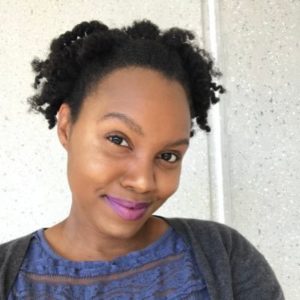
Raisa Habersham

Second, you may notice this edition of The Byline is a hybrid issue. You’ll read stories focused on men in media and the challenges that led to their triumphs. We’ll also have a quick Q&A with Aviation Queen and The Points Guy senior editor Benet Wilson on preparing for virtual convention. We hope you find this issue insightful and useful as we take a brief publishing break for August.

Raisa Habersham, Vice President of Print 


Metro Atlanta journalist Donnell Suggs on his transition from freelance to full time reporter

By Elisheva Wimberly 

When Donnell Suggs first moved to Atlanta in 2006, he started working at The Atlanta Daily World and The Atlanta Voice. According to Suggs, newspapers were more prevalent back then, but it was equally as difficult to get on staff at these papers. Suggs, being new to Atlanta and not knowing anyone in the business, wanted to be involved in journalism and freelance reporting became a window of opportunity. 

Publications during that time had budgets for freelance journalists and those freelance stories helped him apply for reporter positions and gain additional experience. Suggs worked at his college newspaper at the New York College of Technology. He also wrote a few sports stories for small print publications in Brooklyn, N.Y.

“I didn’t come to Atlanta with a ton of experience but I had to hustle and I was willing to go and cover that football game for 35 bucks,” Suggs said. ”Papers will always take you on if you’re willing to work cheap.” 

Since Suggs was willing to work for low wages, he used freelance writing to break into the industry. Suggs reminisced on his experience when he came to Atlanta and said that was ultimately the best course for him. The need for inexperienced journalists is not the same today as it was when Suggs first came into the industry.

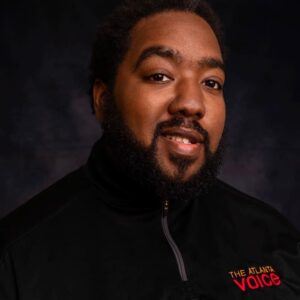
Donnell Suggs, reporter with the Atlanta Business Chronicle. (Courtesy of Donnell Suggs)

“Today, you all have so many options,” he said. “Online existed in 2006, but it wasn’t nearly as strong as it is today. We didn’t have specialty websites like the AJC.”

Before digital media became so popular, Suggs pitched to print publications. His dream was to cover baseball games in the paper as a subsequent love for him and his father’s love for baseball. Suggs said the sports department has always been fully covered by people. 

Atlanta, being a big sports market, made Suggs realize he had to make himself available. When Suggs pitched to print publications he understood he had to give them something good, whether that be reporting in the rain, traveling to work, or turning in a story at 11 p.m. Suggs always made himself available to turn in the assignment.

Now, Suggs writes full time for the Atlanta Business Chronicle. “There’s someone that is 35 and 45 dying to get into the business,” he said. “I did not dream of being a real estate reporter in Atlanta.” Suggs’ goal was to get to the AJC or the Atlanta Business Chronicle. As a daily print and online journalist, Suggs says it is important to keep fighting for your spot. 

Although Suggs has been covering a wide range of subjects for 15 years, he says taking the traditional route is not necessary in today’s time. Social media platforms such as Facebook, Twitter, TikTok, and even blogs can help inexperienced journalists get hired at major newspaper publications.

Donnell Suggs, reporter.

Suggs told The Byline he applied for the Atlanta Business Chronicle (ABC) five years ago but knew he wasn’t ready to take on the position. Suggs was hired by one of ABC’s recruiters. He reports all of the big real-estate deals happening in the city of Atlanta. Suggs always dreamed of working for the ABC and received one of only 16 jobs on the paper under their real estate reporters. 

“I was waiting for this moment and now it’s like we’re here.” Suggs said, adding the Atlanta Business Chronicle serves a specific demographic because it’s a business newspaper. “I haven’t had this much pressure in a while,” Suggs says. “The rest of the staff has been there for over a year, it’s a lot of pressure but I love it.”

With his new position at the ABC, Suggs said he hopes to see more Black representation in the paper. Suggs says most Black representation does not get as much recognition unless they’re a prominent Black figure or it’s a pressing movement happening such as Black Lives Matter. Suggs wants to be a representation for his son, his stepdaughter and his community and is working toward that goal in one of Atlanta’s top prominent papers. 

He recommends joining the Atlanta Association of Black Journalists (AABJ) or the National Association of Black Journalists (NABJ) if you’re not already a member, adding that joining these organizations provided him with connections and strengthened his confidence.

“Seeing these people made it seem like I could be at a major paper publication and still be Black,” Suggs said. “You need to be around your own people, Black or white. There is no better way to do your craft than to be around your own people who do it professionally.”

Suggs’ goal is to one day become an editor. He wants to be able to hire someone like him at the age of 30 with his same drive to get out quality stories. Suggs advised any journalist to not give up or take a year off. 

“You will win and you’ll get to where you want to be but you can’t be above the journey.” Suggs says.

You can read Donnell Suggs articles at www.bizjournals.com.

Elisheva Wimberly is a student at Georgia State University.


AJC reporter Ernie Suggs talks about his pandemic T-Shirt A Day posts 

By Kassidy Jack

COVID-19 has affected our lives in ways that we had never imagined. It forced college students to leave their campuses, left many people unable to work, and required essential workers to put their lives on the line daily. 

One main change that COVID-19 also brought along was quarantine in the beginning stages of the pandemic. People were forced to stay indoors unless it was urgent. But Atlanta Journal-Constitution reporter Ernie Suggs came up with a creative way to spend his days in quarantine: Suggs uploaded a daily picture with a different T-shirt onto his social media. And 365 days later, he is still posting them. The Byline spoke with him about his reasoning and the joy it brought onlookers during the pandemic.
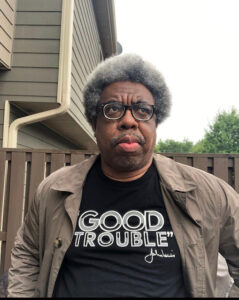
AJC reporter Ernie Suggs wears a “Good Trouble” T-shirt in honor of the late Congressman John Lewis and late Civil Rights pioneer C.T. Vivian. (Ernie Suggs’ Instagram)

Kassidy Jack: What inspired your initial t-shirt post?

Ernie Suggs: Over the years, I’ve worked in a corporate setting as a newspaper reporter, and I go to work every day with a tie or polo shirt. So, over the years, I’ve collected all these t-shirts that I’m never able to wear. During the pandemic, I’ve been working from home. Because of that, I decided these t-shirts would be my work uniform. I started posting them on Facebook, Twitter, and Instagram and it just kind of took off.  I think I did about 160 days straight, took a bit of a break during the winter, and I just started back up last week. It was also something fun and brought some levity to the tragedy of this pandemic. I still probably have 100 t-shirts that I still haven’t worn. 

KJ: Did you think that a year later, you’d still be posting your t-shirts?

ES: I knew that if we were still in the pandemic and I was still working from home, I would. I have 250 nice new T-shirts. So, until I go back to work, I’m still going to be wearing them. I also knew I’d be posting until I got tired, or people got tired. But people don’t seem tired, and neither am I. 

KJ: How do you think your posts affected the lives and spirit of your followers?

ES: I think it gave and still gives people something to look forward to. I believe our timelines are inundated with a lot of negativity, namely surrounding politics. So, my T-shirt posts are just this positive thing. It isn’t controversial, just fun. I’ve even gotten people who send me shirts because they enjoy the posts so much. Throughout this whole process, I think I’ve probably gotten 20 T-shirts. So, it’s been a good thing going on.

KJ: Which t-shirt post has been your favorite?

ES: I love my fraternity ones. I am also a big fan of Prince. I try to have a theme for each week. That helps it become more manageable. Sometimes, I’ll do Prince, the fraternity, foreign or local cities, or even historically black colleges. Choosing the themes are always fun. 

KJ: What have people said about your posts? Have you seen anyone take up your challenge? How have people reacted? 

ES: When I first started, I had people on Twitter who decided to take on the challenge. They said they had some cool T-shirts and wanted to wear them. They slowly fell off, so I guess I’m the champ! But I think that it’s become kind of like this whole social media event that people are drawn to. Last year, I did a Prince week and got retweets from Wendy & Lisa, who were in Prince’s band. I also try to tag any organizations I’m representing, so it’s also fun when they retweet, comment, or send me something. That happens probably once or twice a week. 

KJ: How do the posts make you feel? 

ES: I’m no social media maven, but this is a way for me to expose myself and get out there once a day, so people know I’m still here. Yeah, we’re in a pandemic, but I’m doing fine. I just hope that I can put a smile on someone’s face or meet new people throughout this whole process. And as far as motivating me, I mean for one, I have to wear something, right? It has also helped me to develop a routine throughout this pandemic which I think is super important.

Kassidy Jack is a student at Clark Atlanta University.


Atlanta Voice sports reporter Anfernee Patterson reflects on finding his first job in a pandemic

By Anfernee Patterson

It seems March 2020 was yesterday. I was in Macon covering the basketball high school state championships, which featured Atlanta Public School teams Douglass High School girls and Therrell High School boys. It was a fun weekend, as usual, covering sports as one team won their second straight championship. I was there covering it for The Atlanta Voice, but as I drove back to Atlanta, I did not think that it would be my last time covering a sporting event until August 2020.

Last year, when COVID put the nation at a standstill, a lot of things became uncertain. Are sports going to be around? Is the world going to get back to normal? Will I be able to do sports journalism? Will I be able to do my internship? Am I going to make next month’s rent while being out of work?

As these questions swirled in my head, I prioritized completing my classwork and paying my bills. On top of that, I had to ensure my resume, writing and work samples and broadcast reel were ready to post and send to potential employers.

When the sports world began to shut down, my internship was placed on hold. I saw it coming and knew it was out of my control. This particular internship was something I thought would put me in my sports journalism career permanently and open up numerous doors as I graduated. During the summer and preceding months, I wondered if that internship would still be available. I kept in contact with the coordinator, but the opportunity just was not there. 

I applied for numerous sports and news jobs at various newspapers and television stations. In some cases, I never heard back; in others, I received rejection letters. I attended the annual NABJ Convention and job fair, but had no luck.

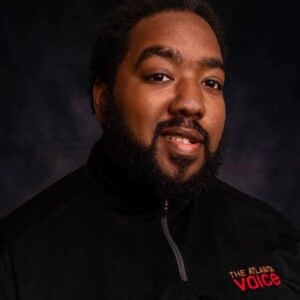
Anfernee Patterson, sports reporter for The Atlanta Voice.

To keep myself busy, I formed a podcast with my friends at The Atlanta Voice, where I interned during the summer; I kept my mind focused and created content. To maintain my skills, I practiced standups (where TV reporters stand in front of a camera and narrate part of a story) or took photos throughout downtown Atlanta. I also updated my equipment so I could have better content and materials for my stories and podcast.

Apart from keeping my skills fresh, I drove around when I could, I exercised, and I tried to get out of the house — I did everything I could to ensure I was prepared for any opportunity and in good mental health. But In the end, I had to move back to my hometown, Manchester, Georgia, which still gets me down to this day. At the time, I did not have a job nor enough money to afford rent during the pandemic. 

That was a dark moment. I have a love-hate relationship with my hometown, and it left me feeling stagnant and lost. I eventually became depressed; I went almost two weeks without social media and without speaking to my friends and loved ones. I had hit rock bottom: I just graduated college and had nothing to show for it. I felt everything I did was for nothing, and I had to just figure things out and give myself time.

With the sports season being in question, I wondered about the future of sports journalism. Would it be sustainable? How long will it last? Will it be a one to two year hiatus before they play again? Is it even safe for players to play sports and reporters cover it and do their job efficiently? This and many more questions came to my mind.

As states announced plans to hold in-person or virtual school, some states such as California canceled the football season. In Georgia, it was surprising to learn the Corky Kell Classic and high school football would be played. But that decision would be a blessing in disguise for me. The Atlanta Voice called me to cover as much high school football as I could. 

I was taken aback by the call, as it seemed nearly impossible that I would be able to cover sports. But reassuring knowing that my job valued high school sports coverage and the reporting I have done. 

Today, I still cover sports for The Atlanta Voice, the first place that gave me an opportunity. I may be a freelancer and I still have to commute to Atlanta from Manchester, but I am glad I get to do what I love. It is also a good feeling knowing that what I’ve worked for has paid off. While I may not be exactly where I want to be, getting this opportunity lets me know that I am on the right track. 

Finding work in an ongoing pandemic can be tough. I’m always willing to give advice to anyone entering the journalism field after college. So, here are a few things that I think helped me, and may be of help to you:

  • Get as much experience while you are in college and save all of your work.
  • Network. Always be nice and respectful to people and follow up. It may not mean much at the moment but do it because you genuinely care. Always surround yourself with mentors, colleagues and friends who understand you and have your best interests at heart.
  • Get involved. Join NABJ, AABJ, campus newspapers and television stations that will help you get that experience.
  • Always ask questions and don’t hesitate to jump at an opportunity. Whether it is to cover a specific event that you enjoy, a potential job opportunity or just a chance to help you in your journalism career, ask to do it. I truly believe that a closed mouth cannot be fed and that no question is a dumb question.
  • Be true to yourself but never be afraid to grow. Stay true to your values and what makes you special because that is what makes you unique and sets you apart. Don’t try to be something or somebody else. But always figure out ways you can be a better journalist and produce better content. Determine the best way to be a better you.
  • Find balance. Do things outside of journalism that matter to you and keep your mind fresh. Whether it is exercising, reading a book or traveling, take time for yourself because you earned it and need it.

As I reflect on the pandemic and my professional journey, I am thankful to God that I am blessed to do what I love. I am grateful for my life and for having the sense of mind to keep working and prepare for my opportunity. It is my hope that I continue to elevate as a sports journalist, but also that anybody reading my story who feels that they’re in the same position never stops and keeps pushing.

Anfernee Patterson covers sports for The Atlanta Voice.


Quick tips on navigating NABJ’s virtual convention

By Kassidy Jack

For the second consecutive year, NABJ’s convention will be held virtually. While some are not new to virtual conventions, there may be a few newly graduated students or working professionals who are first timers and need advice on how to navigate a virtual convention. The Byline spoke with Benét Wilson, senior editor at The Points Guy, founder of Aviation Queen, and longtime mentor to Black journalists about preparations and tips for this year’s virtual NABJ Convention. 

Kassidy Jack: What are some things you’ve been doing to prepare for the convention?

Benét Wilson: Well, to start with, I’ve been checking my internet connection frequently. That was an issue I ran into a lot last year. I’ve also looked at the schedule and created calendar reminders for every session I want to attend, whether it’s a panel or a plenary session. 

KJ: What is something that last year’s convention taught you, and how will you use it this year?

BW: It definitely taught me to watch the time because many of the sessions would immediately follow one another. By using the calendar, I’ll see the notification pop up and move on to my next event.
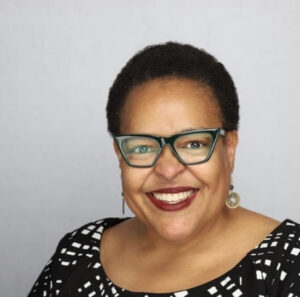
Benet Wilson, senior editor for The Points Guy and longtime NABJ mentor.

KJ: How do you recommend networking in a virtual setting?

BW: Social media, LinkedIn, and Google are your best friends. If there are specific people that you know you want to speak with, names you recognize, or even titles you’re interested in, find them on social media. You can simply say, “I would love to get in touch with you either before, during, or after the convention.” 

KJ: What are some resume and cover letter tips?

BW: Well, I’d be the perfect person for that question. I’ve reviewed more than 400 resumes and cover letters for NABJ members since 2009. As far as resumes, the first tip I suggest is always keeping them updated. Once you’ve done that, have someone review it for a new set of eyes. Ideally, you want a professional. Lastly, for resumes, always customize them for the job you want. Review the qualifications and skill sets, and be sure you are representing those on your resume. You can’t use a generic resume for every job. 

As for cover letters, you want to tell a story. One of the best cover letters I read was done by a student getting her journalism degree, but she was also on her college’s women’s basketball team. She talked about her experience on the basketball team and how those experiences applied to her work ethic for journalism. It was brilliant, and it told the employer, “This is why you want to hire me.”

KJ: What advice would you give to people about the type of clothing and background type they should use for virtual meetings?

BW: You don’t have to wear a ball gown. You don’t have to wear a suit. Look presentable. Wear a nice shirt. Bottoms and shoes don’t matter because no one can see those, honestly. If you have a virtual background, you can put it up as long as it isn’t too busy. You can even blur your background. One thing I will tell people is not to use Zoom makeup. Finally, just because you’re behind a screen doesn’t mean you shouldn’t give any effort to how you are presenting yourself, especially in a professional setting.

Kassidy Jack is a senior at Clark Atlanta University.


This issue of The Byline was edited by Tianna Faulkner and Raisa Habersham. The Byline is taking a hiatus for the month of August.


THE BYLINE 03/2021

AABJ Mourns the loss of Atlanta Voice editor Marshall Latimore

AABJ Family,

We are mourning the death of Marshall A. Latimore, chief content officer and editor-in-chief of The Atlanta Voice. Latimore was an advocate for Black student journalists, a champion of HBCUs and a great friend.
A graduate of Tennessee State University, Latimore, 36, has served as a page designer for Alabama Media Group, Gatehouse Media and the USA Today Network. He also served as the creative director for duGard Communications and HBCUStories Inc. and publisher and editor-in-chief of STAYONTHGO magazine.

AABJ mourns the death of Marshall Latimore, who served as editor-in-chief of The Atlanta Voice. He was 36.

A champion of the Black press, Latimore spent the last three years at The Atlanta Voice, developing young reporting talent and increasing the newspaper’s digital footprint.

“We at The Atlanta Voice are coming to grips with the sudden and unexpected loss of our Executive Editor and Chief Content Officer, Marshall A. Latimore,” Janis Ware, The Atlanta Voice publisher, said in a statement. “Marshall stood in the epicenter of this Atlanta treasure as we have transformed The Atlanta Voice into a multi-media powerhouse set to grow our legacy for generations to come. His loss is not only ours, his family and loved ones, but also our community’s. His leadership cannot be replaced but his direction will be followed as our mission continues to be a voice for the voiceless. His presence will be missed but his voice will continue on in every aspect of our future. Marshall was loved and cherished by all whom he met.”

Latimore was recently interviewed for the February issue of AABJ’s The Byline on the importance of the Black press and had this to say: “Our purpose is ensuring that the people who have been the most oppressed and disenfranchised have a voice and are able to tell their stories that are based on the truth.”

AABJ extends its deepest condolences to Latimore’s family, friends, colleagues and his Atlanta Voice family.


WSB’s Nicole Carr’s Journey to Investigative Reporting 

By Kassidy Jack

As a child, Nicole Carr was always talkative and curious. She would frequently try to listen to the conversations between her parents, aunts, and uncles. 

At the same time, her heart was always in writing. She still has little books she wrote as a child that she would bind with yarn. But her very first news article would come when she was in the eighth grade when she wrote about Terence Roberts, one of the members of the Little Rock Nine, the first Black students ever to attend classes at Little Rock Central High School in Little Rock, Arkansas. 

Roberts spoke to Carr’s class, and her teacher at the time asked her to write about it. From there, Carr’s interest in journalism piqued: The summer before 10th grade, she studied journalism at Cambridge for a summer prep program. She later attended Winston Salem State, where she served as editor-in-chief of the campus’ paper. Carr then attended Syracuse University, where she obtained her master’s degree in broadcast journalism. Soon after, she began her career as an intern at the Fayetteville Observer in Fayetteville, North Carolina. 

Nicole Carr is an investigative reporter for WSB-TV.

“I liked talking to people. I liked finding things out. And so I think that is what kindled my interest in journalism,” Carr said.

But in between then, Carr’s life was filled with the news, driven in large part by her dad’s Army background. Because Carr grew up in a military family, she traveled to various places and was constantly exposed to essentially history in the making. She remembers TV cameras being around at a homecoming for her father’s unit as they returned from the African countries of Mogadishu and Somalia. 

The movie “Black Hawk Down” was released, based on a mission her father was involved with in Fort Campbell, Kentucky. Carr said that most of her time spent with her father was consumed by them watching CNN, as her father always wanted to remain informed. 

“Growing up, we were always in the middle of historical significance, and it always made me wonder ‘what’s going on?’” Carr said. 

After working in Fayetteville, North Carolina, Carr moved to Wilmington, North Carolina, where she was able to get live reporting experience, such as covering hurricanes. She then moved to Atlanta to be a general assignment reporter for WSB-TV from WVTD in Durham, North Carolina. 

After nearly two years at WSB, Carr was promoted to investigative reporter. Carr said she never specifically decided on becoming an investigative journalist, but decided to take the initiative and time to dive deeper into her stories led her to investigative journalism. 

“I wasn’t looking for a title, but I also knew that standing out and having some deeper reporting in a largely competitive newsroom could show that I could hang with the best of them,” said Carr. 

 Like many of her peers, Carr has faced many challenges as a Black journalist. One of the reoccurring issues she has dealt with is the perception of bias or being tone-deaf because of how she may speak on a particular topic. 

“I think the perception of someone who looks like you handling certain stories might make people uncomfortable, for whatever reason,” Carr said. No matter how professionally she handles a story, there is always an assumption that her stance is somehow subjective. “We address problems by bringing attention to them.”

Carr said one of her proudest stories is of a lady who was billed $10,000 for a DNA test she hadn’t authorized. She was a mental health patient, and her doctor had forged her signature on the test. By the time Carr and the rest of her team had finished the story, the business was under a state investigation and shut down soon after. “I think that’s the power of journalists; we were able to expose something that no one was confronting,” she said.

Carr wants to be remembered as a truth-teller, whether that makes people uncomfortable, whether it helps people, whether there’s a fall out from it, or all three. 

“I think truth is light,” Carr said. “We’ve gotten caught up in the way of both siding parts of our reporting that doesn’t require that. It requires us to plainly tell the truth that’s in front of us.”

When asked about her career goals within the next five to ten years, Carr explained she sees herself doing journalism differently. She wants to go back into the more in-depth storytelling. She aspires to be in a position that will allow her to take more time with her stories and delve into accountability journalism. She wants to write more and eventually work on documentaries. 

To aspiring journalists, Carr says to remember there is no one way to achieve a goal. It is okay to admire people and study the methods used, but you also have to always do what is best for you.

“There was a time when they would teach women in television not to get married or have a family until you’ve gotten into your career,” Carr said. 

While she understood where the advice came from, she acknowledged that wasn’t her path, and she has been able to have it all: a successful career and personal life. “If I stopped today, I’d say good job,” Carr said.

Kassidy Jack is a student at Clark Atlanta University.


Digital marketing specialist Kimeko McCoy explains the digital space 

By: Jamila Wood 

Kimeko McCoy has an astute knowledge of branding and marketing in the digital space. She is a freelance journalist and digital marketer. McCoy has worked with WarnerMedia as a digital marketing specialist and coordinator and at the Atlanta Journal-Constitution as an audience development specialist. Now, she is a marketing reporter for Digiday. She takes the time to elaborate on her experience and the responsibilities of a marketing reporter. 

JW: Can you explain the responsibilities of a digital marketing specialist? 

KM: In my formal role as a digital marketing specialist, I was in that role as a social media marketer strategist and audience development. I spent maybe three or four years in that role at various companies. My experience was an all-hands-on-deck situation. People think that digital marketing is just email marketing and social media. There are so many facets to push people along your marketing funnel. It looks different for everybody. It depends on the service or product. For me personally, television required a lot of legwork. You had to work with teams that were knowledgeable about traditional out-of-home marketing. It is a project management team effort. 

JW: What was the difference between being an audience development specialist and a digital marketing reporter?

Kimeko McCoy is a marketing reporter for Digiday.

KM: As a digital marketing reporter, I look at the marketing landscape. I see where people are investing their ad dollars, what is important to them as far as the marketing funnel and where brands are seeing the most success. As we are in a global pandemic, what’s the best ways businesses have been able to market to their consumers to keep your business thriving. An audience development specialist, I was on the opposite end of that. I used SEO, social media newsletters to make sure I am getting traction to the stories, videos and other digital aspects. 

JW: How do you feel about social media encouraging an industry of marketing specialists? Do you think social media influencers are well-versed to share tips about marketing and passing it off as a way to quit your 9 to 5? 

KM: I think it could be a bit misleading. I think when you have somebody who has success and doesn’t divulge how they got there then it can be harmful for people who are looking to you as an industry leader. If you’re a celebrity and you say “I am going to start selling a book about how to live your best life.” Well if you are not divulging that you have a makeup team, nanny, personal chef. I do think it’s a little misleading to encourage people to buy your product. Especially if you are pitching as a DIY and you are not telling people you had help along the way. It’s the same thing for social media marketing. I think oftentimes it waters down what a social media marketer or digital marketer is because there are unproven, debunked shortcuts that have been introduced. For example, buying followers or using this hashtag strategy and you will be able to gain followers by the morning. There’s nothing wrong with trying and testing different strategies it all depends on what your brand is and what you are trying to do. You have to take it with a grain of salt. Keep in mind that what works for someone else’s brand may not work for yours. 

JW: What is one common theme you find within all social platforms?

KM: There is no common. You have to approach every single platform differently. There are a lot of people that are trying to use the same video on all platforms. What is proven successful on Tik Tok is not going to be proven successful on Reels. You have to approach each platform separately. 

JW: Which social platform gives journalists and digital creators the opportunity to grow organically? 

KM: For journalists, I would say Twitter is a phenomenal help. As a content creator, I think Instagram is still pretty heavy. Tik Tok is kind of storming into that space so we will see. But, I think you are starting to see a rise in Clubhouse. There might be a space for a new type of influencer as social platforms continue to rise. 

JW: What should journalists keep in mind when building their brand? 

KM: The key for me has been just being extremely online. Including yourself in conversations, making sure you are making those connections, and don’t be afraid to talk to people. I don’t know how you are going to be a journalist and be afraid to talk to people. That’s step number one. You can be afraid to slide into someone’s DMs, quote tweet, retweet someone, or engage with them. Not even as a source but get your name out there and make sure you are staying on top of things. I think things happen in a digital space so quickly that if you’re not somebody that utilizes that digital space you will find yourself left out of conversation pretty quickly. 

JW: What advice do you have for individuals wanting to be a digital marketing specialist? 

KM: Put yourself in those spaces and make yourself available. Talk to the people in those spaces and connect with them. A couple weeks before I started this role, I was hosting coffee meetings where I would hop onto a Zoom or Google Hangout and just talk to people and let them pick my brain. It proved to be a very helpful space just talking and getting to know people throughout your career and I think that helps put a name with a face. 

Jamila Wood is a student at Clark Atlanta University. 


This issue of the Byline was edited by Raisa Habersham and Tianna Faulkner. 


THE BYLINE 02/2021

Black Women Continue To Break Barriers in Journalism 

By Elisheva Wimberly

Savannah Morning News Executive Editor Rana Cash and Miami Herald Executive Editor Monica Richardson never thought one day they would be history makers. Cash and Richardson are the first Black women to hold their positions at their respective newspapers. 

“I recognize it’s historic and meaningful to a lot of people here in Savannah,” Cash says. “You step into a space that has never been occupied by a person of color before means a lot to me.”

Monica Richardson, executive editor for The Miami Herald.

Cash recognizes that being a part of a history comes with a great responsibility. Occupying this position at this moment in our country with the outpour of race relations, Cash admits, is no more than perfect timing. Richardson assumes the same responsibility with her new role. Richardson says there’s a part of her that will be glad when we don’t have to celebrate these types of first and they become a part of our norm.

“It is long overdue. It’s 2021 and we’re still celebrating a lot of these first,” says Richardson.

Richardson declares that even though she is the first Black woman to have this role she is still an avid and experienced journalist who does not want to be overshadowed by her race and gender.

On the other side, Richardson is honored to carry such a confounding responsibility to represent people and communities who never thought this might be possible.

“I have a greater purpose and calling in this world that has nothing to do with the business, ” Richardson says, “It has everything to do with helping to make a difference.” Representation is helping to make that difference.

Neither Cash nor Richardson ever had ambitions to become executive editors.  Cash spent a majority of her career as a reporter. Cash covered college football and basketball at The Dallas Morning News and moved into management at The Atlanta Journal-Constitution, where she was a reporter for seven years and covered college athletics.

Rana Cash, executive editor for The Savannah Morning News.

Most of her career has been in sports even though she’s always had an interest in news. “I found myself wanting to be involved in coverage such as COVID-19 and the loss of Breonna Taylor,” Cash says. 

Cash has always been drawn to leading people. Her leadership skills were natural because she never craved a title. Cash has had mass amounts of support from people surrounding her. She only hopes that other people also aim to reach their goals. 

“It’s not hard to take someone average and make them good, it’s harder to take someone good and make them great,” Cash says, “I’ve reached for more and I’ve always pushed other people to reach for more.”

Just like Cash, Richardson always felt like she needed to do more. Richardson has also had plenty of mentors who have helped her along the way. She always needed to prepare for the next step in her career. Now, she’s concerned with her next move having purpose.  

“When people see me in a meeting or on the other side of a call and I look like them, I can fulfill my greater purpose,” Richardson says.

Richardson started her first newspaper in middle school. Journalism is all she’s ever wanted to do. She started at a small newspaper at Culpeper, Virginia making minimum wage. She worked for  The Florida Times-Union in Jacksonville, the Lexington Herald-Leader and moved to Atlanta as an editor in one of their bureaus. Richardson spent most of her journalism career in Atlanta and says she would not trade her experience for anything. 

Richardson always felt like she could have a voice even outside her own job. She spoke up when she saw something wasn’t right and believed that the best leaders operate outside their own job description, not stay in a box. 

“Always see yourself as a leader,” Richardson says. “It’s important to speak up for what’s right and learn as you go. You have to think beyond yourself.”

Both Richardson and Cash have goals for their newsrooms to continuously create notable journalism. Both the Miami Herald and the Savannah Morning News have a history and brand of creating celebrated journalism, and these two women are making it a mission to continue that tradition. 

Both women want the people in their newsrooms to feel empowered and they both desire to reach and connect with communities to best serve them to do their best work and be successful.

Elisheva Wimberly is a student at Georgia State University.


The Importance of the Black Press 

By Jamila Wood 

The Black press has been an integral part of the Civil Rights Movement in Atlanta and known to give a voice to the voiceless. This election term, the Black press has been put to work with local runoffs and the presidential election.

The Atlanta Voice is known for effortlessly highlighting the Black community within Atlanta. The newspaper was founded during the Civil Rights movement in 1966 by the late Ed Clayton and the late J. Lowell Ware. 

“Our purpose is ensuring that the people who have been the most oppressed and disenfranchised have a voice and are able to tell their stories that are based on the truth,” said Marshall Latimore, current editor-in-chief of the historical newspaper.

Marshall Latimore, editor-in-chief for The Atlanta Voice.

For the past four years, the mainstream news outlets, such as CNN and ABC, have been labeled “fake” due to the amount of political tension the world has endured under former President Donald Trump. Former three time Editor- In- Chief of The Voice, Stan Washington shares how influential the black press is during election season. 

 Washington recalls an article he wrote titled “#Election2018” where he described the ballot to voters who may not be as informed. He continues to share that it is important for journalists to take the approach of informing the masses. 

And where publications in predominantly Black cities lack the cultural awareness to provide astute coverage for Black residents, Black-owned papers fill that void.

Stan Washington, former editor at The Atlanta Voice and dedicated Atlanta Association of Black Journalist Member.

Latimore worked for a publication in his hometown Birmingham, AL, a predominantly Black town with black local leaders. Unfortunately, the front page did not reflect the town’s population. 

“They are making decisions about covering this Black city and most of them don’t live in the city. It would be very frustrating at times,” he said. “The big stories would always be negative stories about Black politicians, Black corrupt business or Black crime. In every city there are a variety of negative and positive things going on. You make a choice in how those stories are covered.”

The Black press’s influence transcends election season. It is a space to employ Black journalists and grant them a starting point. Washington truly believes that the Black press can prepare the next generation of journalists. 

But Washington said journalists still need to have basic skills and adopt an entrepreneurial mindset. “Young journalists are going to have to be more entrepreneurial,” he said. “They are going to have to learn how to be a single person LLC. Learn how to build their own brand and outlet. Have a real mission to serve the people and not to become famous.”

Latimore emphasized the importance of solid reporting and mastering the detailed skill of storytelling, saying “the way you tell a story matters.”

Jamila Wood is a student at Clark Atlanta University.


This issue of The Byline was edited by Tianna Faulkner and Raisa Habersham. 

THE BYLINE 09/2020

How I found two jobs in a relentless pandemic 

By Alexis Grace 

How does it feel to be a graduate? It’s the question everyone has asked with pride and joy in their voice. That question has a different meaning for recent graduates such as myself and fellow colleagues, who received diplomas, but went without a ceremony due to the COVID-19 pandemic. At the beginning of March, we had no idea that our last moments walking throughout Clark Atlanta University’s campus would abruptly end. 

There was a sense of confusion, continually asking myself “what’s next,” “how am I going to get a job due to the high unemployment rate and lack of hiring” and “Should I move in with my parents until everything blows over?” 

Graduating from college is not just a milestone, it’s a transition into adulthood. The everyday struggles of the world can be daunting, with warnings to enjoy college while you can because time flies. This statement has been continuously said without knowing there was such a unique meaning for the class of 2020.

Alexis Grace, Clark Atlanta University graduate.

But my worries aside, I maintained hope and patience that I would find a job. The summer before my senior year, I participated in the NABJ Student Multimedia Projects. Throughout my time in the program, different universities and recruitment programs from media outlets would stop to speak with us and seeing the work. 

There, I ran into James Washington and Janis Ware, general manager and publisher, respectively, of The Atlanta Voice, a Black-owned newspaper based in Atlanta. They saw the work I did in the program and wanted to see my work at The Voice. While they knew I could write, they never knew of my other hats, from graphic design and layout to social media management. 

I was an intern at The Voice for two years prior to student projects, writing articles about different events happening across the city. I loved to write, but I wanted to gain more experience on the digital side of things, so James, or Washington as he is often called, said he would contact me closer to my graduation date.

Between student projects and graduation, I became NABJ-CAU president and interned with CNN’s digital programming team. I worked on a few personal projects while gaining credentials and certifications for programs on LinkedIn and HootSuite

My talents and hardwork opened doors for me to gain connections and meet valuable people in the media industry. My internships and other media work also taught me the importance of holding on to and building relationships. In my case, my meeting with Washington and Janis led to social media jobs for The Atlanta Voice and The Dallas Weekly, a Black-owned newspaper based in Texas. I went from having no job to two positions in less than a month. 

If the pandemic never happened, I would not have looked into pursuing another degree. Several universities waived GRE requirements, which worked in my favor because I hated the test and the preparation that went into it. I am now in my first semester at Agnes Scott College, pursuing my master’s in writing and digital communication. 

For anyone still looking for a job, my advice to you is this: Never burn bridges that you have not fully built yet. You never know what is on the other side. Also, do not limit yourself on what you can do. There are so many resources and opportunities waiting for you. 

Alexis Grace is a 2020 graduate of Clark Atlanta University. She currently works as a social media editor for Black-owned publications, The Atlanta Voice and The Dallas Weekly.


Reflections from the NABJNAHJ Virtual Convention

The convention was ‘very beneficial’

By Kassidy Jack 

With the recent changes to life as we know it as a result of the COVID-19 pandemic, nothing has been the same, and people are still adjusting to the new norm. The National Association of Black Journalists (NABJ) and the National Association of Hispanic Journalists (NAHJ), however, did not let the virus stop them from holding their annual convention. 

I attended the organizations’ first joint virtual convention and career fair, a four-day event catered to aspiring and active journalists, media executives, journalism educators, public relations professionals and students.

Kassidy Jack, Clark Atlanta University

All sessions, workshops, plenaries, forums, networking activities, meal events and the highly anticipated career fair were held online. There were so many excellent speakers and panelists.

Some of my favorite sessions included “Bearing Witness While Black: African Americans, Smartphones and New Protest #Journalism,” led by MSNBC’s Trymaine Lee and author of Bearing Witness While Black, Allissa V. Richardson. During this session, Richardson discussed what inspired her to write her book, Bearing Witness While Black, as well as how to avoid being traumatized by microaggressions Black people experience daily. I learned about the difficulties’ reporters face covering Black Lives Matter protests while dealing with their mental and how Richardson has personally learned to cope while still executing her assignments. 

Another notable session was “Entrepreneurship for the Next Normal,” in which Black women business owners, Tina Wells, founder of Buzz Marketing Group, and Yolanda Owens, owner of Iwi Fresh, discussed how COVID-19 affected their businesses. The women also shared creative tools and tactics they used to help their businesses survive such a crazy time. I loved the inspiration that filled the virtual room and the transparency from the panelists. I do not think there was one person who left this session without feeling motivated and valiant in continuing their respective endeavors despite COVID-19.  

Besides the online sessions, I was thankful that convention attendees could playback any session after it ended. For someone like myself who wanted to be in about 30 sessions at once, this was very beneficial.

NABJ and NAHJ did a remarkable job with their very first virtual joint convention. This was my first convention, and I can only imagine how much better the live event is.

Kassidy Jack is a junior at Clark Atlanta University.

The convention ‘was a changing moment in my life and career’

By Ariyana Griffin

I have always loved journalism and media, but was nervous about officially taking it from a hobby to my undergraduate major and career path. After getting my feet wet by joining my school’s newspaper, The Panther, I switched my major to journalism from sociology.  Through my school, Clark Atlanta University, learned about NABJ and joined immediately. Being new to the organization, I was not familiar with the convention. So, when a classmate sent me a tweet about a chance to attend the convention, I knew I had to take this opportunity to gain some exposure. It was the perfect way to get acquainted with the organization and some of the opportunities NABJ has to offer.

Thanks to Craig Brown, a Clark Atlanta University graduate, and AABJ’s

Ariyana Griffin, Clark Atlanta University

parliamentarian, I was granted access to the NABJ Virtual Convention on August 5-8, 2020. It was amazing to be in a space with people who look like me and who are passionate about journalism and everything it entails. I also appreciated that the convention incorporated current events and subjects such as social justice issues and the COVID-19 pandemic because it made the convention interesting, engaging, and modern.

Sessions such as the W.E.B. Du Bois Plenary, “Progress Before, Progress After: The Criminal Justice System and COVID-19” and “Where Do We Go From Here: What’s Our Collective Strategy to Overcome Social Injustice?” helped me better understand the correlation between the work that activists do and the work that journalists do to inform the public. 

Hearing panelists with differing viewpoints gave me a wider horizon about many topics, including prison reform. Maria Hinojosa, anchor and executive producer of Latino USA, said Latinos are often unheard when it comes to reform discussions. While learning that upset me, I was even more motivated to do work that is inclusive. 

Hearing speakers, journalists, and activists discuss their passion was a changing moment in my life and career because it motivated me to write about civil rights issues, police brutality, social justice issues, and the history of these topics that are often not taught. While my first convention was virtual, the sessions have me excited for next year’s convention in Houston, Texas.

Ariyana Griffin is a mass media and arts major with a concentration in journalism and a sociology minor student at Clark Atlanta University. She also runs a blog, Equal Justice for Some, focused on highlighting injustices. She is originally from Inglewood, California. 


APS Superintendent discusses her goals for the school year

Atlanta Public Schools Superintendent Lisa Herring spoke with Condace Pressley, host of AABJ’s monthly program In Contact, about her new role and how she’s managing the district in the middle of the COVID-19 pandemic. Herring has more than 25 years of experience in education and is a graduate of Spelman College and Georgia Southern University. Prior to joining APS, Herring served as the superintendent of the Birmingham City Schools in Alabama. Here is a portion of the interview:

Talk to us about your vision and some of your goals for the Atlanta Public Schools.

Lisa Herring: My vision as an educational leader, specifically as a

Lisa Herring, APS Superintendent

superintendent, is to ensure that we first remember that our core business is teaching and learning. And secondly, in that core business of teaching and learning, there’s a model that focuses on three key areas: the student, the teacher, and the content of what we teach. I’ve been fortunate to serve in urban school settings. My vision for Atlanta Public Schools is perhaps threefold. Number one, it is one in which we see a high level of academic progress and success for all students that we serve. Number two, that as we define that progress, and measure it, and that we look at it through a lens of equity. And then third, I do believe that every child that enters into our systems should exit, not only having fully identified their gifts, but being able to have the necessary skills to then transition to the next level of their life’s journey.

What are those one or two things that are going well in APS,  and how do you seek to build upon them?

LH: Let me let me take a moment to brag about our outstanding leaders and high performers within the school system over the last several years. I know this as a former superintendent, some of the most critical decisions we make are tied to principalship selection and district leaders who help support schools. I am so impressed with not just the caliber of staff, but the love and loyalty and investment in the work and the children that I have seen. I’ve observed in the last several months individuals that perhaps we would call them in any other field essential workers. Those who have been frontline and sharing that Atlanta Public Schools continues to run and operate in a fluid successful manner, even with restrictions during a pandemic, whether that’s the school bus driver whose role has changed now into food delivery services, or school nurses, or school psychologists and counselors who’ve not only taken additional approaches to how we make sure that people are well. And because of the pandemic, we’re all cognizant and conscious about the cleanliness of our surroundings. And I’m not saying that it wasn’t [before the pandemic]. But given what we had, we’ve taken it to another level. I am clear that we have a high level of dedication to excellence in Atlanta Public Schools.

It’s one thing to start a new position at the end of a school year or at any point during the year. But to do so in the middle of a global pandemic, for which there is no vaccine is quite the undertaking. How would you characterize your transition, and as we wrap up your thoughts, again, just looking ahead to this exciting new challenge that you’ve accepted.

LH: The challenge is indeed exciting and new in that, as familiar as the city is, being the superintendent in the city as a new role and opportunity, being a superintendent, whereas it may not be new, the superintendent of city of Atlanta, or Atlanta public schools is new for me. I’m very thoughtful every day I think about are we doing enough or doing too much in certain categories. I worked very hard as a leader to not make decisions that I have to second guess. And I also want to make certain that the team of leaders around me feel empowered to execute whatever expectations are put in front of them.

That being said, we have to be very thoughtful about our practices and our actions. We have to have a level of reflection when we need to reevaluate but we also have to do things with a sense of urgency. And yet in the midst of all of that, we also have to remember that we’re not on an assembly line building cars, but we’re virtually in homes and in front of individuals. Still trying to impact minds and the thinking process, it’s a heavy weight. I think about it every day.

And then I think about the fact that we’re also trying to do it and keep ourselves healthy, and keep the people that we serve healthy. And all of us are only individually responsible for that part. We couldn’t have guessed this season. Our goal in Atlanta Public Schools, is that a year from now or two years from now, when they’re trying to figure out how to make certain that when and if it should ever reoccur, maybe they’ll look at APS for some guidance there. We want to be a model for what is right. What is right, not just in terms of the work, but that we do right by people, and most importantly, children.

This interview was edited for length and clarity. The full interview may be viewed Sundays throughout September at 10:30 a.m. on AIB-TV.


This issue of The Byline was edited by Raisa Habersham.