
Your cart

THE BYLINE 03/2020

Former CNN producer reflects on her career and being theonly Black woman in newsrooms

By Tenisha Taylor

As a young girl, I always wanted to own my own radio station, WTNT –

Dynamite. I always had something to say, and with the initials, TNT (Tenisha Nicole Taylor), I figured whatever I decided to do in life had to be dynamite.
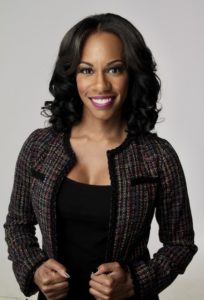
Tenisha Bell.

While the dream of owning WTNT radio never came to fruition, the reality of working in media did. At 16, I dipped my toes in the industry when I became a typesetter for The Chicago Citizen, one of Chicago’s two Black newspapers at the time. After being immersed in black newsroom culture for a summer, I was hooked on media. I followed publisher Bill Garth to meetings, luncheons and business functions, taking copious notes. I shadowed managing editor Lisa Ely ad nauseum, learning everything I could about reporting and the journalism business. By the time I was a high school senior, I was writing stories for the paper, covering stories affecting Black communities. Working for the Black press carried a sense of pride; it was a badge of honor. 

Unfortunately, in my naivety, I thought that every newsroom cared about Black voices and stories. After college and starting my first job, I quickly realized the world was different.  At The Citizen, everyone was Black and championed Black culture. In my new world, I was often the only Black woman in the newsroom — and the only one who cared about our stories. I eventually became the woman who only pitched Black stories. The comfortable, supportive Citizen newsroom wasn’t representative of what I would experience. While I am grateful it solidified my presence as a Black woman journalist, I had to readjust my thinking if I wanted to survive as an African-American woman in this industry. 

As my career progressed, I often carried the burden of being the lone Black person and pitching our stories without being pigeonholed. It was, and is, a delicate balance. Once I transitioned into management, I was careful not to show favoritism. But with time, I learned favoritism was how some races ensured their friends succeeded. Black women in media must play by a different set of rules; there needs to be a class taught about them. A Black woman can’t be too passionate about a story, or she’ll be labeled aggressive. On top of that, black women work twice as hard to earn half the respect. 

Many Black women journalists carry the weight of representing their race and culture to the highest standard. How you dress, how you rock your hair, what you say, how early you arrive, how late you stay, who you support and promote — these all factor into how you are viewed in a newsroom. And with all that pressure, Black women are still not paid their worth. Black women make .61 cents for every $1 white men make.

Despite the challenges, I found that being true to myself was important. Yes, it cost me some battles but it didn’t cost me my inner peace. I vowed to fight on behalf of Black people who needed an advocate in the newsroom. I vowed to push for stories that were important to Black people and to treat people with dignity and respect. 

After 16 years in newsrooms, I am pleased with myself and the work I accomplished. When I reflect on my newsroom career, I am confident the little girl who wanted to own WTNT radio, not only had something to say but used her voice to help other Black people in journalism. 

Tenisha Taylor is a PR consultant, former CNN producer and served as AABJ President from 2010 to 2014.


Books You Should Read by Black Women Journalists

By Alexis Grace

In honor of Women’s History Month, AABJ is highlighting Black women journalists who have had an impact on the industry. One way to honor them is to read books written by some of these incredible women. Here are just a few books you should check out if you’re looking for some inspiration:

More Than Enough: Claiming Space for Who You Are (No Matter What They Say) by Elaine Welteroth 

Credit: Penguin Random House

In 2017, Elaine Welteroth made history when she became the first black editor-in-chief of Teen Vogue. A year after leaving the monthly magazine, Welteroth became a New York Times Bestselling author with her book, “More Than Enough,” – a memoir for anyone who has ever felt “othered, overlooked, underestimated, undervalued, and still chooses greatness.” In the book, Welteroth discusses life lessons and breaking barriers while being the only black woman in the room. Readers are reminded they are more than enough despite their challenges. The book will help you face inner conflicts and build confidence.

The Light of Truth: Writings of an Anti-Lynching Crusader by Ida B. Wells

Credit: Penguin Classics

Journalism pioneer Ida B. Wells once said: “The way to right wrongs is to turn the light of truth upon them.” For Wells, that meant exposing the horrors of lynching. “The Light of Truth,” includes a broad assortment of Wells’ articles and discusses her journalism career and experiences while traveling abroad. Wells’ book also addresses her anti-lynching reporting. Her impact has made a  lasting impression, with the creation of the Ida B. Wells Society, an organization dedicated to training investigative journalists of color. The National Association of Black Journalists also gives an annual, prestigious award in her honor. 

Note to Self: Inspiring Words From Inspiring People by Gayle King 

Credit: Penguin Random House

TV personality and CBS This Morning co-host Gayle King gathered her favorite letters of inspiration from a popular CBS This Morning segment and put them all in one place. Her book, “Note to Self,” includes encouraging messages and advice to the author’s younger self. The book provides a sense of appreciation for who the authors once were and who they are today. The New York Times bestseller includes essays from well-known figures like entrepreneur and former television talk show host Oprah Winfrey and the late, esteemed poet Maya Angelou. King’s book is excellent for anyone struggling with growing pains and can be uplifting for those who need a quick boost to their day. These tender words are also great for self-reflection.

Alexis Grace is a senior at Clark Atlanta University. She is also president of the school’s NABJ-CAU chapter


FEATURE STORY: Errin Haines talks new online news nonprofit The 19th

By Darriea Clark
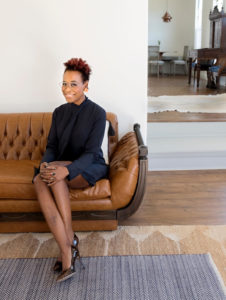
Errin Haines. Credit: The 19th

Errin Haines colored her journalism career with discussions and reports of race and ethnicity. The former Associated Press newswoman, got her bearings at Atlanta Daily Word, a black newspaper in the city. Haines, a former National Association of Black Journalists Vice President of Print, credits the newspaper for helping her realize she wanted to cover black communities. Now, the proud Atlanta native serves at editor-at-large for The 19th, a national news nonprofit focused on women issues. Haines spoke with Byline reporter Darriea Clark about the latest venture, NABJ and what readers can expect.

DC: How did you get involved in journalism and how did segue into political journalism?

EH: I got involved with journalism when I was a sophomore in college. My school paper wasn’t that great. I didn’t really see that as being a stepping stone to making a career out of [journalism]. I was looking through Creative Loafing, saw an ad for an AABJ meeting. So, I went, introduced myself and everyone embraced me and was helpful. One of my friends in the student chapter referred me to The Atlanta Daily World. The day I walked in was the day they got me started. They gave me my first article, and I stayed. I eventually worked there for year covering all aspects of black life in Atlanta.

I got into covering politics during the 2008 election during Barack Obama’s historic candidacy and then presidency. Atlanta has a very storied past around issues of race: Martin Luther King Jr. obviously being from here, John Lewis being such a living icon, Andrew Young — they were all her. They were people I talked to about building a legacy from their efforts. The fruition of that embodied this historic presidency. I was drawn to politics for that reason and covering that black electorate out of the South which was pivotal in his nomination and election. From that point, I wanted to get a deeper understanding of politics.

DC: You are the first and only reporter for the 19th news until others are hired. How have your previous positions prepared you for the demand of the role? 

EH: Working at the AP taught me a couple of things. First, metabolism. I was constantly having to think and write about [this topic] for a national audience. My stories have run in The New York Times and The Washington Post. They’ve also run in small newspapers in the middle of the country — places where they may have not had black or brown journalists who were going to write about these issues. That’s one avenue that has led me to where I am now.

My involvement as a member and in leadership with NABJ has prepared me for this role, because I’ve had to think about representation and why that matters in journalism, mainly around issues of race. NABJ is about creating the types of newsrooms that more accurately reflect our society, and we know we’re not there yet. At the 19th, we absolutely want to create a newsroom that is reflective of both the fact that black and brown people are soon to become the majority in this country and that women are already the majority of the electorate population.
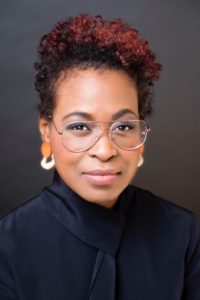
Errin Haines. Credit: The 19th

DC: In what ways are the world ready for a platform like the 19th news, and what ways are they not?

EH: [The 19th’s] assertion is that this platform is overdue. We are certainly feeling that sense of urgency as we have been out for the past month. We’re hearing from so many women. On the campaign trail, people are coming up to me and saying how excited they are that we have launched. Like I said before, women are more than half the electorate, yet in politics, women are discussed as a special interest group. I say to people all the time, “All issues are women’s issues.” That’s whether you’re talking about the economy, or education, or healthcare, you name it.

DC: There are a lot of women who feel like their voices aren’t being heard or their stories are being told. How do you plan on approaching those people who may not tap into the traditional news articles? 

EH: Trying to meet women where they are. We’re doing listening tours as part of a soft launch in multiple cities across the country. Going to women, listening to them, asking them: “What are the issues you most care about? What is the coverage that you want to see in the 19th?” It’s something that we want people to take ownership of, it’s a conversation we’re trying to start. We’re not just telling you what it means to be a woman engaged in politics. We want to engage with those women. And so, there will be those listening tours. We are going to do live events, because it’s important to be in conversation with women about the journalism and about these issues that we’re trying to raise through the journalism.

DC: How can newsrooms begin to make a more conscious shift toward diverse journalists?

EH: It has to be deliberate. I believe in our mission and I believe in our mission. I did feel like it was necessary to have the conversations we wanted to start. We had to build something new, but that’s not to say that media organizations should not be doing better in terms of race and gender. Our goal is equity. That is something we get to think about [everyday] and we build this.

DC: How will you define success in this venture? When will you be satisfied with the work and the mission? 

 EH: That’s a good question. Were the women who worked to ratify the 19th amendment satisfied what that amendment was passed? Was Shirley Chisholm satisfied when she ran for president and made history although she didn’t win? I want to continue in my job as a black person and as a woman and push the democracy forward as much as I can in the time that I’m here to do that job. Success to me looks like forward progress every single day. I think about the women and the people of color who came before me who did not necessarily see the victory or the “finish line” in their lifetime but did their efforts got people that much closer to where they need to be. Ida B Wells was certainly successful, even though she was not able to stop lynching in America. Success looks like for me and the 19th for us to do our part to change the conversation as much as we can and to the extent that we can while we are here. In a lot of ways, our being here and our existence tells me that we’ve already won.

DC: The 19th is launching, and then you’re going on a tour in April. What’s next for the nonprofit? 

 EH: A listening tour, the primary election, ramping up our hiring, and then we’re heading into the summer, the convention. We’re having an eventual nominee against our president, and then it’s on to the general election. We are obviously very much invested in honoring, marking the anniversary of the 19th amendment. You can stay tuned on our details to commemorate that. We are definitely growing, fundraising, committing to journalism, and trying to change this conversation every day.

Darriea Clark is an AABJ member and recent graduate of Syracuse University. This article was edited for length and clarity.

THE BYLINE (3/2019)

March 2019

Upcoming Event Alert

The Atlanta Association of Black Journalists will be hosting a Digital Workshop this Saturday, March 9.

Come listen to experts who live and breathe digital communications.

Tickets and information can be found here.

###

AABJ Online Fundraiser: 43 Years Campaign

AABJ is kicking off our $43 for 43 fundraising campaign. In its 43rd year, we are asking members to donate $43 to go towards programming, scholarships, and events throughout the year. Be sure to invite your friends, coworkers and anyone you know that supports our members in print, communications, public relations, radio, broadcast, digital and the many trailblazers in the literary world. Be sure to share our campaign on your social media by using the hashtag  #AABJ43.

You can donate here.

###

AABJ honors Black media trailblazers at film screening

By Amir Vera

Some of the first reporters and anchors in Atlanta pose for a photo on February 9, 2019.

Until late 2018, there hasn’t been an organized record of the first black journalists in Atlanta.

There was no record of the challenges they faced unless it was by word of mouth.

The Atlanta Association of Black Journalists changed all that. In the span of two years, a lot of volunteer hours and countless interviews, members of AABJ organized all of that history to create a film dedicated to these stories.

“Black & Reporting: The Struggle Behind the Lens” is a firsthand account that charts the paths of 10 Atlanta broadcast pioneers. The organization held a screening in December during its annual scholarship reception and then again on February 9.

The February event featured eight of the 10 pioneers for a post-screening discussion on their experiences, the current state of journalism, it’s future and tips for young journalists.

“It took AABJ to tell the stories of the first black journalists,” said Collie Burnett, a former reporter at WSB Radio and one of the panelists, adding that major and local networks are just covering rappers, athletes and business leaders.

“Only when you control the means of distribution do have the capacity to tell the stories that need to be told and make a difference.”

AABJ Vice President of Print Amir Vera interviews Lorenzo “Lo” Jelks, the first black reporter in Atlanta, after a screening of “Black & Reporting: The Struggle Behind the Lens” on February 9, 2019.

Lorenzo “Lo” Jelks, the first black reporter in Atlanta, came to WSB in the late 1960s. He said he enjoyed the documentary screening and couldn’t wait to see the finished product. He also said he hopes viewers really understand not only the experiences of the trailblazers, but also “the pride associated with African Americans in the media.”

Jocelyn Dorsey, another trailblazer and former anchor/reporter at WSB-TV, spoke to that pride saying her fellow reporters helped her learn about the city. She even described some of the other trailblazers as brothers and sisters.

“There was a community movement, a civil rights movement that got us on the air,” Dorsey said. “We knew if we screwed up, it’d be difficult for another black person to take our place.”

Kerry Charles, a reporter and anchor at WAGA Fox 5, said watching the “more than 300 years of experience in the panel” was inspiring.

“They opened the door for me to have a voice in my newsroom and in the community.”

Cierra Johnson, a senior at Clark Atlanta University, was almost brought to tears during the panel.

“I tried not to cry because I really appreciate journalists that came before me,” she said. “Just watching them take the time to give their wisdom so I can excel, it made me feel no matter what I face in this industry I can get through it because they’re still here.”

Anyone who wants to watch the entire documentary can buy it for $9.95 here.

Amir Vera is AABJ’s vice president of print.

Editor’s Note: The Atlanta Association of Black Journalists would like to pass their condolences to the family of Civil Rights leader Lonnie King Jr., who died Tuesday at the age of 82.

###

AABJ member reflects on volunteering for Super Bowl LIII

By Almiya White

AABJ member Karvis Jones volunteered during Super Bowl LIII.

With a passion for service, FOX Sports South’s very own production assistant Karvis Jones found time to give back to the city that once welcomed him with open arms.

When Jones found out Super Bowl LIII was coming to Atlanta,  he didn’t hesitate to sign up as a volunteer and demonstrate his southern hospitality.

“I think the biggest incentive of being a volunteer is to help raise Atlanta’s

profile as a city that continues to show the world that it can host some of the world’s biggest sporting events, as well as show the nation how diversity continues to make Atlanta a special place,” Jones said.

According WXIA-TV, more than 30,000 people applied and interviewed to be volunteers with the Atlanta Super Bowl host committee and only 10,000 were chosen.

“I found out that I was selected as a volunteer via e-mail. I was really excited when I got the news that I got selected because with the record number of applicants who applied to be volunteers, I knew I had a  one-third shot of making the cut.,” Jones said, adding that the first person he told was his wife, Carrisa Jones.

“Volunteers spent two hours in training leading up to the Super Bowl where they learned the area around the Super Bowl campus, how to greet fans and how to report suspicious activities. The Super Bowl host committee spoke heavily on the topic of sex trafficking being that Atlanta is a hub for sex trafficking nationwide,” Jones said.

Jones was selected to serve on the street team where he said he welcomed visitors and gave directions to all of the must-see places in Atlanta. Jones said he worked three days out of the 10 days surrounding the Super Bowl.

“The culture of the Street Team was very friendly. The Street Team gave fans materials on how to get to the NFL Experience at the Georgia World Congress

Center, as well as Super Bowl LIVE at Centennial Olympic Park. The Street Team also helped fans find hotels, restaurants, the closest MARTA rail station and places around downtown Atlanta such as the King Center, the Sky View, the World of Coke and the National Center for Civil & Human Rights.” Jones said.

Volunteering for the Super Bowl didn’t guarantee tickets inside the game. However, volunteers were able to experience any and everything else by being in the heart of the action with events like Super Bowl Live and anywhere the game left its footprint.  It was all to assist the 250,000 guests, WXIA-TV reported, who came to the city without even having an actual ticket to the game.

Not only were volunteers able to give back to the community, but they were able to do it in style. According to The Atlanta Journal-Constitution, the Super Bowl Host Committee provided 10,000 volunteers with uniforms from The Icebox, an Atlanta apparel and merchandise agency. Jones said the uniforms consisted of six cool swag components that included a jacket, a beanie cap/baseball cap, gloves, a polo shirt, scarf and a book bag.

According to The AJC, more than 500,000 people  came to Atlanta, including 150,000 out-of-state visitors to experience Super Bowl LIII and the numerous events.

With two Super Bowls already in Atlanta, Jones said “we’re the city to show the world what we have to offer. We made history hosting Super Bowl LIII in Atlanta.”  

Not only that, but Jones said volunteering for the Super Bowl was his way of giving back to the community that welcomed him with open arms when he moved to the city in 2006.

“I love serving people around the community and I believe when you serve others, it makes the world a better place to live as global citizens,” Jones said.

Almiya White is a junior at Clark Atlanta University.

###

Women’s History Month: Inventions by Black Women

By Ashlea Brown

Women’s History Month takes place every March. According to the United Nations’ website, the first National Woman’s Day was February 28, 1909, in the United States. From there it grew internationally in 1910 during a meeting in Copenhagen, Denmark, for a conference with over 100 women in attendance who decided there should be a Women’s Day to honor the movement for women’s rights and support for women’s suffrage, the UN website states. In 1913, the International Women’s Day website states it was established that March 8 would remain the global date for International Women’s Day. In 1981, Congress passed a resolution that authorized Women’s History Week that began on March 7. However, after much petitioning by the National Women’s History Project in 1987 the Women’s Week turned into Women’s History Month that is celebrated in March, according to the federal Women’s History Month website.  

Women have made major contributions throughout history by being actresses, writers, activists and inventors. Every day, people encounter inventions made by black women that they may overlook.

Here is a list of women who have invented items you may have not known.

Patricia Bath

Patricia Bath was the first African American to complete residency in ophthalmology in 1973 according to biography.com. She invented the Laserphaco Probe for cataract treatment in 1986. This device is used to remove the cataracts, or cloudy blemishes formed over the lens of a person’s eye.  She was able to restore the vision of several people who were unable to see prior to her invention.

The blue print of the closed-circuit television system that was used for home monitoring.

When people think about their modern home security, people can thank Marie Van Brittan Brown. She invented an early closed-circuit television system that was used for home monitoring and filed for patent for the invention in 1966 according to the history website America Comes Alive. Brown was influenced to create this security system, the website states, because of concern for crime and slow response from police. She was also influenced to create this security system so that she could identify those surrounding her home, America Comes Alive states.

Annie Malone

Annie Malone was a chemist and entrepreneur who became one of the country’s wealthiest African-American women in the early 1900s, according to the State Historical Society of Missouri. Malone developed a hair product that straightened black women’s hair with damaging it, the historical society states on their website. Malone moved her business to St. Louis in 1902 where she began selling a safe hair care for people of color. She went on to open the cosmetology school and training center known as Poro College in St. Louis in 1918, according to the historical society. Despite Malone’s success, the historical society says she is often overshadowed by a former employee, Madam C.J. Walker.

Mary Kenner

Mary Kenner invented the sanitary napkin with moisture-proof napkin pocket according to the Black History website Black Then. Her invention was a safer and much cleaner way for women to handle their menstrual cycles. However, her invention was not used until 1956, which was thirty years after she invented it. The company first interested turned her invention down once realizing she was black. She also invented the bathroom tissue holder and back washer, according to Black Then.

Sarah Boone earned patent rights to her improvements of the ironing board in 1892 according to the reference website ThoughtCo. Her new and improved invention led to better quality of shirt sleeves and women’s garments. Her new board, according to ThoughtCo, was narrow and curved which was a nice size to fit sleeve and women’s clothing. She stated in her patent application that the purpose of her invention was to “produce a cheap, simple, convenient and highly effective device, particularly adapted to be used in ironing the sleeves and bodies of ladies’ garments” according to biography.com.

Ashlea Brown is a senior at Spelman College. 

A previous edition of this article had the incorrect picture of
Marie Van Brittan Brown. That photo has since been replaced.

###

AABJ Member Spotlight: Kamaria Jackson

AABJ member Kamaria Jackson

How long have you been a member of AABJ?

I have been a member of AABJ for 2 years now.

Where did you attend college?

I attended Clark Atlanta University (CAU) for undergrad in which I obtained a degree in Mass Media Arts, concentrating in Television Production. I also obtained my Masters Degree in New Media Journalism from Full Sail University.

How long have you lived in Atlanta?

I’m a homegrown Georgia Peach, and have lived in Atlanta my entire life!

What is your current occupation?

I’m currently a video playback operator and trainer at the Mercedes Benz Stadium here in the heart of downtown Atlanta. I import and organize videos and clips for playback during live events such as Atlanta Falcons, as well as Atlanta United games. I’m also an educator in the Dekalb County School District.

What do you like most about being a member of AABJ?

AABJ is a great organization that connects media professionals, new and seasoned. I particularly love the fact that college students are encouraged to join as well, giving them early exposure to the industry by offering programs, conventions, and workshops that provide the necessary skills essential to being successful in the media field. AABJ has allowed me to reconnect with some of my fellow CAU alumni and build professional relationships through organized fellowship and networking.

What initially got you interested in the media/communications field?

For the majority of my childhood I had the goal of becoming a pediatrician. It wasn’t until I reached my junior year at Stephenson High School, that I actively became a member of the Production Department (JAG 8 News). There, I first learned how to operate a camera and edit via Casablanca. My teacher pulled me aside and noted that I had a great speaking voice, and should encourage me to audition for the JAG 8 news anchor position (which were the anchors who hosted school morning announcements and other school productions.) I auditioned and received the role. Upon further research on perfecting my TV presence, I was inspired by Atlanta native and popular local news anchor, Monica Kauffman, who had attained notable accolades as a journalist. From then on, I just knew that the media production industry was for me. Nothing beats having fun while loving what you do professionally!

What are your favorite publications/outlets to get your news?

Because I think it’s very paramount to know what’s going on in my community, local news is very important to me. I support all of the local stations in Atlanta, but in particular WSB-TV and well as FOX 5; in which I was afforded the opportunity to “job shadow” popular news anchor Lisa Rayam my junior year in high school.

Is there anyone in media you look up to? Why?

With the mass media field being a male-dominated industry, I’m inspired by all of the women who have paved the way for me to not only be a successful woman, but successful black woman in this fast paced industry. On many of my production-related social media posts, I love to represent by using the hashtags #BLACKWOMENINPRODUCTION, #BLACKGIRLMAGIC and #PRODUCTIONCHICKSROCK, giving distinct notoriety to the women who “blaze” the industry daily with fierceness, style, and grace.

What’s an interesting fact about you people wouldn’t have otherwise known?

Most people don’t know that I possess many talents. I play two instruments (clarinet and bass clarinet), I am a dance instructor and baton twirler, specializing in fire baton twirling. I’m also a freelance sketch artist. Most importantly, I am a mother to the best 10 year-old son I could have ever prayed for! He is the reason why I strive so hard for success everyday. Mommy loves you Kamden!