THE BYLINE 03/2020 
Former CNN producer reflects on her career and being theonly Black woman in newsrooms
By Tenisha Taylor
As a young girl, I always wanted to own my own radio station, WTNT –
Dynamite. I always had something to say, and with the initials, TNT (Tenisha Nicole Taylor), I figured whatever I decided to do in life had to be dynamite.
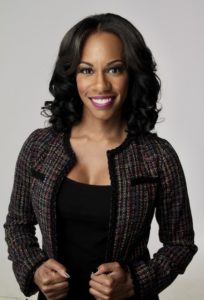
While the dream of owning WTNT radio never came to fruition, the reality of working in media did. At 16, I dipped my toes in the industry when I became a typesetter for The Chicago Citizen, one of Chicago’s two Black newspapers at the time. After being immersed in black newsroom culture for a summer, I was hooked on media. I followed publisher Bill Garth to meetings, luncheons and business functions, taking copious notes. I shadowed managing editor Lisa Ely ad nauseum, learning everything I could about reporting and the journalism business. By the time I was a high school senior, I was writing stories for the paper, covering stories affecting Black communities. Working for the Black press carried a sense of pride; it was a badge of honor.
Unfortunately, in my naivety, I thought that every newsroom cared about Black voices and stories. After college and starting my first job, I quickly realized the world was different. At The Citizen, everyone was Black and championed Black culture. In my new world, I was often the only Black woman in the newsroom — and the only one who cared about our stories. I eventually became the woman who only pitched Black stories. The comfortable, supportive Citizen newsroom wasn’t representative of what I would experience. While I am grateful it solidified my presence as a Black woman journalist, I had to readjust my thinking if I wanted to survive as an African-American woman in this industry.
As my career progressed, I often carried the burden of being the lone Black person and pitching our stories without being pigeonholed. It was, and is, a delicate balance. Once I transitioned into management, I was careful not to show favoritism. But with time, I learned favoritism was how some races ensured their friends succeeded. Black women in media must play by a different set of rules; there needs to be a class taught about them. A Black woman can’t be too passionate about a story, or she’ll be labeled aggressive. On top of that, black women work twice as hard to earn half the respect.
Many Black women journalists carry the weight of representing their race and culture to the highest standard. How you dress, how you rock your hair, what you say, how early you arrive, how late you stay, who you support and promote — these all factor into how you are viewed in a newsroom. And with all that pressure, Black women are still not paid their worth. Black women make .61 cents for every $1 white men make.
Despite the challenges, I found that being true to myself was important. Yes, it cost me some battles but it didn’t cost me my inner peace. I vowed to fight on behalf of Black people who needed an advocate in the newsroom. I vowed to push for stories that were important to Black people and to treat people with dignity and respect.
After 16 years in newsrooms, I am pleased with myself and the work I accomplished. When I reflect on my newsroom career, I am confident the little girl who wanted to own WTNT radio, not only had something to say but used her voice to help other Black people in journalism.
Tenisha Taylor is a PR consultant, former CNN producer and served as AABJ President from 2010 to 2014.
Books You Should Read by Black Women Journalists
By Alexis Grace
In honor of Women’s History Month, AABJ is highlighting Black women journalists who have had an impact on the industry. One way to honor them is to read books written by some of these incredible women. Here are just a few books you should check out if you’re looking for some inspiration:
More Than Enough: Claiming Space for Who You Are (No Matter What They Say) by Elaine Welteroth

In 2017, Elaine Welteroth made history when she became the first black editor-in-chief of Teen Vogue. A year after leaving the monthly magazine, Welteroth became a New York Times Bestselling author with her book, “More Than Enough,” – a memoir for anyone who has ever felt “othered, overlooked, underestimated, undervalued, and still chooses greatness.” In the book, Welteroth discusses life lessons and breaking barriers while being the only black woman in the room. Readers are reminded they are more than enough despite their challenges. The book will help you face inner conflicts and build confidence.
The Light of Truth: Writings of an Anti-Lynching Crusader by Ida B. Wells

Journalism pioneer Ida B. Wells once said: “The way to right wrongs is to turn the light of truth upon them.” For Wells, that meant exposing the horrors of lynching. “The Light of Truth,” includes a broad assortment of Wells’ articles and discusses her journalism career and experiences while traveling abroad. Wells’ book also addresses her anti-lynching reporting. Her impact has made a lasting impression, with the creation of the Ida B. Wells Society, an organization dedicated to training investigative journalists of color. The National Association of Black Journalists also gives an annual, prestigious award in her honor.
Note to Self: Inspiring Words From Inspiring People by Gayle King

TV personality and CBS This Morning co-host Gayle King gathered her favorite letters of inspiration from a popular CBS This Morning segment and put them all in one place. Her book, “Note to Self,” includes encouraging messages and advice to the author’s younger self. The book provides a sense of appreciation for who the authors once were and who they are today. The New York Times bestseller includes essays from well-known figures like entrepreneur and former television talk show host Oprah Winfrey and the late, esteemed poet Maya Angelou. King’s book is excellent for anyone struggling with growing pains and can be uplifting for those who need a quick boost to their day. These tender words are also great for self-reflection.
Alexis Grace is a senior at Clark Atlanta University. She is also president of the school’s NABJ-CAU chapter.
FEATURE STORY: Errin Haines talks new online news nonprofit The 19th
By Darriea Clark
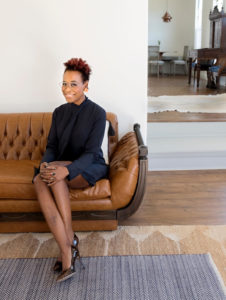
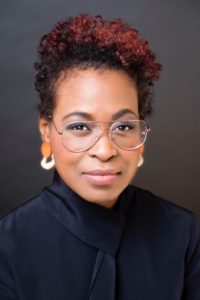
Errin Haines colored her journalism career with discussions and reports of race and ethnicity. The former Associated Press newswoman, got her bearings at Atlanta Daily Word, a black newspaper in the city. Haines, a former National Association of Black Journalists Vice President of Print, credits the newspaper for helping her realize she wanted to cover black communities. Now, the proud Atlanta native serves at editor-at-large for The 19th, a national news nonprofit focused on women issues. Haines spoke with Byline reporter Darriea Clark about the latest venture, NABJ and what readers can expect.
DC: How did you get involved in journalism and how did segue into political journalism?
EH: I got involved with journalism when I was a sophomore in college. My school paper wasn’t that great. I didn’t really see that as being a stepping stone to making a career out of [journalism]. I was looking through Creative Loafing, saw an ad for an AABJ meeting. So, I went, introduced myself and everyone embraced me and was helpful. One of my friends in the student chapter referred me to The Atlanta Daily World. The day I walked in was the day they got me started. They gave me my first article, and I stayed. I eventually worked there for year covering all aspects of black life in Atlanta.
I got into covering politics during the 2008 election during Barack Obama’s historic candidacy and then presidency. Atlanta has a very storied past around issues of race: Martin Luther King Jr. obviously being from here, John Lewis being such a living icon, Andrew Young — they were all her. They were people I talked to about building a legacy from their efforts. The fruition of that embodied this historic presidency. I was drawn to politics for that reason and covering that black electorate out of the South which was pivotal in his nomination and election. From that point, I wanted to get a deeper understanding of politics.
DC: You are the first and only reporter for the 19th news until others are hired. How have your previous positions prepared you for the demand of the role?
EH: Working at the AP taught me a couple of things. First, metabolism. I was constantly having to think and write about [this topic] for a national audience. My stories have run in The New York Times and The Washington Post. They’ve also run in small newspapers in the middle of the country — places where they may have not had black or brown journalists who were going to write about these issues. That’s one avenue that has led me to where I am now.
My involvement as a member and in leadership with NABJ has prepared me for this role, because I’ve had to think about representation and why that matters in journalism, mainly around issues of race. NABJ is about creating the types of newsrooms that more accurately reflect our society, and we know we’re not there yet. At the 19th, we absolutely want to create a newsroom that is reflective of both the fact that black and brown people are soon to become the majority in this country and that women are already the majority of the electorate population.
DC: In what ways are the world ready for a platform like the 19th news, and what ways are they not?
EH: [The 19th’s] assertion is that this platform is overdue. We are certainly feeling that sense of urgency as we have been out for the past month. We’re hearing from so many women. On the campaign trail, people are coming up to me and saying how excited they are that we have launched. Like I said before, women are more than half the electorate, yet in politics, women are discussed as a special interest group. I say to people all the time, “All issues are women’s issues.” That’s whether you’re talking about the economy, or education, or healthcare, you name it.
DC: There are a lot of women who feel like their voices aren’t being heard or their stories are being told. How do you plan on approaching those people who may not tap into the traditional news articles?
EH: Trying to meet women where they are. We’re doing listening tours as part of a soft launch in multiple cities across the country. Going to women, listening to them, asking them: “What are the issues you most care about? What is the coverage that you want to see in the 19th?” It’s something that we want people to take ownership of, it’s a conversation we’re trying to start. We’re not just telling you what it means to be a woman engaged in politics. We want to engage with those women. And so, there will be those listening tours. We are going to do live events, because it’s important to be in conversation with women about the journalism and about these issues that we’re trying to raise through the journalism.
DC: How can newsrooms begin to make a more conscious shift toward diverse journalists?
EH: It has to be deliberate. I believe in our mission and I believe in our mission. I did feel like it was necessary to have the conversations we wanted to start. We had to build something new, but that’s not to say that media organizations should not be doing better in terms of race and gender. Our goal is equity. That is something we get to think about [everyday] and we build this.
DC: How will you define success in this venture? When will you be satisfied with the work and the mission?
EH: That’s a good question. Were the women who worked to ratify the 19th amendment satisfied what that amendment was passed? Was Shirley Chisholm satisfied when she ran for president and made history although she didn’t win? I want to continue in my job as a black person and as a woman and push the democracy forward as much as I can in the time that I’m here to do that job. Success to me looks like forward progress every single day. I think about the women and the people of color who came before me who did not necessarily see the victory or the “finish line” in their lifetime but did their efforts got people that much closer to where they need to be. Ida B Wells was certainly successful, even though she was not able to stop lynching in America. Success looks like for me and the 19th for us to do our part to change the conversation as much as we can and to the extent that we can while we are here. In a lot of ways, our being here and our existence tells me that we’ve already won.
DC: The 19th is launching, and then you’re going on a tour in April. What’s next for the nonprofit?
EH: A listening tour, the primary election, ramping up our hiring, and then we’re heading into the summer, the convention. We’re having an eventual nominee against our president, and then it’s on to the general election. We are obviously very much invested in honoring, marking the anniversary of the 19th amendment. You can stay tuned on our details to commemorate that. We are definitely growing, fundraising, committing to journalism, and trying to change this conversation every day.
Darriea Clark is an AABJ member and recent graduate of Syracuse University. This article was edited for length and clarity.